

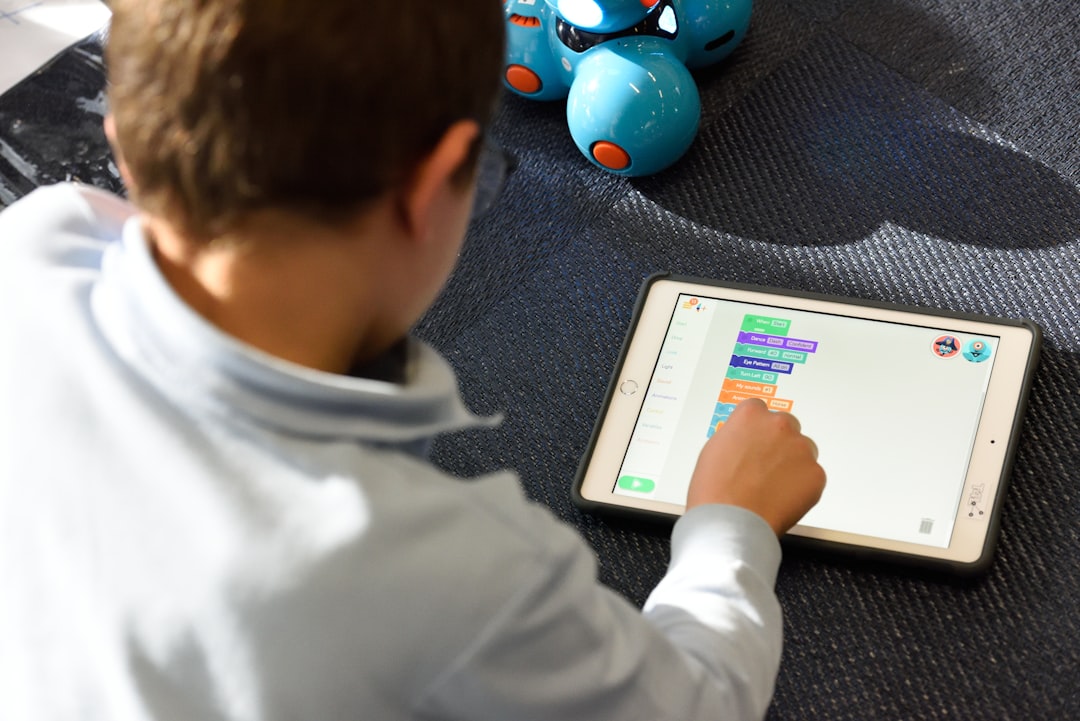
The shift in ai classroom learning across every continent isn’t a future projection anymore — it’s already here, already messy, and already delivering results that would have seemed implausible five years ago. A student in Manila gets instant, personalized feedback on a physics problem at 11pm. A teacher in rural Ohio saves two hours a week by letting an AI draft her lesson plans. A university in the UK scrambles to rewrite its academic integrity policy for the third time in eighteen months. This is the actual shape of educational AI right now — equal parts exciting and unresolved.
Here’s what’s really happening, stripped of the hype.
The Numbers: How Big Has AI Classroom Learning Across the Globe Actually Gotten?
Let’s start with the market, because the money tells you where this is going.
The global AI in education market is forecasted to expand from $7.52 billion in 2025 to approximately $10.6 billion by 2026, growing at a compound annual growth rate of 40.9%. That’s not a typo. Forty percent year-on-year. By 2030, the market is projected to surge to $42.48 billion. For context, that’s roughly the GDP of a small European nation — being funneled into how kids and adults learn.
The adoption numbers match the investment curves. Global student AI usage jumped from 66% in 2024 to 92% in 2025 — the steepest single-year rise on record. As of 2026, 86% of students across 16 countries already use AI in their studies. And teachers? Teacher adoption surged from 32% in 2024 to 61% in 2025, a 29 percentage-point jump that signals a major shift toward mainstream classroom use.
That’s not a trend. That’s a tipping point.

What’s Actually Happening Inside the Classroom? the Tools Teachers Use
People love to talk about “AI in education” as if it’s one thing. It isn’t.
The most common teacher applications include adaptive learning platforms (used by 43% of educators), automated feedback or grading (41%), chatbots for supporting students (35%), and intelligent tutoring systems (29%). And the tool dominating the conversation? ChatGPT. ChatGPT dominates teacher tool recommendations at 47%, nearly doubling the next most-cited option (Google Lens at 24%).
Teachers are primarily using AI to do the invisible work — the stuff that grinds them down. Teachers most often apply AI to lesson creation and planning, led by brainstorming lesson ideas (31%) and creating or updating lesson plans (29%). That matters more than it sounds. I once watched a first-year teacher spend her entire Sunday — literally from 9am to 9pm — building lesson materials from scratch for a Monday class. AI tools like Canva Magic, Khanmigo, and Copilot for Education are giving those hours back.
Khan Academy’s AI assistant sees daily engagement from 4.2 million unique users worldwide. That’s not a pilot program. That’s infrastructure.
AI Classroom Learning Across Borders: The Regional Picture
The story looks different depending on where you stand.
North America led the AI in education market, accounting for the largest share of 38% in 2025. Substantial investment from Silicon Valley giants such as Google, Microsoft, Apple, and IBM in education has contributed significantly to the market’s success in the region.
But the real growth story is Asia-Pacific. The AI in education market in Asia Pacific is $2.85 billion in 2026, expected to grow at a CAGR of 35.3%, reaching $9.7 billion by 2030 — making it the fastest-growing region. China leads in student AI enthusiasm, with 80% of students excited about AI, compared to 35% in the US and 38% in the UK.
The Middle East is moving fast too. In May 2025, the UAE Ministry of Education mandated AI learning for all public-school students starting from the 2025–2026 academic year. Mandatory. Not optional. Not a pilot. Mandatory.
Latin America is the underdog story. The AI in education market in Latin America stands at $0.67 billion in 2026 and is projected to grow at a CAGR of 33.5% to reach $2.1 billion by 2030. Though smaller in absolute terms, the region’s growth rate indicates aggressive digital transformation as countries ramp up investments in AI-based learning tools to bridge longstanding educational gaps.
Truth is, the global picture is uneven. Some students are getting Harvard-level AI tutoring from their bedroom. Others have spotty internet and a single shared tablet for a class of forty.
Does it Actually Improve Learning? the Evidence is Surprisingly Strong
This is the question that actually matters. And honestly? The results are better than I expected.
A 2025 Harvard University study found that students learning with AI tutors mastered content more than twice as fast as students in traditional active-learning classrooms — a peer-reviewed result published in PNAS. AI-tutored students also required less study time (median 49 minutes versus 60 minutes for classroom instruction) and reported feeling more engaged and motivated.
That’s a controlled, peer-reviewed study. Not a vendor’s marketing PDF.
There’s more:
- More than half of teachers (55%) report improved student outcomes when using AI tools, according to a Forbes Advisor survey of 500 practicing U.S. educators.
- Students using an enhanced AI tutor with Socratic questioning saw 127% improvement, versus 48% with a standard AI chatbot — though students relying heavily on the standard chatbot performed worse without it.
- Schools using AI-powered early alert systems have reduced student dropout rates by 15%.
- In March 2025, Macquarie University students using AI improved by up to 10% in examination results.
That last bullet is the catch. The AI only helps when it’s well-designed and pedagogically grounded. The OECD Digital Education Outlook 2026 finds that generative AI can support learning when guided by clear teaching principles — but if designed or used without pedagogical guidance, outsourcing tasks to AI simply enhances performance with no real learning gains.
Mostly. It depends entirely on what you’re doing with it.
The Uncomfortable Side of AI Classroom Learning Across School Systems
I’d be doing you a disservice if I only showed you the wins.
Nearly two-thirds of educators are concerned about plagiarism due to AI usage, and academic dishonesty is now teachers’ top concern about their students. The numbers back that up. The proportion of students directly including AI-generated text in assessed work continues to increase — standing at 12% as of 2026, up from 8% in 2025 and 3% in 2024.
Then there’s the training gap. Despite the rapid rise of AI in classrooms, only about a quarter of teachers have received any training on AI chatbots, and nearly one-third cite a lack of training or professional development as the main barrier to adoption. Think about that for a second. We’re rolling out powerful tools to classrooms where 75% of the teachers are figuring it out on their own. Nearly 60% of educators and students say they have received no AI training, and a major perception gap exists — 76% of institutional leaders believe users are trained, but 45% of educators and 52% of students report zero training.
That’s not an AI problem. That’s a management problem.
And there are deeper equity questions nobody wants to answer at a board meeting. While 80% of high school educators report their students are receiving formal AI literacy lessons, only 8% of students in grades Pre-K through 3rd are receiving the same training, creating a significant developmental gap in early childhood education.
Policy and Governance: Who’s Actually in Charge?
Governance is where the real action is right now — and where most institutions are still behind.
A February 2026 Coursera survey of more than 4,200 students and educators across five countries found that AI adoption has dramatically outpaced governance. That’s a polite way of saying schools are making up the rules as they go.
Governments, at least, are trying to catch up. A White House Executive Order, “Advancing Artificial Intelligence Education for American Youth,” was signed in April 2025 to unite AI education across all levels of learning, from K-12 to postsecondary. In April 2025, the European Commission introduced the AI Continent Action Plan, including an AI Skills Academy initiative.
The most thoughtful institutional voice in this space right now is UNESCO, whose guidance for generative AI in education and research explicitly supports a human-centered approach — one where AI augments teachers rather than replaces them, and where student data is protected, not mined. That’s the right frame. The OECD recommends that jurisdictions ensure policy and regulatory frameworks protect learners while enabling innovation, with clear expectations on privacy, safety, bias testing, and alignment with educational objectives.
Clear expectations. Privacy. Bias testing. These are not technology problems. They’re values problems.
Frequently Asked Questions
How is AI Classroom Learning Across Different Countries Changing Student Outcomes?
A 2025 Harvard study found that students using AI tutors learned more than twice as fast as peers in traditional active-learning classrooms. Results vary significantly by country and context — China shows 80% student enthusiasm, while the UAE has made AI literacy mandatory in public schools. The consensus from research is that well-designed, pedagogically grounded AI tools improve outcomes; generic chatbot use without structure does not.
What is the Current State of AI Classroom Learning Across K-12 Schools Globally?
In 2026, 86% of students across 16 countries already use AI in their studies. K-12 adoption is moving faster than higher education in many markets. 53% of K-12 teachers use AI chatbots with students at least weekly, and 80% use virtual learning platforms like Google Classroom weekly. The main challenges are teacher training gaps, academic integrity concerns, and inconsistent policy frameworks.
What are the Biggest Risks of AI Classroom Learning Across Schools and Universities?
The risks are real and worth naming plainly. Students using standard AI chatbots without structured pedagogy saw gains — but also performed worse than non-users when the chatbot was removed, raising concerns about dependency. Many educators face significant challenges integrating AI effectively, and plagiarism, data privacy, and algorithmic bias remain active, unresolved issues in nearly every education system.
How Much does the Global AI in Education Market Cost and Who are the Major Players?
The AI in education market is forecasted to reach approximately $10.6 billion in 2026, growing at a CAGR of 40.9%. Major players include Google, Microsoft, IBM, Pearson, Coursera, Duolingo, Khan Academy, DreamBox Learning, and Carnegie Learning. Microsoft alone invested over $4 billion in AI education initiatives targeting schools, community colleges, and nonprofits as of July 2025.
Is AI Classroom Learning Across Developing Regions Actually Accessible?
Increasingly, yes — but it’s uneven. Asia-Pacific and Africa hold significant potential, with youth populations driving demand for affordable, scalable learning solutions, and localized AI content in regional languages capable of bridging educational gaps for millions underserved by traditional methods. Low-bandwidth AI applications and edge computing are expanding access in areas with poor connectivity, but the digital divide remains a very real constraint.
The One Takeaway that Actually Matters
Here’s the real conclusion, and it’s less glamorous than the headlines suggest.
The transformation of ai classroom learning across every education system on earth is not being driven by technology alone. The Harvard study’s AI tutor worked because it was designed by people who understood how learning happens. Khan Academy’s Khanmigo works because it sits inside a pedagogy-first platform. The UAE’s national mandate works (or will work) because there’s infrastructure, policy, and training behind it.
The institutions treating AI like a magic fix — dropping ChatGPT into a syllabus and calling it innovation — are the ones producing students who can’t function without it and teachers who feel alienated from their own classrooms. As the OECD Digital Education Outlook 2026 notes, general-purpose generative AI tools are not designed specifically for learning — education systems should invest in educational GenAI grounded in learning science, co-created with teachers and learners.
That’s the only version of this that actually works. Not the flashiest tool. The right tool, used thoughtfully, by people who know what they’re doing.
Start there.
