


Electric suvs reshaping urban transportation isn’t a headline from a futurist think piece — it’s what you see when you look at the actual numbers, the showroom floors, and the parking garages of cities from Los Angeles to Amsterdam right now. I remember test-driving the original Hyundai Ioniq 5 in late 2022 in a rainy Chicago parking lot, thinking “this is promising, but is the world ready?” In 2026, the world didn’t just get ready. It got in and drove away.
Here’s what no one tells you straight: this shift is messier and more complicated than the clean “EVs are winning” narrative suggests. But it’s also more exciting. Let’s get into it.
Electric Suvs Reshaping Urban Roads: The Scale of What’s Changed
The numbers are hard to argue with. Worldwide, revenue in the electric vehicle market is projected to reach nearly $996 billion in 2026. That’s not a niche. That’s a full-scale industry reorientation.
Compact models led 2024 deliveries with a 48.15% slice of the electric SUV market share, anchored by the Tesla Model Y and BYD Yuan Plus’ success in dense cities. That’s not coincidence — compact electric SUVs fit cities. Parking decks, narrow lanes, school drop-offs, the 4.2-mile commute to the office. These vehicles were built for exactly that life.
In 2026, the mid-sized SUV segment is projected to dominate the overall market with a share of approximately 41.60%, owing to its suitability for urban commuting, easier parking, fuel efficiency, and affordability.
And the electric share within that? Growing fast. Battery electric vehicles secured 72.33% of the electric SUV market share in 2024, as robust charging ecosystems and falling pack costs cemented buyer confidence.
The compact electric SUV is, effectively, the new urban family car. Not the sedan. Not the hatchback. The electric SUV.
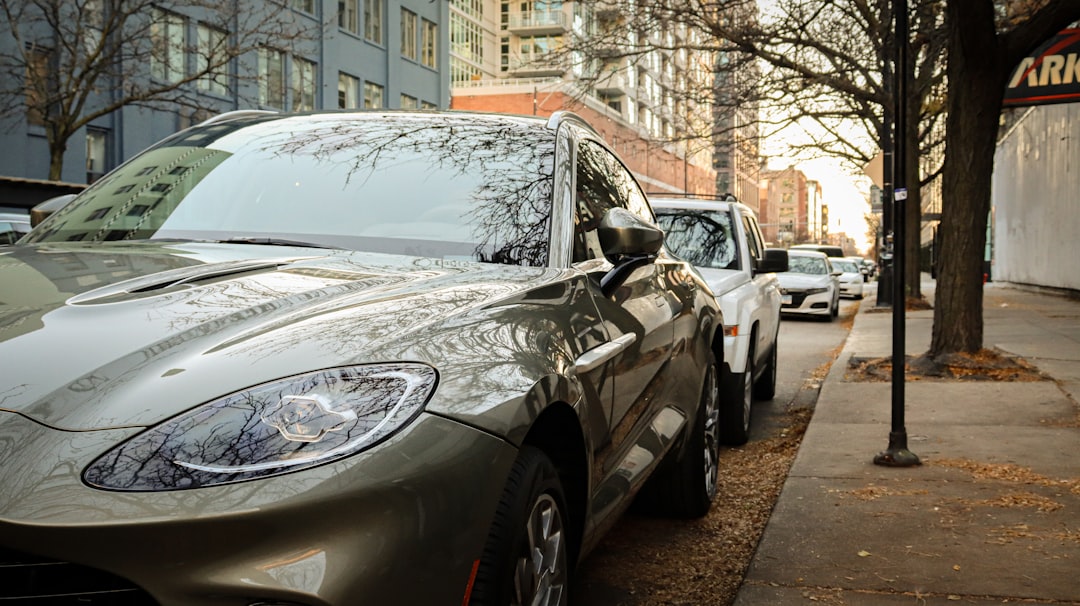
Why Cities are the Natural Home for Electric Suvs
Here’s the thing most gas-car defenders miss: urban driving is ideal for electric powertrains. Stop-and-go traffic that would punish a combustion engine? Regenerative braking turns that into recovered energy. Short daily distances? A non-issue. Most Americans drive just 40 miles daily, meaning a 500 km (310-mile) EV provides nearly eight days of driving between charges.
Research shows that 80% of EV charging happens at home overnight, transforming the ownership experience from weekly gas station visits to simply plugging in like your smartphone.
The city, weirdly, is the electric SUV’s comfort zone.
You also get a tangible improvement to daily life. Unlike some previous-generation ICE SUVs with poor fuel efficiency, new electric models bring lower running costs, improved interior space, and stronger acceleration. Quieter, faster off the line, cheaper to run per mile. For a vehicle you’re piloting through rush-hour gridlock every morning, that calculus matters enormously.
Electric SUVs are gaining momentum in coastal and urban states specifically, supported by policy incentives and charging expansion. Cities are pulling this forward — not just consumer preference, but zoning rules, parking requirements, emissions zones, and utility incentives.
Still. There’s a catch. Not every city is equal. United States rural counties average just 2.3 chargers per 1,000 square miles compared with 45.7 in urban zones — a gulf that amplifies range anxiety among users outside metro corridors. If you’re in Phoenix or Seattle, you’re fine. If you’re in rural Wyoming, the story is different.
Electric Suvs Reshaping Urban Fleets: The Models Driving the Change in 2026
2026 brings a wave of new and refreshed electric SUVs aimed at lowering prices and broadening choice. And honestly, the lineup right now is the best it’s ever been.
The Hyundai Ioniq 5 is still Edmunds’ top pick for the year, winning the Edmunds Top Rated Electric SUV award for 2026. That’s not nothing — it’s been a volume seller for years and it’s still the benchmark. Then you’ve got the Ioniq 9, which scored an extraordinary 8.4 out of 10 at Edmunds: with its combination of roomy three-row seating, abundant cargo space, a luxurious interior, great driving manners, and rapid recharging, it can’t be beat in its class.
For value-focused buyers, the picture is genuinely exciting:
- The Chevrolet Equinox EV starts under $35,000, delivers 319 miles of range, spacious seating for five, and includes GM’s Super Cruise hands-free driving technology — features typically reserved for luxury vehicles.
- The Tesla Model Y starts at $39,990 for its base rear-wheel drive trim, and remains the default answer for most urban buyers despite intensifying competition.
- The 2026 Cadillac Escalade IQ and IQL offer the best driving range of any electric SUV — the IQ reaches a jaw-dropping 465 miles, though you’ll pay significantly for it.
- The Rivian R2 arrives as a smaller, more affordable sibling to the R1S, aimed squarely at mainstream buyers who like Rivian’s adventurous image but don’t need a huge truck-based SUV.
The range anxiety excuse is fading fast. Real-world range is up 11% year over year, and the fastest EVs now charge 100 miles in under 10 minutes.
The Charging Infrastructure Finally Catching Up ??? Mostly
I spent a weekend in Austin, Texas in February trying to plan a route from downtown to Fredericksburg using only non-Tesla public chargers. Took me 45 minutes to map it out and I still had a moment of genuine anxiety pulling up to a CCS station I’d never used. That was February. The situation has improved since.
Charging infrastructure has reached critical mass in 2026, with over 185,000 public charging ports operational across the United States — a 47% increase from 2024 levels. That kind of growth in a two-year window is not slow. That’s a sprint.
In 2024 alone, more than 1.3 million public charging points were added worldwide — a 30% rise over the prior year, bringing the total to levels that rival the entire global stock in 2020. China leads with roughly 65% of recent growth, while Europe saw public points climb more than 35% in 2024 to surpass 1 million.
Public charging locations continue to expand, and more 2026 SUVs can now use Tesla Superchargers — which, if you’ve used them, you know is genuinely the most reliable fast-charging experience in North America right now.
The asterisk? Federal and state spending on public charging under programs like NEVI has been slower to materialize than originally advertised, which has tempered rural and road-trip confidence for some buyers. Urban cores? Great. Everywhere else? Still getting there. Mostly.
Electric Suvs Reshaping Urban Economics: The Total Cost of Ownership Argument
The purchase price conversation dominates headlines. It shouldn’t.
The premium electric SUV market was valued at $40.7 billion in 2025 and is set to reach $45.9 billion in 2026. That’s a lot of capital moving in a single direction. And it’s doing so because the economics — once you run the numbers properly — increasingly favor electric.
Electric vehicles have fewer mechanical parts, require no oil changes, and experience fewer brake replacements, which lowers maintenance costs over time. This is where the real money is. Not at the dealership. At the service center — or rather, the service center you’re not visiting. The average ICE SUV owner spends somewhere between $800 and $1,200 a year on maintenance. Electric SUV owners cut that dramatically.
Then there’s battery longevity — which used to be the biggest fear and is now, honestly, a non-issue for most buyers. According to Recurrent’s analysis of over 1 billion miles driven, the average EV retains 97% of its range after three years and 95% after five years — meaning a 2026 model with 325 miles of range today is still a 309-mile EV in 2031.
That’s not degradation. That’s durability.
The one genuine financial wildcard in 2026? As of September 30, 2025, all federal tax credits for used, new, and leased electric vehicles ended. That’s a real hit. U.S. EV market share fell to 5.7% in Q4 2025 — the dip analysts expected following the end of federal EV subsidies. State-level programs vary widely, so you need to check your local situation before assuming you’ll get a break.
Regulatory Pressure: The Force Nobody Talks About Enough
Consumer preference is one thing. Policy is the accelerant.
The EU’s 95 g/km CO₂ cap, effective 2025, exposes automakers to €95 per gram penalties, virtually obliging high-volume SUV sellers to balance fleets with zero-emission variants. California’s ACC II pushes 35% ZEV share by 2026, while China’s dual-credit policy assigns higher weighting to heavier SUVs — intensifying the pressure to electrify.
Manufacturers aren’t going electric because they want to. They’re going electric because the alternative is paying massive fines per vehicle sold. Manufacturers with strong electric SUV portfolios — like Tesla — find themselves better shielded from fines, gaining a noticeable competitive edge.
In Europe, the electric SUV segment is quickly becoming the most competitive part of the car market, and many electric models have now achieved price parity with their petrol, diesel, and hybrid counterparts. That’s the turning point economists and analysts have been predicting for years. It’s here now. Not everywhere, not for every model — but the trend line is unmistakable and according to the International Energy Agency’s global EV data, it’s only accelerating.
Frequently Asked Questions
How are Electric Suvs Reshaping Urban Mobility in 2026?
Electric suvs reshaping urban mobility in 2026 primarily through three shifts: they’ve replaced compact sedans as the default city family vehicle, pushed charging infrastructure expansion into urban cores, and reduced the total noise and emissions load in dense neighborhoods. Compact and mid-size electric SUVs now account for the bulk of EV sales in the U.S., and cities from Oslo to Los Angeles have built zoning, tax, and fleet policies around this reality.
What is the Best Electric Suv for City Driving in 2026?
The Hyundai Kona Electric leans toward efficiency and simplicity — with around 260 miles of range and a redesigned interior, it’s an excellent option for urban drivers who want something compact but capable. For slightly more budget, the Chevrolet Equinox EV is the most balanced choice, with an EPA-estimated range of up to 319 miles at a price point that undercuts many competitors.
Are Electric Suvs Reshaping Urban Charging Networks, or is Infrastructure Still a Problem?
Electric suvs reshaping urban demand have genuinely pushed infrastructure forward — over 185,000 public charging ports are now operational across the United States, a 47% increase from 2024 levels. That said, the gap between urban density and rural coverage remains wide. For most city drivers, charging is no longer a meaningful barrier. For road trips or rural routes, planning ahead still matters.
How Long do Electric Suv Batteries Actually Last?
Longer than most people think. The average EV retains 97% of its range after three years and 95% after five years, according to Recurrent’s analysis of over 1 billion miles driven. Battery degradation was a legitimate concern with early-generation EVs. In 2026, with modern thermal management and smarter charging software, it’s largely a solved problem for mainstream buyers.
Which Electric Suv Has the Longest Range in 2026?
The 2026 Cadillac Escalade IQ and IQL offer the best driving range of any electric SUV — the IQL reaches 460 miles and the IQ a jaw-dropping 465 miles. For buyers who don’t need full-size luxury, the Lucid Gravity offers up to 450 miles of range and the Rivian R1S up to 410 miles — both starting at $75,000 or more.
The One Thing that Actually Matters
Look — electric suvs reshaping urban transportation is not a prediction anymore. It’s a description of what’s already happening. You can see it in the Q4 2025 sales figures, the charging port density maps, the lineup at any auto show, and the parking garage of any major U.S. city.
The one clear takeaway: if you’re buying a family vehicle for urban or suburban use in 2026, the electric SUV is no longer a bold choice — it’s the practical one. The technology is mature. The infrastructure in cities is adequate and improving. The long-term ownership economics are solid. And the driving experience, particularly from brands like Hyundai, Kia, and Chevrolet, has closed the gap with — and in some cases surpassed — comparable gas-powered vehicles.
According to Edmunds’ ongoing 2026 vehicle evaluations, you’d have to go eight models deep on the small electric SUV list to find one scoring below 7 out of 10. That’s a mature market. That’s not hype.
What you need to do is simple: match the vehicle to your actual life, not the spec sheet. Figure out where you charge, how far you actually drive per day, and how much space you genuinely need. Then look at the options. There are more good ones right now than there have ever been.
The question isn’t whether electric SUVs belong in cities anymore. It’s which one belongs in your driveway. Per the IEA’s latest EV tracking data, the global transition has already passed its inflection point. Cities just got there first.
