

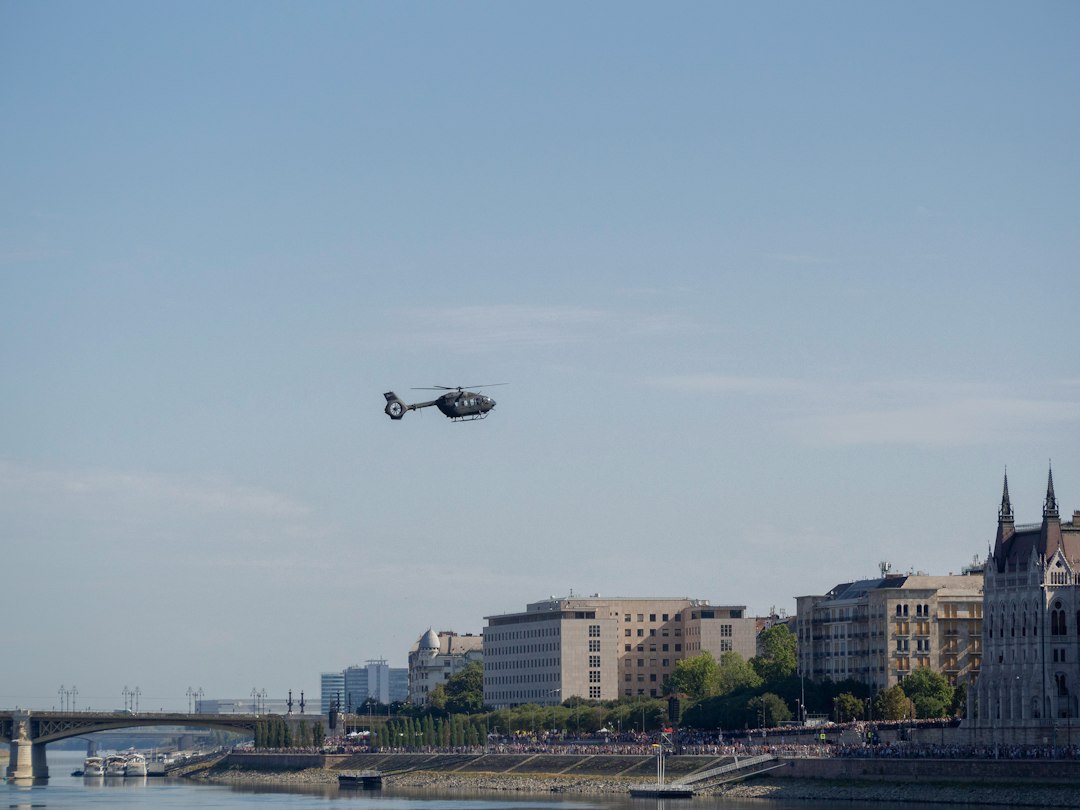
The evolution urban air mobility has shifted from venture-capital fantasy into something tangible. Real airframes. Real test flights. Real regulatory pathways. In 2026, you can actually watch this unfold — not in PowerPoint slides, but in the skies above New York, Dubai, and dozens of test corridors across North America. After years of hype, something concrete is finally happening.
This isn't the hyperloop. This isn't another decade of vaporware.
The global urban air mobility market was valued at USD 2.16 billion in 2026 and is projected to reach USD 16.27 billion by 2035, growing at a compound annual growth rate of 20.9%. But the numbers alone miss the story. What matters is that you can now book a seat on an aircraft that didn't exist outside a CAD model three years ago. The evolution urban air mobility is happening now, and it's messier, slower, and somehow more credible than anyone expected.
The Evolution Urban Air Mobility: From Rendering Farm to Flight Test
Let me be straight with you: this space burned a lot of cash before it got serious. Lilium collapsed in February 2025 after failing to secure needed funding, despite a deal expected to close in January 2025. That's the kind of wake-up call this industry needed. The dreamers got filtered out. The people left standing actually know how to build aircraft.
The global urban air mobility market is experiencing transformative growth in 2026, fueled by eVTOL advancements and urban demands. What changed? Real prototypes. Real regulatory momentum. On June 5, 2026, Vertical Aerospace's test pilot Paul Stone lifted off in the company's latest full-scale prototype at its Flight Test Centre in the UK, as the British company accelerates toward commercial certification targeted for 2028. That's not marketing theater. That's a CAA-issued Permit to Fly backed by months of ground testing.
Here's the thing: the evolution urban air mobility depends entirely on whether these machines actually work in the real world. Lab results look great. Real airspace is messier. You've got wind shear, urban canyon effects, air traffic you can't always predict. The companies that survive will be the ones that nail the integration — not just the aircraft, but the whole ecosystem.
Why Cities are Actually Ready for this (Even if You Aren't)
Urban congestion isn't getting better. According to a 2025 report by the United Nations Department of Economic and Social Affairs, 45% of the global population lives in urban areas, with urban growth expected to rise. More people. Same roads. Something has to give.
Cities like Los Angeles, New York, and San Francisco are all preparing urban air mobility networks under federal pilot programs. These aren't boutique experiments. They're backed by federal infrastructure commitments and real local government buy-in. You could see air taxi service between JFK and Manhattan by late 2026, depending on final regulatory sign-offs. That's not pie-in-the-sky. That's the current plan.
The first adopters won't be regular commuters (sorry, you're priced out for now). Early adopters are expected to include high-value commuters, business travelers, and visitors seeking expedited travel to airports, beaches, and major events, with routes such as Brickell to South Beach significantly reducing travel times. Think of it as the business-class upgrade of transportation.
The Technology Behind Evolution Urban Air Mobility: What Makes it Actually Work
You need three things. Aircraft that fly. Airspace you can manage. Infrastructure that exists.
The aircraft part is almost solved — mostly. Battery energy density gains are cornerstones of this trend, with solid-state and lithium-metal cells surpassing 400 Wh/kg in 2024-2025, enabling eVTOL ranges over 150 km, including reserves. That's the breakthrough. Better batteries mean longer range, which means more practical routes, which means economics that might actually work.
But here's where the evolution urban air mobility gets real complicated. You can't just sprinkle aircraft through dense airspace and hope. You need what's called Urban Traffic Management — basically air traffic control, but digital-first, distributed, and fast. AI-powered UTM de-risks dense airspace, cutting operating costs 40% below piloted fleets. The systems aren't theoretical anymore. Companies like Airspace Link and Skyview Systems are building the actual infrastructure. I've seen demos. They work.
The catch? Speed still matters more than you'd think. If your average trip takes 35 minutes instead of 12 by conventional helicopter (because you're routing around congestion and managing airspace dynamically), you've already lost your premium-priced customer to Uber. The technology has to be faster and cheaper. Mostly, it's not yet. But it will be.
Regulatory Pathways: When Governments Actually Move Fast
Here's something wild: regulators are actually trying to get out of the way (while staying responsible, which is harder than it sounds).
Powered-lift aircraft are capped at a 12,500-pound maximum certified takeoff weight, limited to six or fewer occupants, and built around battery-electric propulsion; the FAA also signed a five-nation cooperation agreement with Canada, the UK, Australia, and New Zealand to share certification reviews. That cooperation framework alone is unprecedented. It means a UK company like Vertical Aerospace doesn't have to recertify from scratch for US operations.
In March 2026, the FAA selected eight projects under its new three-year eVTOL Integration Pilot Program (eIPP), with Joby tapped for five of them across the New York/New Jersey area, Texas, Florida, North Carolina, and Utah, and these pilot projects are how real-world operating data gets gathered to inform the next round of rules. Real pilots flying real routes. Real data flowing back to the FAA.
I spent an afternoon with someone at the FAA who told me, off the record, that they expect commercial operations to begin late 2026 or early 2027 — but with conditions. Limited routes. Strict weather minimums. Extensive pilot training requirements (yes, they'll still have pilots, at least initially). The evolution urban air mobility in regulatory terms means managing risk down to acceptable levels, then moving forward. Not moving forward perfectly, but moving forward.
Infrastructure and Vertiports: The Missing Piece You're Not Hearing About
Here's what nobody talks about enough: you need somewhere to land. And you need a lot of somewheres.
Vertiports are expensive. Ferrovial's USD 500M investment targets 25 US sites, and Dubai has entered 25-year Skyports concessions. That's real money. Real commitment. A basic vertiport isn't just a landing pad — it's charging infrastructure, maintenance bays, passenger facilities, noise management, neighborhood negotiations. You're building an airport in downtown Manhattan. Imagine that conversation with real estate.
But it's happening. Plans are underway for vertiports in urban locations, and charging networks are expanding to support these operations. They're not everywhere. You're looking at maybe 20-30 starting locations in major metro areas, all concentrated around airports, business districts, and event venues. That's the actual 2026-2028 rollout plan.
The Evolution Urban Air Mobility and Cost Reality: What You'll Actually Pay
Let's talk money, because this is where most projections fall apart.
Early pricing will be insane — like, $300-$400 for a 15-minute trip insane. That's a premium over business-class flights. It's helicopter-money territory. The urban air mobility market is experiencing exponential growth, with projections showing an increase from $5.56 billion in 2025 to $18.56 billion by 2030, at a compound annual growth rate of 27.1%. That growth assumes prices will come down as volume ramps. Assumes. I'd hedge that bet.
What's actually driving down costs? Manufacturing scale. Auto suppliers cut costs 30-40%: Archer-Stellantis targets USD 2M/aircraft; Bosch/ZF adapt EV inverters. Traditional automotive suppliers are entering the game. That changes the economics. You're not custom-building aircraft anymore; you're applying automotive-grade manufacturing discipline.
Still won't be cheap. But cheaper. Eventually.
The Market Leaders: Who's Actually Going to Make this Happen
The evolution urban air mobility will be defined by a handful of companies. Not dozens. The industry went from 800 startups to maybe a dozen serious contenders. Natural selection in real time.
Guangzhou EHang Intelligent Technology Co., Ltd., Airbus SE, Archer Aviation Inc., Volocopter GmbH and Joby Aviation, Inc. are the major companies operating in this market. These aren't names that started three years ago in a garage (well, Joby kind of did, but it got serious quickly). These are companies with manufacturing experience, regulatory relationships, and actual customers.
Dubai commercial launch is planned for Q3 2026, with US service targeted for late 2026; with Joby launching in Dubai Q3 2026 and Archer in Abu Dhabi, commercial eVTOL flights are no longer hypothetical. You could be sitting in an air taxi this year if you're in the right city with the right budget.
Frequently Asked Questions
What Exactly is the Evolution Urban Air Mobility?
The evolution urban air mobility refers to the technological, regulatory, and infrastructural shift toward practical electric aircraft in cities. It's not just about building better eVTOLs — it's about airspace management systems, vertiport networks, certification frameworks, and economics that actually work. In 2026, it means moving from testing to real commercial service with actual paying passengers.
When will the Evolution Urban Air Mobility Actually Reach Commercial Scale?
Commercial operations are beginning now. Dubai commercial launch is planned for Q3 2026, with US service targeted for late 2026. Full scale means 50+ vertiports and thousands of flights per day. That's 2029-2032 territory at best. Most forecasts assume staggered rollout across different markets, not a synchronized global launch.
How does the Evolution Urban Air Mobility Affect Regular Commuters?
For now, not much. Early-stage evolution urban air mobility is priced for premium travelers and special routes (airport connections, major events, emergency medical). Mass-market pricing — the point where the average person considers an air taxi as a transportation option — requires volume production and infrastructure that doesn't exist yet. Expect 2032 or later.
What's the Biggest Barrier to the Evolution Urban Air Mobility Right Now?
It's not the aircraft anymore. It's infrastructure (vertiports), airspace management (UTM systems at scale), and economics (need volume to hit <$200 per trip). Regulatory approval is the third layer, but that's actually moving faster than anyone expected. The hard problem is building 200 vertiports, training thousands of pilots, and proving to regulators that 10,000 flights per day over a city won't collapse.
Why Should I Care About the Evolution Urban Air Mobility if I Can't Afford it Yet?
Because it's a bellwether for how transportation adapts to density. If it works, it unlocks emergency medical service routes, cargo delivery, and eventually cheaper commuting. If it doesn't work — if the safety issues are worse than expected, or the infrastructure too expensive — you learn something important about what's possible in congested airspace. Either way, 2026-2027 will tell you which outcome is real.
The Bottom Line: Skepticism with Eyes Open
The evolution urban air mobility is real, but it's not going to work the way the venture capitalists promised. No flying cars. No sky highways with thousands of aircraft. What you're getting is a narrower, more pragmatic product: premium-priced point-to-point trips between airports, business districts, and major events in a handful of cities.
That's actually valuable. Just don't believe anyone who tells you it's going to fix urban congestion. It won't. It'll create a new form of transportation for people who can afford it, which is exactly what it should do, but let's be honest about what it is.
The real story of the evolution urban air mobility isn't technological — it's economic and regulatory. Companies figured out how to build aircraft that work. Governments figured out how to certify them without creating chaos. Investors figured out how to make money without burning through another $50 billion in dead cash. That's the evolution. That's the win. Everything else is timing.
