

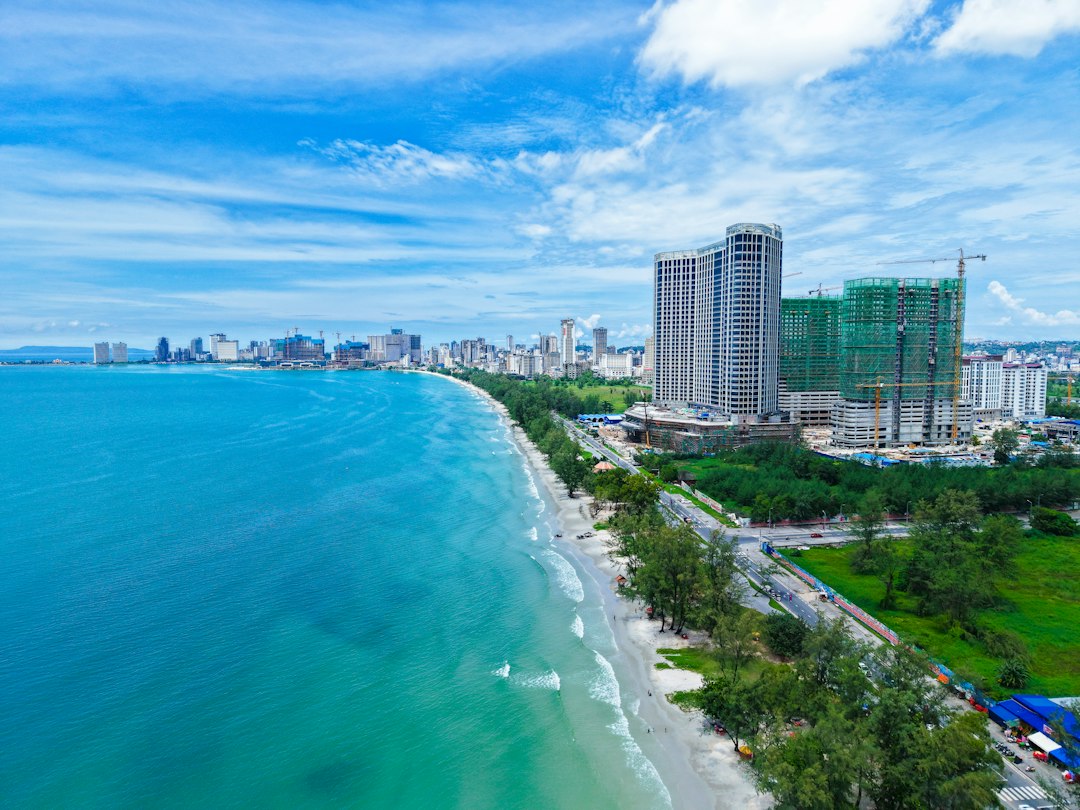
Tourism investment emerging destinations is not a trend anymore — it’s a massive reallocation of global capital. And frankly, it’s turning the entire travel industry on its head.
For decades, the world’s tourism map was basically locked in place. Paris. London. New York. These cities hoarded the money, the infrastructure, the visitor numbers. Meanwhile, thousands of places with genuine cultural depth, natural beauty, and economic potential languished in obscurity, starved of the one thing they actually needed: real, committed capital.
That’s changing. Fast.
Today, close to 12% of global tourism investment reaches emerging and secondary destinations, despite these regions accounting for more than half of global growth potential. That gap — between where the money is going and where the growth actually lives — is the entire story. Emerging destinations aren’t just competing anymore. They’re winning. And if you’re not paying attention, you’re missing one of the biggest economic shifts of this decade.
Here’s what’s actually happening on the ground. And why it matters for travelers, investors, and local communities alike.
How Tourism Investment Emerging Destinations Creates Immediate Economic Impact
The math here is straightforward. Tourism money doesn’t just sit in a bank account somewhere. It ripples.
By 2024, tourism employment surpassed one million jobs, helping absorb new labour-market entrants while catalyzing SME growth and regional economic diversification. One million jobs. That’s people who now have steady work, who can send kids to school, who can build something. In emerging economies, that’s not just economics. That’s life-changing.
A single hotel opening in a secondary city doesn’t just create 200 jobs at the front desk and in kitchens (though it does that). It creates jobs in construction, in supply chains, in taxi services, in restaurants that feed hotel workers. You get multiplier effects that ripple outward for years.
I spent a week in Bhutan a few years back. Relatively small tourism by global standards, but the infrastructure investment required to handle growing visitor flows? It transformed the entire country’s capacity to service its own economy. Roads improved. Internet connectivity expanded. Airport modernization created engineering jobs that spilled into adjacent sectors.
Here’s the real part, though. This is not a demand problem, but a readiness and risk allocation challenge, where capital follows predictability, governance and long-term planning rather than promotion alone. You can’t just wish tourism into a place. You need reliable electricity. Good visa processes. Safe airports. That infrastructure unlocks everything else.
The Investment Pipeline: Where the Real Money is Flowing in 2026
Tourism investment emerging destinations is hitting record levels because the returns are real, and early-stage investors are already cashing in.
Reshaping the global travel map through a $402 billion investment pipeline in China and ₹5,500 crore in sanctioned Indian projects, a highly competitive era of tourism infrastructure is taking shape. That’s not hype. That’s capital allocation at scale.
China’s State Council has approved its 15th Five-Year Plan (2026–2030) targeting 190 million annual inbound visits, India is upgrading 40 iconic centers and 53 air connectivity routes, and Saudi Arabia is investing billions in Vision 2030 megaprojects like AlUla, Jeddah Central, and Aseer.
Why? Because these governments understand something that Western tourism boards haven’t fully grasped yet: tourism is economic infrastructure. It’s not a luxury. It’s the foundation for jobs, foreign exchange, and regional balance.
Saudi Arabia’s case is particularly instructive. Saudi Arabia’s 35% year-on-year growth is the most striking example of deliberate top-down tourism construction — the country has invested massively in hospitality infrastructure under Vision 2030. They didn’t stumble into this. They planned it. Funded it. Executed it. And now travelers who would never have considered visiting are booking trips.

Tourism Investment Emerging Destinations Transforms Secondary Cities Faster than Anyone Predicted
The shift away from major metropolitan centers is now undeniable. Travelers increasingly favoring shorter-haul and regional destinations amid higher costs and uncertainty. When visiting Paris costs $350 a night and Hanoi costs $60, the math becomes obvious.
Asia Pacific is expected to be the fastest growing regional market with a projected share of 28.5% in 2026, driven by rapid middle-class expansion, rising incomes, and accelerating urbanization. Countries like China, India, and Southeast Asian nations represent the frontier for travel industry growth, with improving air connectivity and substantial infrastructure investments fueling this expansion.
But here’s what makes this different from past growth cycles: it’s not just happening in a few marquee destinations. Kenya, Tanzania, Morocco, South Africa and Rwanda all recording strong inbound growth driven by safari tourism, cultural tourism, and improving air connectivity.
Rwanda specifically has become almost mythic in tourism circles. Rwanda transformed itself into a premier destination for eco-tourism, leveraging its mountain gorillas and conservation efforts. That didn’t happen by accident. Years of deliberate infrastructure investment, visa policy reform, and destination marketing created the conditions for growth.
The catch? These successes create competition. Every emerging destination now sees what Rwanda did and wants to replicate it. That’s healthy pressure. It forces investment quality to rise.
The Technology and Digital Backbone Behind Emerging Tourism Investment
Here’s something most tourism articles gloss over: you can’t actually do tourism investment emerging destinations without modern digital infrastructure.
Online channels account for 72% of all travel bookings globally in 2026, with mobile devices driving 54% of all travel searches and 41% of completed bookings. If your destination doesn’t have a booking system, a website that doesn’t look like it’s from 2003, and payment processing that works, you’re essentially invisible to 70% of potential visitors.
The development of artificial intelligence is reshaping the tourism market dynamics in terms of highly customized journey planning, pricing, and customer engagement. Some of the top players in this sphere are applying generative AI to offer destination recommendations, automation of trip planning, and multilingual customer support.
A small hotel in Vietnam or Colombia now needs the same digital tools as a luxury property in Barcelona. That’s expensive. That’s why public-private partnerships have become critical — governments funding digital infrastructure, private operators running the hospitality layer. Blended finance, public–private partnerships and innovative risk-mitigation tools will be critical to mobilize capital where it is needed most.

Latin America and the Untapped Regional Growth
Latin America is having a moment that most tourism media outlets are still sleeping on.
Countries such as Mexico and Brazil already rely heavily on tourism as a major economic driver, while emerging markets like Colombia, Peru, and Ecuador are leveraging tourism to support regional development and infrastructure expansion. Colombia especially has gone from a place where tourism was risky to a genuine destination. Not because anything magical happened, but because of sustained investment.
Airport modernisation projects are underway in key cities including São Paulo, Mexico City, Lima, Bogotá, and Buenos Aires, aimed at increasing passenger capacity and improving travel efficiency. These aren’t cosmetic upgrades. They’re functional changes that let more planes land, let more tourists actually reach secondary cities where the real cultural experiences live.
The jobs impact is significant too. Job creation in hospitality, aviation, transport, and local services is expected to increase steadily in 2026 as visitor numbers rise. Small and medium enterprises are also benefiting from tourism-led supply chains, particularly in rural and coastal communities.
The Sustainability Challenge: Growth Without Wrecking What Makes These Places Worth Visiting
Here’s the uncomfortable truth that tourism investment emerging destinations advocates don’t always want to say out loud: rapid tourism growth can destroy the very things that make a place worth visiting.
Venice is sinking under the weight of 30 million visitors a year. Barcelona residents are literally protesting. Bali is watching its beaches erode. The question haunting every emerging destination now is: how do you capture tourism revenue without becoming a theme park of yourself?
Sustainability investment in the global tourism sector has reached an estimated $180 billion USD annually in 2026, encompassing hotel energy efficiency retrofits, renewable energy installations, plastic elimination programmes, carbon offset schemes, and community benefit tourism initiatives. That money is real. And it’s flowing into emerging destinations at a pace that would have been unthinkable five years ago.
Costa Rica has successfully mitigated environmental risks by promoting eco-tourism and enforcing strict conservation laws. It’s not perfect — no country’s sustainability approach is — but they’ve proven you can attract tourism investment while protecting your natural assets. That model is spreading.
Frequently Asked Questions
What does Tourism Investment Emerging Destinations Mean in Practical Terms?
Tourism investment emerging destinations refers to capital allocation — both public and private — flowing into lesser-known regions and secondary cities to build hospitality infrastructure, improve air and ground connectivity, and strengthen digital booking systems. In 2026, this includes everything from airport expansions in Vietnam to hotel construction in Colombia to visa policy reforms in African nations. The intent is to shift tourism flows and revenue away from overtaxed major cities toward places with genuine growth potential and authentic experiences.
Why is Tourism Investment Emerging Destinations Growing So Fast Right Now?
Three structural reasons. First, established destinations are saturated and expensive — Paris hotels run $300+ per night, pushing budget travelers toward alternatives. Second, emerging economies have improved governance and infrastructure predictability, making them less risky for large capital commitments. Third, the global travel and tourism market is valued at approximately $8.2 trillion in 2026, and investors know that growth is coming from secondary cities, not established hubs. The money follows the growth.
Can Emerging Destinations Actually Sustain Tourism Without Damaging Local Communities?
It’s possible but not automatic. Large-scale investments in aviation networks, modern airports, high-speed rail systems, and hospitality infrastructure have dramatically improved the competitiveness of many developing destinations. The difference between success and disaster is whether local communities have a seat at the planning table and whether tourism revenue actually stays in the region rather than flowing to foreign corporations. Rwanda and Costa Rica show it can work. Bali and Venice show it can fail.
Which Emerging Regions will See the Biggest Tourism Investment Growth by End of 2026?
Asia Pacific is expected to be the fastest growing regional market with a projected share of 28.5% in 2026. Within that, Southeast Asia (Vietnam, Thailand’s secondary cities), South Asia (India), and parts of Latin America (Colombia, Peru) are seeing the most active capital deployment. Africa is lagging in absolute numbers but growing faster percentage-wise, particularly East Africa (Kenya, Rwanda, Tanzania).
The Bottom Line: Tourism Investment Emerging Destinations is Reshaping Where You’ll Actually Want to Travel
The tourism industry has been fundamentally redistributed. Money that would have gone exclusively to Paris is now going to Lima. Travelers seeking authentic experiences are bypassing Barcelona and heading to secondary cities in Colombia. Investors are finally understanding that the next decade of tourism growth isn’t in established hubs — it’s in places that have the infrastructure, governance, and cultural authenticity to actually absorb and benefit from visitor flows.
That’s not hype. That’s capital discipline meeting real demand. Tourism investment emerging destinations isn’t just transforming those regions economically — it’s reshaping the entire travel experience for the people doing the traveling. Fewer crowds. More authentic encounters. Better value. Communities that still benefit from tourism without being consumed by it.
If you’re thinking about where to invest, where to travel, or where opportunity lives in tourism, the message is clear: stop looking at the traditional destinations. The real action is elsewhere. And it’s only accelerating in 2026.
