

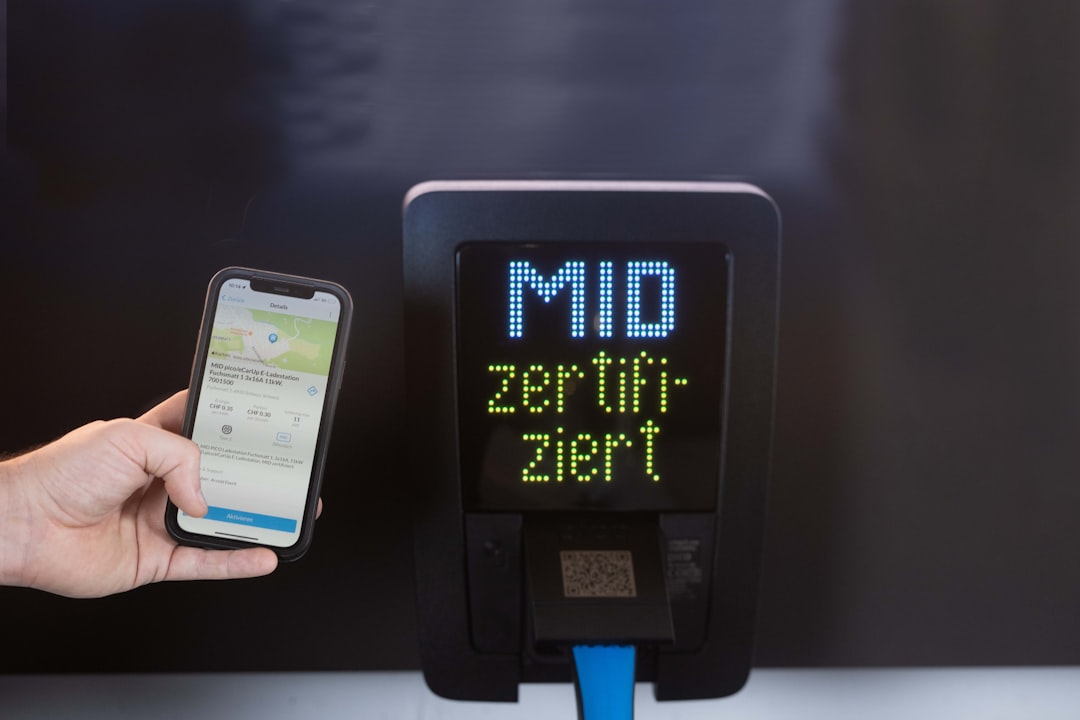
Digital identity systems online are fundamentally transforming the way you prove who you are in a digital world. Not with passwords scribbled on Post-it notes and reused across twelve websites, but with biometrics, cryptographic proofs, and wallets that actually put you in control. The shift is accelerating faster than most people realize—and honestly, most people are nowhere near ready for it.
The Real Problem with Everything Before this
You know what’s broken? Passwords. Eighty-three percent of data breaches involve compromised or stolen passwords, and 73% of users reuse the same password across multiple accounts. This isn’t some edge case or niche problem. This is the security foundation of the modern web, and it’s held together with duct tape.
The catch? Biometric authentication reduces login time by 50% compared to passwords. You can log in faster and be more secure. That single fact should have killed password authentication years ago. But institutional inertia is a powerful force.
Here’s what makes digital identity systems online so different from what came before: they’re designed for reuse. Historically, every bank, e-commerce site, and government agency ran its own identity verification gauntlet. You’d fill out forms, upload documents, answer the same questions, prove your identity again. And again.
Organizations traditionally verify users in isolation, repeating the same checks and collecting the same data each time, but digital identity management solutions increasingly enable verified identity data to be issued once and reused across multiple interactions and services.
That’s not innovation theater. That’s actually changing how we move through digital services.
Why the Market is Exploding Right Now
The digital identity market size is expected to grow from USD 64.44 billion in 2025 to USD 75.23 billion in 2026. That’s not a modest uptick—that’s a $10.79 billion jump in one year.
Three things are driving this. First: regulation is no longer optional. The eIDAS 2.0 deadline obliges every European Union member state to issue citizen wallets by December 2026, then enforces private-sector acceptance one year later, eliminating opt-out pathways for banks, telcos, and retailers. This isn’t a suggestion. It’s law.
Second, fraud is getting worse. Impersonation fraud accounts for over 85% of online attacks. When attackers can fake your face with deepfakes or create synthetic identities in hours, companies have no choice but to upgrade their defenses.
Third, user expectations have shifted completely. Customers, employees, and citizens increasingly expect digital interactions to be fast, intuitive, and consistent across services, and repeated onboarding, form filling, and re-verification create friction and abandonment. You don’t want to prove your identity forty times a year. Neither do your customers.

Digital Identity Systems Online Meet Your Wallet
The physical wallet in your pocket has worked for centuries. Your digital identity wallet might be about to do something similar—except faster, more secure, and controlled entirely by you.
Digital identity wallets are becoming a central part of modern identity architectures, allowing individuals, organizations and AI agents to securely store verified identity data and present it when needed. That’s not theoretical—it’s happening now. Apple Wallet and Google Wallet now support state digital IDs in a growing set of jurisdictions, and approximately 41% of Americans live in states where mobile driver’s licenses are active, while roughly 76% live in states with programs either live or in development.
I remember the first time I saw a mobile driver’s license work in person. The user tapped their phone at the TSA checkpoint. The agent scanned it. It took eight seconds. No card extraction, no physical fumbling, no holding up the line. Eight seconds.
Here’s what makes that actually revolutionary: Wallets enable selective disclosure, allowing users to prove age without revealing their birth date or confirm employment without exposing their full work history, and create reusable credentials that reduce friction while maintaining assurance. You’re not handing over your entire identity. You’re handing over exactly what’s needed, nothing more.
Biometric Authentication Isn’t Optional Anymore
Biometric authentication represents more than 60% of identity deployments in regulated sectors. That’s not some bleeding-edge startup move. That’s banks. Insurance companies. Government agencies.
Here’s why: Multi-factor authentication blocks approximately 99.9% of automated cyberattacks. And Advanced facial recognition achieves a 1 in 1,000,000 false acceptance rate. When your security is that solid, passwords genuinely look like a joke.
The adoption numbers are real. Enterprise passwordless authentication adoption increased by more than 20% year over year. Not 2%. Not 5%. Twenty percent. More than 65% of compliance leaders increased spending on AI-based fraud detection tools in 2026 budgets.
But here’s the honest part: Generative AI can now produce synthetic identity profiles in less than 24 hours. The same technology that makes you safer also makes it easier for bad actors to fake their way in. Identity vendors detect more than 1 million deepfake attempts monthly in high-risk sectors.
This is where digital identity systems online get serious. Biometrics plus AI plus behavioral analytics plus continuous verification. You’re not just logging in once. You’re being verified throughout your entire session.
The Problem Nobody Talks About: Non-Human Identities
This is where 2026 gets weird.
Independent 2025 studies report roughly 44% year-on-year growth in non-human identities, and machine-to-human ratios are projected to grow from around 80:1 to 144:1 in some environments. Your organization doesn’t just need to authenticate people anymore. It needs to authenticate bots, AI agents, and automated systems acting on someone’s behalf.
In 2026, autonomous and agentic systems will be treated as full participants in the identity lifecycle—registered, authenticated, authorized, observed, and contained just like human users, giving rise to a Know-Your-Agent mindset requiring IAM/CIAM controls capable of monitoring both people and AI bots acting on their behalf, with clear accountability, audit trails, and containment playbooks.
That’s not hypothetical. Only 23% of consumers say they trust companies to use AI responsibly with their data, and 77% worry about AI agents acting on their behalf online.
Decentralized Identity: The Architecture that Hands Power Back to Users
Here’s the thing: centralized identity systems are convenient for companies. They’re a nightmare for privacy.
Decentralized Identity is an innovative approach to managing digital identities where control resides entirely with the users rather than centralized authorities, allowing individuals to securely manage and share their digital credentials without relying on a central database or single point of control.
Instead of your identity living on some company’s server (and being vulnerable to the inevitable data breach), it lives in your digital wallet. You control what gets revealed. You control who sees it. Credentials are securely stored by the user in their digital wallet—giving them full control over their data.
The decentralized identity market is projected to reach $7.4 billion in 2026, reflecting increasing enterprise and public sector investment. This isn’t theoretical blockchain theater—enterprises are writing serious checks.
Identity is no longer exclusively about people, as enterprises are managing rapid growth in non-human identities, including bots, devices, and AI agents, with reported year-over-year growth of 44% and machine-to-human ratios reaching as high as 144:1 in some environments.
Government-Backed Wallets are Becoming Real
The European Union is making this mandatory. The US is moving faster than anyone expected. Asia is betting billions.
European Union digital ID wallet initiatives aim to serve nearly 450 million citizens under updated regulatory frameworks. More than 30 U.S. states have launched or piloted mobile driver’s license programs.
This isn’t scattered innovation. This is coordinated, government-led digital identity infrastructure. And approximately 1 billion people are entering the global addressable market for digital identity as emerging markets transition toward user-controlled wallet models.
One billion people. Not millions. A billion.
Frequently Asked Questions
What Exactly are Digital Identity Systems Online?
Digital identity systems online refer to the ecosystem of technologies, platforms, and services that enable individuals, organizations, and digital entities to prove who they are online in a secure, reliable, and privacy-respecting way. They include authentication methods, identity verification, wallet storage, and governance frameworks. The key shift is moving from passwords and siloed verification toward reusable, interoperable credentials you control.
How do Digital Identity Systems Online Reduce Friction in Onboarding?
Instead of filling out identical forms at every new service, digital identity systems online let you verify once and reuse that verification. Digital identity management solutions enable verified identity data to be issued once and reused across multiple interactions and services, reducing onboarding friction, lowering verification costs, and improving consistency while still allowing organizations to control risk and assurance levels. You prove who you are, and then you just present that proof wherever it’s needed.
Why do Companies Care About Digital Identity Systems Online if Passwords Still Technically Work?
Because passwords don’t work. Eighty-three percent of data breaches involve compromised or stolen passwords, 73% of users reuse the same password across multiple accounts, and multi-factor authentication blocks approximately 99.9% of automated cyberattacks. Digital identity systems online with biometrics and continuous verification offer stronger security, faster login, and lower costs for user support. For businesses, that math is compelling.
Are Digital Identity Systems Online Actually Private?
It depends on the architecture. Decentralized systems put control in your hands—you decide what’s revealed. With decentralized identity, users fully own and control their digital identities and decide who accesses their personal data and when. Centralized government wallets might be secure but less private. The real question isn’t whether they’re private—it’s whether you trust the entity controlling them.
The Takeaway: This Isn’t Coming, It’s Here
Digital identity systems online aren’t some distant future. AI-powered identity verification systems became standard in enterprise deployments during 2025. You’re already using them when you unlock your phone with your face, when mobile driver’s licenses work at airports, when banks stop asking for your password.
The meaningful action happening in 2026 isn’t the invention of new technologies. It’s the shift from fragmented, organization-specific identity checks to reusable, portable, ecosystem-based identity. It’s government wallets becoming mandatory. It’s biometrics becoming the default. It’s AI agents needing their own identities.
What actually matters for you right now: Figure out which digital identity systems online your organization relies on. Understand where your identity data lives. Get comfortable with biometric authentication (it’s more secure than you think). And when you’re asked to adopt a new digital identity wallet—whether it’s a government-issued credential or something from your bank—actually use it instead of assuming it’s security theater.
Because this time, it’s not.
