

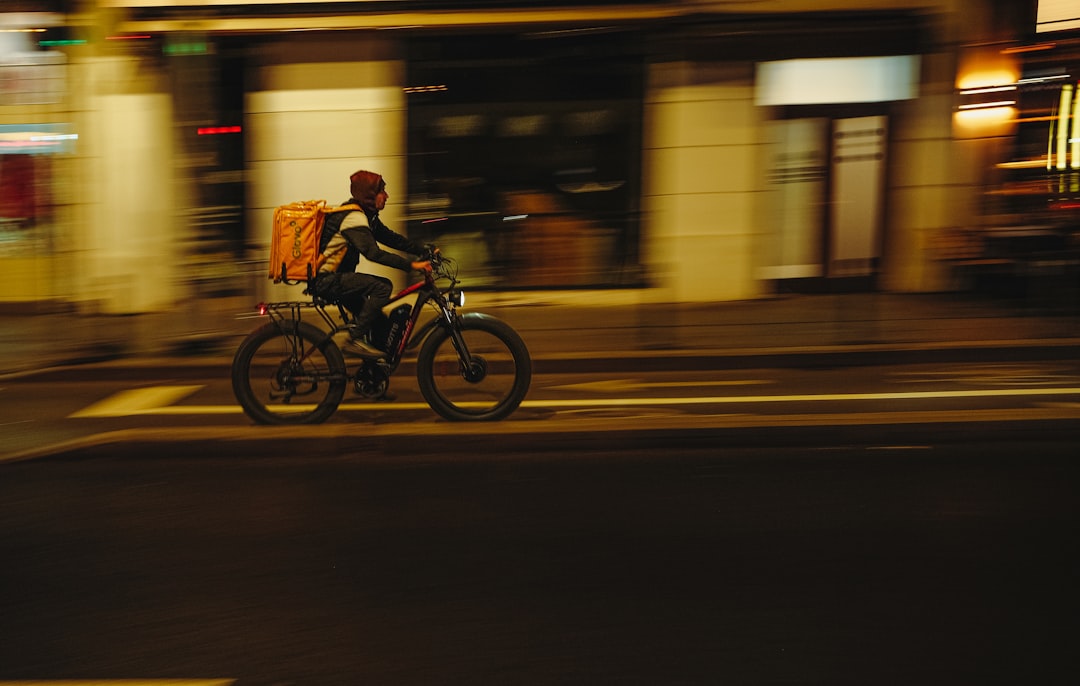
Here's the thing: instant commerce urban retail is no longer some Silicon Valley pipe dream. It's happening right now, reshaping how millions of people shop for everyday essentials. What started as a gimmick—30-minute grocery delivery, really?—has become table stakes for urban retailers. And it's not stopping.
The Seismic Shift in Consumer Expectations
Walk into any major city in 2026, and you'll see the same pattern repeating. People aren't ordering groceries anymore expecting them in 3 days. They expect them in 30 minutes (I once watched a coworker order coffee at 9 a.m., get it delivered by 9:25 a.m., and act like this was completely normal). That's the revolution.
Urban consumers increasingly expect groceries, essentials, and daily-use products to be delivered within minutes rather than days. But here's what's wild: nearly a quarter of consumers now expect ultra-fast grocery delivery within a 2-hour window. And that 2-hour window? It used to be the premium option. Now it's the baseline.
The numbers prove this isn't hype. 37.9 percent of online shoppers conducted most, all or almost all of their purchases through a rapid delivery service in the past year. That's not a niche. That's mainstream consumer behavior. Instant commerce urban retail has become the dominant way cities shop.
Instant Commerce Urban Retail Market is Exploding
Let's be direct about the scale here. The quick commerce market will grow from $129.73 billion in 2025 to $161.93 billion in 2026 at a compound annual growth rate (CAGR) of 24.8%. That's not a trend line. That's a hockey stick.
By 2030, this isn't even close—the quick commerce market will grow to $358.16 billion in 2030 at a compound annual growth rate (CAGR) of 22%. Cities are becoming the epicenter of this shift. Major platforms including Meituan Flash Shopping, JD Daojia, and Ele.me have collectively expanded their coverage to over 300 cities, with average delivery times dropping to 28 minutes in tier-one cities.
The competition among giants is fierce. Walmart Express is the most-used rapid delivery service, a title it has held since 2023. But Amazon is making a serious move. Amazon's rapid delivery jumped to 42% respondent usage in 2026 from just shy of 35% respondent usage in 2025. Meanwhile, DoorDash surpassed Instacart for the first time this year, reporting a 45.2% respondent usage compared to Instacart's 43.9%.
This is war in real time. And instant commerce urban retail is the battlefield.
The Infrastructure that Makes Ultra-Fast Delivery Possible
You can't deliver a coffee in 25 minutes without rethinking logistics entirely. That's why micro-fulfillment centers—smaller warehouses positioned hyperlocally—have become the backbone of instant commerce urban retail. These aren't your grandpa's distribution hubs in the suburbs. They're in city neighborhoods, sometimes in a corner storefront or basement, positioned to serve a 2-3 mile radius.
Same-day fulfillment from micro-warehouses rose by 56%, with California, New York, and Texas accounting for 41% of total instant retail transactions. That's not just growth. That's infrastructure transformation at scale.
The cost structure? Brutal. 49% of companies cite excessive operational expenses as a major barrier to scaling instant retail models, as logistics costs per order increased by 31% in 2024 due to fuel, labor, and warehousing demands. Profit margins are getting squeezed in a way that traditional e-commerce never experienced. But the volume and customer lock-in are making it worth the pain.
Technology is the accelerator. By 2026, 50% of logistics companies are expected to adopt AI-driven route optimization software to improve efficiency and cut delivery times by 15%. That's not speculative. That's operational necessity. Without AI handling the complexity of 500 orders hitting your system simultaneously from a 2-square-mile radius, you collapse.
Why Instant Commerce Urban Retail Works in Cities (And Nowhere Else)
Let's be honest: instant commerce urban retail only works in dense, wealthy urban areas. Try ordering instant delivery in rural Montana and you're getting laughed at. The model requires density.
Cities have three things that make this possible:
First: proximity. Your order is never more than a few miles away. Second: infrastructure. Enough customers pay premiums to justify the micro-warehouse network. Third: money. Cities have it. Urban consumers increasingly expect groceries, essentials, and daily-use products to be delivered within minutes rather than days, and they're willing to pay for speed.
The catch? The quick commerce industry in Europe is anticipated to register considerable growth from 2026 to 2033 due to rising urban population density and growing sustainability-focused logistics innovation. Even as demand explodes, retailers are building this infrastructure with an eye toward sustainability—electric bikes, consolidated delivery routes, distribution systems that produce less waste than driving to a physical store six times a year.
What Instant Commerce Urban Retail Means for Traditional Retail
This is the part that's actually scary if you run a brick-and-mortar store. Instant commerce urban retail is eating same-day pickup and convenience shopping alive. Why go to CVS for a energy drink when it lands on your doorstep in 20 minutes?
Over 58% of online consumers now prefer instant delivery options from e-commerce platforms, up from 34% in 2021. That's a seismic preference shift in five years. Traditional retailers aren't extinct—but they're being pressed into a role they didn't expect: either become a fulfillment node for instant delivery platforms, or become destination retail where people actually want to spend time.
Some retailers are winning here. Around 42% of US-based retailers have launched instant retail systems, while 68% of small retailers utilize third-party fulfillment APIs. Translation: the smart ones aren't fighting instant commerce urban retail. They're integrating into it. Small retailers are using platforms like Shopify combined with DoorDash or Instacart APIs to compete without building their own logistics.
Frequently Asked Questions
What Exactly is Instant Commerce Urban Retail?
Instant commerce urban retail refers to rapid delivery of groceries, essentials, and consumer goods within minutes to hours in urban areas using microlocal fulfillment networks and fast logistics platforms. It combines on-demand delivery infrastructure with hyperlocal inventory positioning to meet consumer expectations for ultra-fast service in cities.
How Much Has Instant Commerce Urban Retail Grown in 2026?
The quick commerce market grew from $129.73 billion in 2025 to $161.93 billion in 2026 at a compound annual growth rate (CAGR) of 24.8%. This reflects explosive adoption among both retailers and consumers across major urban markets globally.
Why is Instant Commerce Urban Retail Only Viable in Cities?
Instant commerce urban retail requires population density, existing micro-fulfillment infrastructure, wealthy customer bases willing to pay premiums, and short delivery distances. Rural and suburban markets lack these prerequisites, making the model economically unviable outside urban zones.
Which Companies Dominate Instant Commerce Urban Retail in 2026?
Walmart Express remains the most-used rapid delivery service. However, DoorDash surpassed Instacart for the first time this year, reporting a 45.2% respondent usage compared to Instacart's 43.9%. Amazon is also expanding aggressively with its 30-minute delivery service.
What are the Biggest Challenges for Instant Commerce Urban Retail Businesses?
The primary challenge is cost structure. 49% of companies cite excessive operational expenses as a major barrier to scaling instant retail models. Additionally, around 56% of small and medium enterprises (SMEs) lack access to automation infrastructure, while 47% face challenges in integrating omnichannel delivery systems.
The Bottom Line: Adapt or Get Left Behind
Instant commerce urban retail isn't the future anymore. It's now. The quick commerce market will grow from $129.73 billion in 2025 to $161.93 billion in 2026, and that's just the headline number. What matters for you—whether you're a retailer, a logistics provider, or just someone who expects your groceries in 20 minutes—is this: the speed threshold has permanently shifted.
If you're running retail, you have two choices. Become part of someone else's instant delivery network, or build your own hyperlocal fulfillment capability. Half-measures don't work anymore. The consumer vote is in: instant commerce urban retail is the expectation, not the exception. The question isn't whether this will reshape your city's retail landscape. It already has. The question is whether you're ready to operate in that landscape.

1 Comment
Pingback: Rise Experience-Led Retail Major: 2026 Guide for Brands