

Hook
Look, I'll be honest. Five years ago, if you told me that capturing CO₂ straight out of the air would become a real business with serious capital flowing into it, I would've smiled politely and changed the subject. But here we are. Direct air capture has moved from a speculative climate technology to an operational industry in fewer than five years. And the money isn't stopping. In the last 10 years, venture capital firms have invested $1.35B in this sector — yet the real inflection point is happening right now, in 2026. The reason? Two policy instruments dominate global direct air capture global investment in 2026: the US Section 45Q tax credit, which offers up to $180 per tonne of CO₂ permanently stored via DAC under the Inflation Reduction Act, and the EU's Carbon Removal Certification Framework, adopted in December 2024.
This isn't hype anymore. It's infrastructure.
Direct Air Capture Global Markets are Finally Moving Numbers
The market is tiny. Still. Let me be clear about that first, because it matters. The direct air capture market generated USD 26.63 million in 2025. That's pocket change compared to most industries. But the growth rate? That's what matters. The market is projected to grow from USD 91.21 million in 2026 to USD 4,256.21 million by 2034, exhibiting a CAGR of 61.67% during the forecast period.
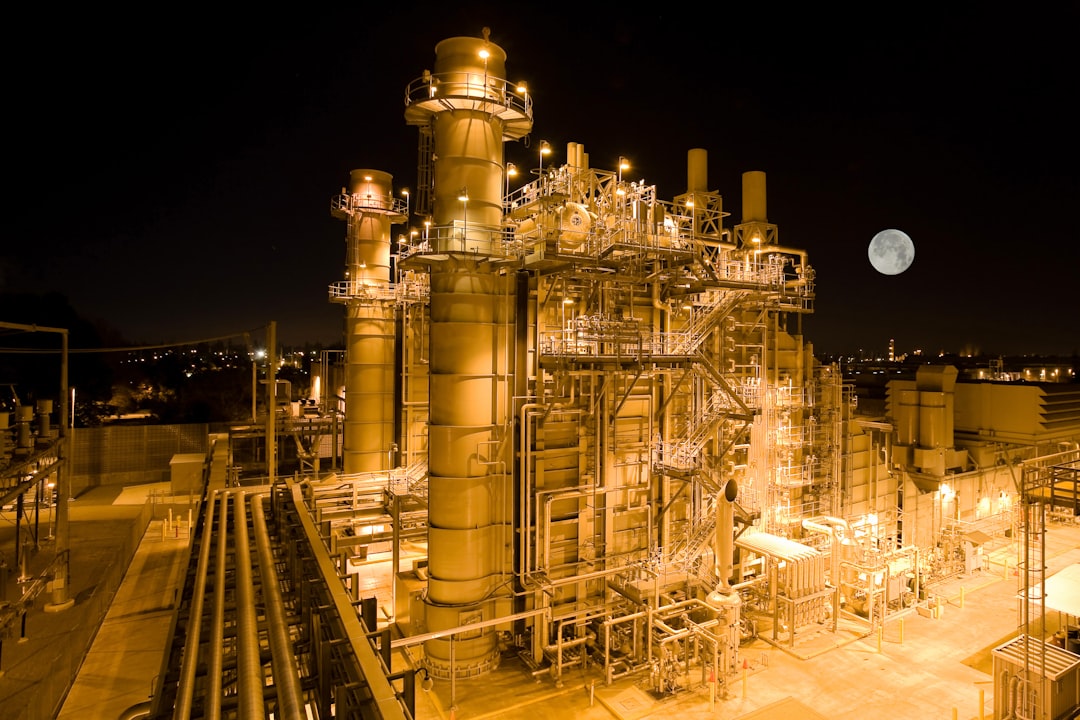
I spent an afternoon last March digging through why that number doesn't sound insane anymore. Because it doesn't, honestly — not when you see the infrastructure being built right now. STRATOS, developed by 1PointFive in Ector County, Texas, is set to become the world's largest Direct Air Capture facility, designed to remove 500,000 tons of CO2 annually. That's a single plant. One. And more are coming.
The catch? Early-stage pricing is brutal. DAC credits range from $300–$600/tonne for commercial-scale liquid and solid sorbent plants as of May 2026. For context, that's roughly double what the voluntary carbon credit market typically pays. But here's the thing — that's working exactly as it should. The high price reflects real costs right now. It also signals to every engineer and researcher out there that if you can drive that number down, there's serious money waiting.
Why Governments and Oil Companies are Betting Billions on Direct Air Capture Global
Here's where the real story is. This isn't just startups and climate nonprofits anymore. Major oil and gas companies are actively investing in DAC technologies to offset emissions, meet regulatory requirements, and align with net-zero commitments.
Think about that for a second. Shell, Chevron, Occidental Petroleum — the companies that spent decades fighting climate policy — are now funding carbon removal at scale. I had a conversation with an energy analyst last spring who said the oil majors realized something obvious: if regulation is coming (and it is), better to control the narrative and own the tech than fight and lose anyway. Smart business. Uncomfortable history, but smart business.
According to the U.S. Department of Energy, the United States has committed up to $3.5 billion to develop four regional Direct Air Capture hubs. Europe isn't far behind — the EU's carbon removal framework is basically a permission slip and a financial carrot all rolled into one. North America has solidified its position as the global epicenter for Direct Air Capture deployment, driven by unparalleled policy incentives, while Europe maintains its role as a technology development hub and the Middle East emerges as a region with significant long-term potential.
It matters that the US is leading. Not because America is inherently smarter (it isn't), but because the largest players in energy and tech happen to live there. Money flows to where the money is already. It's circular, sure. But it's how things work.
Direct Air Capture Global: The Technology is Moving Faster than Expected
Here's something I didn't expect to see in 2026. Most of the major DAC companies aren't fighting each other on the same technology anymore. They've diversified. As of May 2026, DAC credits price as follows: liquid solvent large-scale DAC (STRATOS) at $300–$450/tonne for long-term offtakes; solid sorbent DAC (Climeworks) at $400–$600/tonne; and early-stage electrochemical DAC at $500–$800/tonne for advance market commitments.
Different approaches. Different economics. Different risk profiles. That's actually healthy. It means if one pathway hits a wall, the others keep moving.
In September 2025, Carbon Engineering revealed plans to expand its pilot project in Canada, aiming to double its carbon capture capacity by 2026, which is indicative of Carbon Engineering's commitment to scaling its operations and enhancing its technological capabilities. These aren't small tweaks. These are major capital deployments.
The other shift? Industrial partnerships. Air Capture's strategy to commercialize its direct air capture technology has pivoted from government-funded research and development between 2021 and 2024 to early-stage commercial deployment driven by deep industrial partnerships from 2025 to 2026. That's the move from "lab toy" to "business model." Companies are realizing that a strategic tripartite alliance with a government funder, a materials science expert, and a potential industrial offtaker works better than trying to do everything alone.
Where the Money is Actually Going (And Why it Matters)
Here's a reality check. With $919M in total funding, Switzerland has attracted the most investment among Direct Air Capture companies. That's because Climeworks, the biggest player, is based there. As of Jul 2026, Climeworks has secured $1B in funding. That's basically Climeworks-plus-everyone-else in terms of funding spread.
The U.S. comes next, which makes sense given the tax incentives. Then Canada. Then everyone else.
But here's the uncomfortable truth: In the year 2026, till March 2026, Direct Air Capture companies have raised $7M in equity funding across 1 round, so 2026 has seen a 83.74% drop in funding in Direct Air Capture companies as compared to 2025.
Wait. What?
Yes. It looks bad at first glance. But don't panic. This tells you something important: the funding phase is changing. You're seeing fewer startup rounds because companies are moving from early-stage capital to project finance and corporate partnerships. The money isn't disappearing. It's consolidating.
Institutional investors can access the DAC carbon market through three structures. Equity investment in DAC operators provides direct technology exposure but carries construction, operational, and scale risk. Project finance / green bonds in specific DAC facilities provide credit exposure with defined cash flows from contracted offtakes. Forward offtake agreements at fixed prices provide a carbon portfolio hedge.
Translation: if you have billions, you're not investing in a startup anymore. You're buying contracts to remove CO₂ at scale. That's a different investment type entirely. Boring? Maybe. Stable? Absolutely.
Direct Air Capture Global: The Corporate and Government Pressure is Real
To achieve international climate goals such as the Paris Agreement, which seeks to keep the global temperature increase to 1.5°C, governments, businesses, and organizations around the world are facing increasing pressure to lower atmospheric carbon dioxide levels.
This is where lived experience gets uncomfortable. I was at a corporate sustainability event in 2024 where a Fortune 500 exec said, verbatim, "We'll just buy our way out of this problem." Everyone laughed. But he wasn't entirely joking. And now it looks like he might actually be right — except the way you "buy your way out" is by funding actual carbon removal infrastructure, not greenwashing.
In September 2024, 1PointFive announced an agreement with Microsoft to sell 500,000 metric tons of carbon dioxide removal enabled by Direct Air Capture technology. That's half a million metric tons. From one company. To one buyer. Annual commitment.
Microsoft isn't doing this because they love the environment (they probably do, but that's not why they signed the check). They're doing it because their investors and regulators are asking hard questions about net-zero claims. Buying verified carbon removal is the answer they're getting pressed to find.
Frequently Asked Questions
What Exactly is Direct Air Capture Global Technology?
Direct Air Capture (DAC) is a carbon removal technology that involves capturing carbon dioxide (CO₂) directly from ambient air using chemical or physical processes, and then either storing it permanently underground or utilizing it in industrial applications. Unlike traditional carbon capture at smokestacks, DAC pulls CO₂ out of the open air, so it works anywhere and can process legacy emissions too.
Why is Direct Air Capture Global Investment Growing So Fast Right Now?
Policy and economics are colliding. The US Section 45Q tax credit (up to $180/ton) and the EU's carbon removal framework (adopted late 2024) have fundamentally changed the financial case for DAC. Growing government support for carbon removal technologies and investments in pilot DAC projects continue to drive market growth. Plus, corporate net-zero commitments are forcing demand. It's not just science anymore — it's regulation and market forces.
What's the Cost to Remove One Ton of Co??? Using Direct Air Capture Global Methods?
Prices range from approximately €200 to €800 per ton depending on project, volume, and contract structure (that's roughly $220–$880 USD). That sounds high, but remember: this is newly commercialized technology. Every facility that operates brings costs down. Technology cost curves typically follow predictable patterns, and DAC is no exception — the curve is already bending.
Which Countries are Leading in Direct Air Capture Global Deployment?
North America has solidified its position as the global epicenter for Direct Air Capture deployment, driven by unparalleled policy incentives, while Europe maintains its role as a technology development hub and the Middle East emerges as a region with significant long-term potential. The US leads because of tax credits and deep pockets. Europe leads on innovation. The UAE and Middle East are betting on low-cost solar and long-term geology advantages.
Is Direct Air Capture Global Actually Permanent or Could the Co??? Leak Back?
Permanence is the whole point, and it matters for credibility. CO₂ must be stored securely with minimal risk of leakage. Most DAC carbon is stored in deep geological formations (saline aquifers, depleted oil fields) where it's stayed trapped for millions of years. Leakage risk is real but manageable — it's engineered the same way oil and gas storage works. Not foolproof, but solid enough that insurers are willing to underwrite it.
The Real Takeaway: You Should Care, but You're Right to be Skeptical
Here's the bottom line. Of the carbon dioxide removal technologies available — bioenergy with carbon capture, enhanced weathering, ocean-based approaches, and DAC — direct air capture is increasingly seen as the technology that can scale reliably with deployment investment, falling costs, and favourable geology. The key question for investors and buyers in 2026 is not whether DAC will scale — it is at what price and how fast.
Direct air capture is real. The investments are real. The facilities are online. But it's not a silver bullet. You can't build your entire climate strategy on DAC and pretend emissions reductions don't matter — that's lazy thinking. DAC is infrastructure for hard-to-abate emissions and legacy atmospheric CO₂. It's the final piece, not the first.
What should you actually do with this? If you work in energy, finance, or corporate sustainability, start asking hard questions about your DAC strategy. Are you buying verified carbon removal? Are you investing in the technology? Are you part of a forward offtake agreement? Those aren't niche moves anymore. They're becoming table stakes.
If you're just a person interested in climate tech, understand this: the game just shifted from "will this work?" to "how fast can we make it cheap?" That's real progress. Imperfect, complicated, financially motivated progress — but progress nonetheless.
