

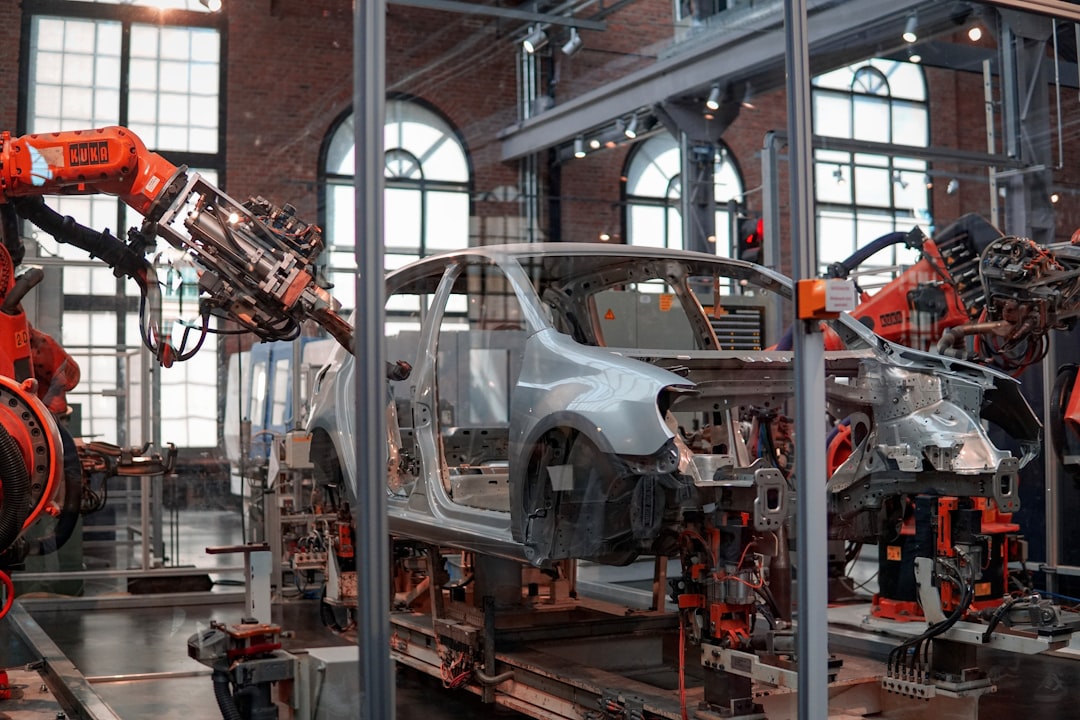
The future automotive manufacturing era is no longer something you’re waiting for—it’s already happening on the shop floor right now. Robot installations in the U.S. automotive sector rose more than 10% in 2024, and plants that adapted early are running circles around those that didn’t. The gap between a modern, AI-powered facility and a traditional one isn’t marginal. Facilities that have embraced AI-driven production, predictive maintenance, and smart factory technology are running with a meaningful productivity advantage over traditional operations, and that gap is widening every year.
But here’s what nobody tells you straight: automation isn’t just about robots replacing workers. It’s messier than that. Harder. More expensive to implement than most CEOs expect. And the real opportunity—the one that actually moves the needle—sits at the intersection of human judgment and machine speed.
Let me walk you through what’s actually changing, what’s still hype, and what you need to know if you’re involved in any part of this industry.
Where We are Right Now in the Future Automotive Manufacturing Era
Seventy percent of automotive manufacturing facilities use industrial robots, and robotic welding covers 85 percent of production processes. That’s a staggering number if you step back and think about it. But the reason it matters is less about the robot count and more about what those robots enable.
Automation used to mean picking the same task and repeating it 10,000 times. Modern automation means flexibility. When BMW set out to build a plant that could handle both internal combustion engines and electric vehicles on the same line—without a complete rebuild—they didn’t do it with manual labor. BMW now automates 95% of its body-in-white production, which allows the company to efficiently produce both internal combustion engine (ICE) and electric vehicle (EV) models on the same assembly line, without the need to rebuild their entire plant.
That’s the shift. Automation used to be about volume. Now it’s about responsiveness.
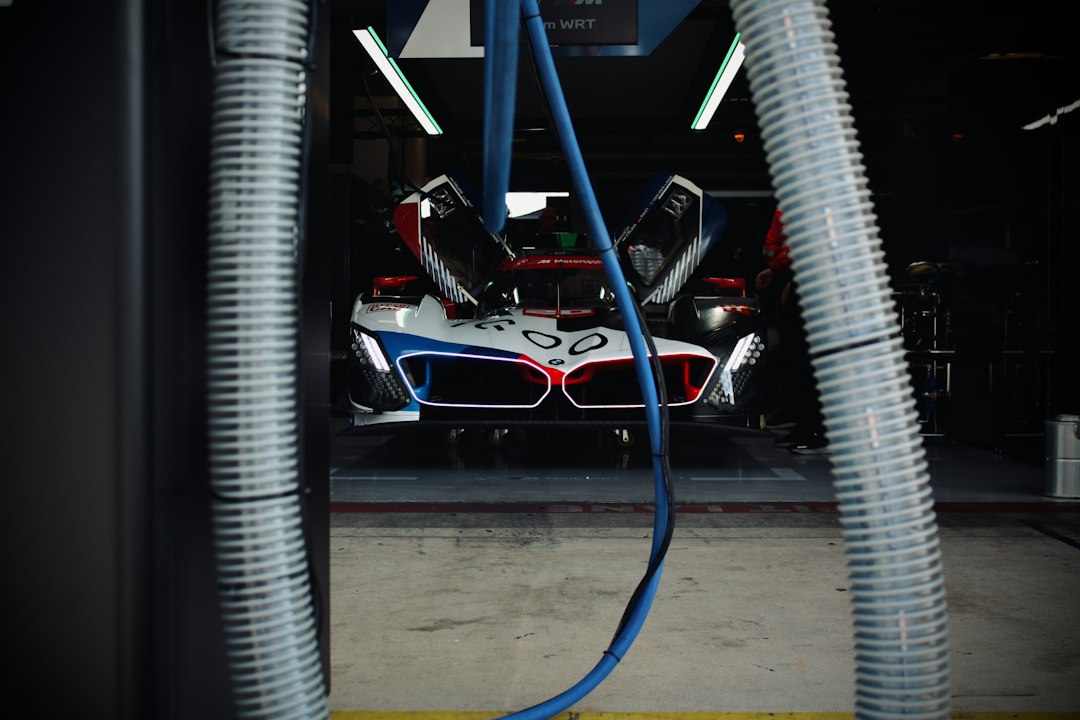
Global smart-manufacturing adoption reached roughly 47% in early 2026, which means half the industry is still figuring this out. If you work at a facility still in that 53%—and odds are you might—the pressure is real. Your customers see what the other plants are doing. They know what’s possible.
Why the Future Automotive Manufacturing Era Demands AI-Driven Predictive Maintenance
Here’s something that actually keeps operations leaders awake at night: unplanned downtime. You know how much money leaves the room when an automotive assembly line goes dark? An automotive line can lose up to roughly $2.3 million per hour (yes, per hour) when downtime happens without warning.
That’s not dramatic. That’s the reason predictive maintenance exists.
The future automotive manufacturing era changes this equation entirely. Instead of waiting for a sensor to fail, a bearing to seize, or a motor to burn out, you’re monitoring hundreds of data points in real time. AI learns what “normal” looks like for your specific equipment, your ambient conditions, your production speed. Then it whispers to you—quietly, before the crisis—that something’s about to go sideways.
Deployments report 30 to 50 percent reductions in unplanned downtime. That’s not a nice-to-have number. That’s the difference between a plant that’s profitable and one that hemorrhages money every quarter.
The catch? You need data. Clean data. Lots of it. And most plants are still hand-feeding data into spreadsheets like it’s 2006.
Electric Vehicles are Forcing a Complete Rethink
Automakers spent much of 2024 and 2025 recalibrating electric-vehicle plans as EV demand lagged earlier forecasts. That’s corporate speak for: everyone panicked, cut budgets, and delayed production lines. But the underlying force—electrification—isn’t going anywhere.
The future automotive manufacturing era in the context of EVs is different because battery packs aren’t just a different part. They’re a completely different problem. The machines that assemble a traditional engine can’t suddenly flip over to battery assembly. The jigging is different. The safety requirements are different (you’re working with high-voltage components). The testing is different.
The automotive robotics market is expected to grow from $3.31 billion in 2024 to $8.28 billion by 2033, a 10.74% CAGR, as labor costs rise and EV assembly requires new automation configurations. That’s telling you something: EV production isn’t just an extension of what came before. It’s a whole new skill set, new equipment, new layouts.
And here’s the thing—some facilities are getting it right. Over $70 billion in announced investments are flowing into new gigafactories across the country, from Ford’s BlueOval City in Stanton, Tennessee ($5.6 billion, 2,500 jobs) to the Tesla-LG Energy Solution LFP battery plant in Michigan ($4.3 billion). These aren’t incremental upgrades. These are built from scratch with automation DNA baked in from day one.
The Skills Gap that Nobody’s Solving
Let’s be blunt. Over 2 million manufacturing jobs in the US alone may go unfilled by 2030.
I spent three months last year working with a Tier 1 automotive supplier trying to hire quality engineers. Three months. For roles that should have been filled in two weeks, they were competing with remote tech jobs, getting outbid on salary, and watching candidates ghost interviews because the work felt too traditional. This is happening everywhere.
The automation wave isn’t happening in a vacuum. It’s happening while the workforce is shrinking, aging, and increasingly unwilling to do repetitive work for middling pay. So what actually solves this? Not robots doing the work alone—robots that enable your existing staff to do more valuable work.
A robot doesn’t need training on why a weld looks wrong. A human does, and that human is now free to supervise five robots instead of tending one task. That’s the math that works.

Smart Factories are Only Smart if You Have Smart Data
This is where a lot of facilities get stuck.
Real-time OEE measurement is becoming the nervous system of the smart factory—that’s “Overall Equipment Effectiveness,” the metric that tells you how much of your available time you’re actually producing at full speed. But here’s the dark secret: 40% of plants trying to deploy this are still collecting it manually. Worse, they’re not acting on it. The data sits in a spreadsheet. Nothing changes.
The future automotive manufacturing era requires what you might call “data fluency.” You need to know:
- What’s your actual cycle time per vehicle, not your theoretical cycle time?
- Where are your bottlenecks hiding (spoiler: they’re not where your intuition says they are)?
- Which equipment is running hot and about to fail?
- Which process variations are costing you quality points?
Until you can answer those questions in real time—not next Tuesday, not in a morning meeting, but right now—you’re still operating on guesses and urgency. Automation won’t save you. Hype certainly won’t.
Frequently Asked Questions
What does the Future Automotive Manufacturing Era Actually Mean for Workers on the Floor?
The future automotive manufacturing era doesn’t mean robots take every job. It means your job changes. You move from repetitive assembly tasks to quality control, robotics maintenance, data monitoring, and troubleshooting. The roles that remain demand more skill, not less—and pay better. The plants getting this right are training their existing workforce, not hiring all new people.
How Much does Automation Cost in the Future Automotive Manufacturing Era?
That depends entirely on what you’re automating. A collaborative robot arm runs $35,000–$150,000 upfront, plus integration costs that often double that. A full production line redesign runs seven figures easily. But the ROI gets interesting fast: a single prevented downtime incident (remember that $2.3 million per hour?) pays for a lot of sensors.
Can Small Suppliers Compete in the Future Automotive Manufacturing Era?
Smaller shops are actually moving faster than you’d expect. The conventional wisdom that automation is a large-enterprise advantage is breaking down in 2026—technology costs have dropped significantly, and cloud-based MES platforms have made manufacturing execution system adoption viable for plants that could never justify an on-premise SAP PM implementation. That said, scale matters for accessing capital.
Is AI Really Necessary in the Future Automotive Manufacturing Era, or is it Just Marketing?
AI isn’t necessary if you’re comfortable with 30% downtime reductions being your ceiling. But if you want 40–50% improvements—and your customers are demanding it—AI-driven predictive maintenance stops being optional. Most plants are running hybrid models: some processes are pure automation, others blend AI insight with human decision-making.
The Real Takeaway
The future automotive manufacturing era is here, and you can see it in two types of facilities: the ones adapting and the ones hoping the disruption passes. It won’t.
What actually matters isn’t the number of robots on your floor. It’s whether you’ve built a culture where data drives decisions, where workers feel secure enough to suggest improvements, and where automation serves to amplify human skill rather than replace it wholesale. Get those three things right—really right, not just a memo about it—and the technology part becomes a tool instead of a threat.
The plants winning this fight aren’t the ones with the fanciest robots. They’re the ones that treated automation as a human problem, not a technology problem. Start there.
