

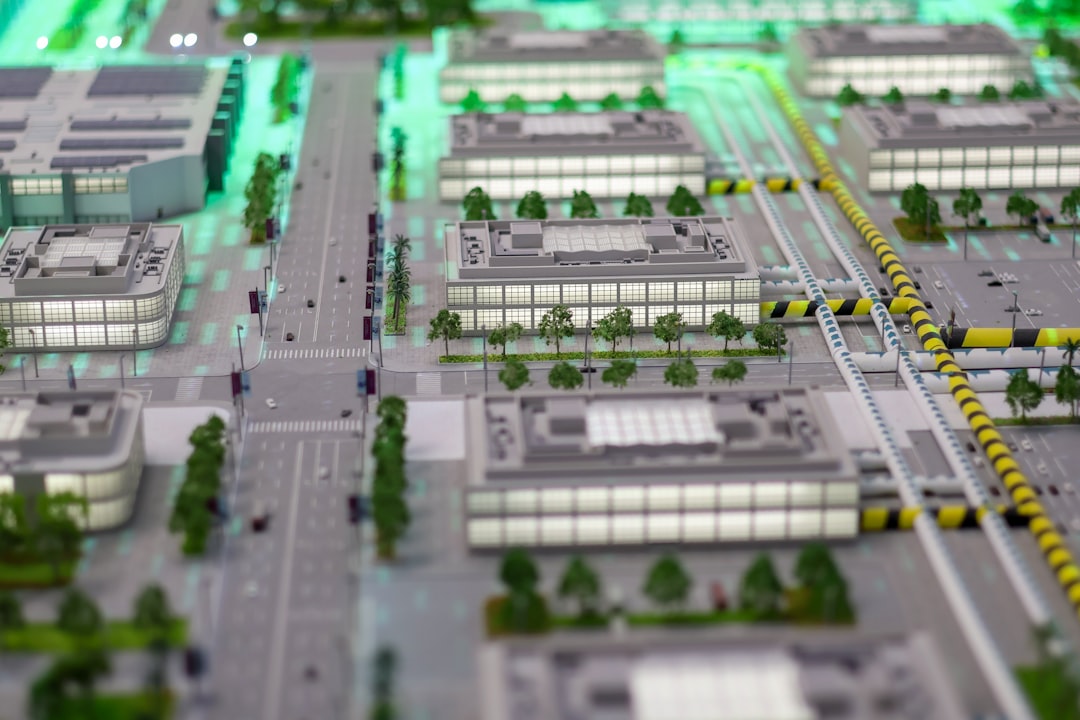
The future of smart cities isn’t a distant vision projected on conference room whiteboards — it’s happening right now, in the sensors embedded in Singapore’s roads, the AI-controlled streetlights dimming across Berlin, and the predictive water meters quietly flagging leaks before a pipe bursts under a residential block in Barcelona.
And it’s only accelerating.
The global IoT in Smart Cities market is growing from $269.36 billion in 2025 to a projected $329.41 billion in 2026, at a CAGR of 22.3%. That’s not a niche tech trend. That’s infrastructure-level transformation playing out at a speed that most city governments — and honestly, most tech commentators — are still struggling to fully process.
This article breaks down what’s actually driving that transformation, which cities are doing it right, where things still go wrong, and what it means for the people who build, market, or simply live inside these systems.
Why the Future of Smart Cities Is Bigger Than You Think
Let’s get the scale question out of the way first.
The global smart cities market — which IoT underpins — was valued at $952.13 billion in 2025 and is projected to grow from $1,187.27 billion in 2026 to $6,315.12 billion by 2034, exhibiting a CAGR of 23.20%. For context, that trajectory would make the smart cities sector larger than the GDP of most nations on earth.
But raw market numbers can mislead. Here’s what they’re actually measuring: a fundamental shift in how urban infrastructure is owned, operated, and experienced.
A smart city uses advanced technologies and data-driven solutions to enhance urban living, optimize resource use, and improve sustainability. Key components include IoT sensors, AI analytics, smart grids, and connected infrastructure — technologies that enable real-time monitoring and efficient management of utilities, transportation, and public services.
Translation: the city itself becomes a sensor-laden operating system. And you, the resident, become both a user and a data point. That’s either exciting or slightly unsettling, depending on where you sit.

The IoT Technologies Powering Future Smart Cities Right Now
Here’s where most articles get vague. They say “sensors” and “connectivity” and move on. Let’s be specific.
The rollout of 5G-Advanced networks offers unprecedented data rates and ultra-reliable low-latency communications that support immersive applications like autonomous transit and real-time public safety monitoring. Concurrently, the convergence of AI and IoT — often referred to as AIoT — enables predictive maintenance and proactive service optimization. Meanwhile, edge computing has emerged as a pivotal enabler for decentralized data processing, ensuring that mission-critical functions such as traffic signal adjustments and emergency response analytics are executed without dependence on distant cloud servers.
These aren’t buzzwords. They’re architectural decisions. And the difference between a city that builds on edge computing versus one that routes everything through a central cloud is the difference between a traffic system that responds in milliseconds and one that lags when you need it most (I’ve seen the latter in a mid-sized European city pilot that shall remain nameless — the latency was embarrassing).
The core technology stack powering smart urban environments typically includes:
- 5G and NB-IoT networks for massive device connectivity across wide areas
- Edge computing nodes for sub-10-millisecond local data processing
- Environmental, motion, and temperature sensors embedded in roads, bridges, and buildings
- AI analytics platforms that turn raw sensor data into actionable decisions
- Digital twin simulations for infrastructure planning and stress-testing
- LoRaWAN and Sigfox protocols for low-power, long-range IoT applications in utilities
5G stands at the forefront, offering ultra-low latency, high bandwidth, and massive device density — capabilities essential for industrial automation, autonomous systems, and smart city infrastructure. 5G RedCap (Reduced Capability) is emerging as a cost- and power-efficient solution for mid-range IoT applications such as wearables, surveillance systems, and industrial sensors.
The catch? None of this works if cities build these layers in silos. Integration is everything.
What Real-World Future Smart Cities Actually Look Like: Case Studies
Enough theory. Let’s talk about cities that have moved past the pilot stage.
Singapore: The Benchmark Nobody Can Ignore
I spent time reviewing Singapore’s GovTech documentation last year, and the detail is genuinely impressive — not in a PR way, but in an engineering way. Singapore’s Smart Nation initiative, first launched in 2014, aims to create a hyper-connected city where IoT devices streamline daily life. By 2025, the city-state had deployed an intricate network of sensors, edge computing nodes, and AI analytics to manage everything from traffic flow to healthcare delivery.
The results are concrete. IoT-enabled traffic sensors and vehicle-to-infrastructure communication have cut peak-hour congestion by 15%. Smart grids and IoT-connected buildings reduced energy consumption in commercial districts by 12% since 2023. And more recently, Singapore’s Smart Nation initiative integrated IoT-enabled infrastructure alerts and AI-powered traffic updates into its MyTransport.SG app in April 2025, delivering real-time infrastructure status and predictive transit management to the entire urban network simultaneously.
That’s not a pilot. That’s a city-wide operating system. Singapore’s Open Digital Platform (ODP), a digital infrastructure developed for the country’s first smart district — Punggol Digital District — acts as a “master language translator,” enabling seamless integration and optimisation of various systems within the region.
Berlin: Proving Sustainability ROI
You don’t have to be a city-state to get results. Berlin’s 2024 AI street lighting deployment achieved a 40% electricity reduction in test districts through real-time sensor-driven control and AI load optimisation. Forty percent. That’s not an incremental improvement — that’s a structural change in how energy is consumed, and it directly cuts municipal operating costs.
Asia-Pacific: Where Scale Is Happening Fastest
Asia-Pacific now holds the largest share of global IoT device installations in smart city environments — approximately 46% — with deployment density exceeding 2,800 sensors per square kilometre in major urban zones. According to Fortune Business Insights’ smart cities market analysis, demand for IoT-based energy management and transportation systems is one of the top growth drivers for the broader sector.
The Messy Reality: Challenges That Future Smart Cities Must Solve
Honestly? Not everything works as advertised.
The biggest gaps aren’t technical. They’re structural. Cities buy sensors from Siemens, analytics from IBM, and connectivity from Huawei — and then spend two years realising none of it talks to each other cleanly (I had a conversation with a city IT director in 2025 who described exactly this scenario after a $40 million smart infrastructure rollout).
The high costs required for implementation and the worries about data privacy and the difficulties associated with system integration create barriers to market adoption. That’s a polite way of saying: procurement is broken, privacy laws vary wildly by jurisdiction, and legacy infrastructure makes integration a nightmare.
The cybersecurity problem is also real and growing. Cybersecurity risks are increasing as billions of IoT devices come online, making data protection, device authentication, and regulatory compliance critical concerns.
Singapore has addressed this head-on. With 1.2 million IoT devices, Singapore is a prime target for cyberattacks. The city has responded by adopting post-quantum cryptography, with NIST-standardized algorithms deployed in 60% of government systems by July 2025.
Most cities aren’t there yet. Mostly. The gap between the leading smart cities and the laggards is widening, not narrowing.
Future Smart Cities and the Sustainability Imperative
Here’s the thing. The IoT-in-cities conversation used to be almost entirely about efficiency and convenience. That’s shifted significantly.
The growth in the forecast period can be attributed to expansion of smart city investments, integration of AI-driven city analytics, growth of connected transportation systems, rising focus on sustainability goals, and adoption of city-wide data platforms.
Sustainability is no longer a nice-to-have. It’s a procurement requirement in the EU and increasingly baked into federal infrastructure funding in the US. The U.S. smart cities market is expected to grow at a significant CAGR of over 27% from 2025 to 2030. A significant driver of that? Federal IIJA infrastructure funding actively rewarding smart, connected, energy-efficient deployments.
The energy management application alone is transformative. The energy management segment accounted for the largest market share in 2024, owing to growing energy demand that sparked the adoption of virtual power plants, which operate on AI, machine learning, and IoT to provide security and efficiency.
Waste management is the next frontier. The waste management segment is expected to witness the highest CAGR from 2025 to 2030, with several governments approaching system integrators and OEMs for smart trash bin installation across various cities. (Yes, really — IoT-enabled bins that signal when they’re full and optimise collection routes are a $100M-plus opportunity.)
According to The Business Research Company’s IoT in Smart Cities Global Market Report, the market is projected to reach $742.23 billion by 2030, driven substantially by sustainability mandates and smart infrastructure spending.
Who’s Building Future Smart Cities — and Who’s Getting Left Behind
The corporate players aren’t who you’d expect. Yes, Cisco, Siemens, IBM, and Microsoft are involved. But the real action is in the mid-market — the system integrators, the protocol specialists, the edge-hardware manufacturers you’ve never heard of.
Leading companies in the smart city IoT arena distinguish themselves through end-to-end solution portfolios spanning hardware manufacturing, software development, and service delivery. Established networking and telecommunications providers have fortified their offerings with edge compute platforms and robust security frameworks, while industrial conglomerates have scaled sensors and gateway production to align with resilient supply chains. Specialty software firms continue to innovate analytics stacks that transform raw IoT data into actionable insights.
Geographically? North America is expected to generate the highest demand due to effective governmental policies, state-of-the-art digital connectivity, and early deployment of IoT devices. In addition to having significant investments in smart cities and leading technology players, it also boasts a great deal of public-private partnership in its market.
But Asia Pacific is expected to grow fastest due to fast urbanization, extensive smart city developments, and increased government funding in nations like China, India, Japan, and South Korea — a large urban population and considerable infrastructure spending qualifying it as an emerging market.
The cities getting left behind? Mostly mid-sized metros in developing regions that have the vision but lack the technical talent pipeline and the procurement frameworks to execute. The gap is real. Fixing it requires more than money — it requires governance.
Frequently Asked Questions
What is the role of IoT in the future of smart cities?
IoT forms the sensory backbone of future smart cities. Connected devices — embedded in roads, buildings, water systems, and public infrastructure — collect continuous real-time data that AI platforms use to automate decisions, predict failures, and optimise resource use. Without IoT, a smart city is just a city with a website. The sensors are what make responsiveness possible at scale.
How will future smart cities affect everyday urban life?
Future smart cities will make daily urban life measurably more efficient and (in well-governed deployments) safer. Think: traffic systems that reroute in real time, bins that never overflow, streetlights that dim when streets are empty, and healthcare wearables that flag problems before you feel them. The flip side is surveillance creep — which is why governance frameworks matter as much as the technology itself.
What are the biggest challenges facing future smart cities in 2026?
Three dominate right now. First, cybersecurity — billions of connected devices create an enormous attack surface that most municipal IT teams are underprepared for. Second, interoperability — proprietary systems from different vendors often fail to integrate cleanly, creating expensive data silos. Third, the equity gap — smart city investment tends to flow to already-wealthy districts, widening disparities within the same city.
Are future smart cities actually sustainable, or is that just marketing?
Both, honestly. The energy efficiency gains are real — Berlin’s 40% electricity reduction from AI streetlighting is documented, not a press release. But building and running IoT infrastructure at scale has its own carbon and e-waste footprint. The net sustainability math only works if cities prioritise energy-efficient protocols (NB-IoT and LoRaWAN over always-on cellular, for instance) and plan for device end-of-life from day one.
Which cities are the best examples of future smart cities today?
Singapore is the most cited and most studied benchmark globally, particularly for transport, healthcare IoT, and integrated data governance. Copenhagen leads on sustainable mobility and energy. Barcelona pioneered smart water and parking. Berlin is ahead on AI-driven infrastructure efficiency. And in the Middle East, Saudi Arabia’s NEOM and the King Abdullah Financial District are greenfield smart city experiments operating at a scale no retrofit project can match.
The Clear Takeaway: Build for Integration, Not Spectacle
The future of smart cities will belong to the cities that refuse to treat technology as a trophy.
The ones getting it right — Singapore, Copenhagen, Berlin — aren’t the ones with the flashiest pilots. They’re the ones that chose integration over novelty, built data governance frameworks before deploying sensors, and treated IoT infrastructure as a long-term public utility rather than a short-term procurement win.
If you’re a policymaker, a tech professional, a marketer working in the urban space, or a student trying to understand where this is all going: the signal isn’t in the market-size projections (though they’re staggering). The signal is in the cities that have moved from pilot to platform. That’s the future worth paying attention to.
Stop waiting for a perfect blueprint. Start with one system, govern it well, and build outward. That’s how real smart cities get built.
Legal disclaimer: This article is for general informational purposes and is not legal advice. Laws and regulations vary by jurisdiction and change over time. Consult a qualified lawyer or attorney licensed in your jurisdiction for guidance specific to your situation.
