

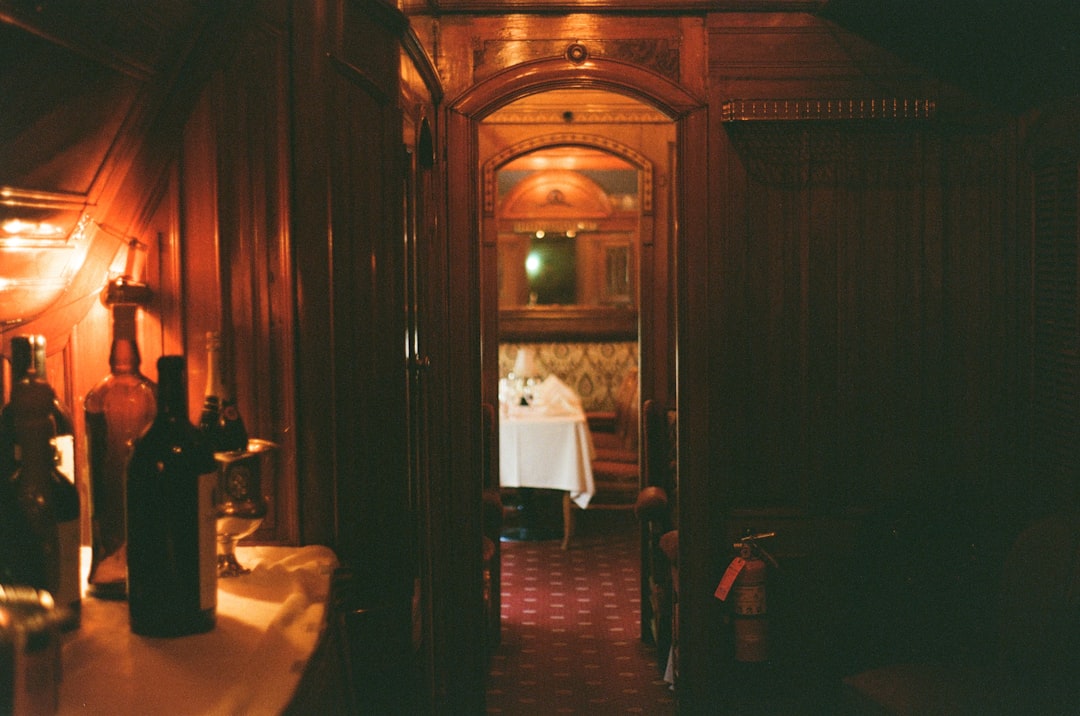
Luxury train journeys redefine modern travel not by competing with flying, but by making flying feel like the inferior option — and the numbers, the new routes, and frankly the sheer vibe of what’s launching right now all back that up.
Think about the last time you flew somewhere. The 4 a.m. alarm. The airport cattle pen. The security line. The middle seat. None of that happened on the Venice Simplon-Orient-Express, where you’re sipping Champagne in an Art Deco bar car somewhere over the Swiss Alps with a three-course dinner still to come. That’s not a fantasy. That’s Tuesday.
The rail renaissance is real, it’s global, and it is absolutely not slowing down. Here’s what’s actually happening.
How Luxury Train Journeys Redefine the Meaning of “Getting There”
For most of recorded aviation history, the plane was about speed. Get there fast. The train was for people who couldn’t afford the plane, or didn’t mind the inconvenience.
That’s completely reversed now. Luxury once meant getting there first. Now, it means having the room to breathe — a window seat that reveals a changing horizon instead of a gray wing. The airport experience, meanwhile, is quietly falling apart. The FeedbackNow Global Airports Index for early 2026 shows a sharp decline — passenger satisfaction at departure gates dropped by seven points in just one quarter, and in North America, satisfaction levels have slumped to 70 percent.
When your competition is a cramped departure gate and a $17 airport sandwich, a private suite with butler service starts looking pretty compelling.
According to 2024 figures, the global luxury train travel market reached USD $1.92 billion, reflecting the growing appeal of exclusive and immersive travel experiences, and is expected to expand at a CAGR of 7.1% from 2025 to 2033. That’s not niche. That’s a genuine market shift — and operators are responding with some of the most ambitious rail projects in a generation.
The Trains You Actually Need to Know About in 2026
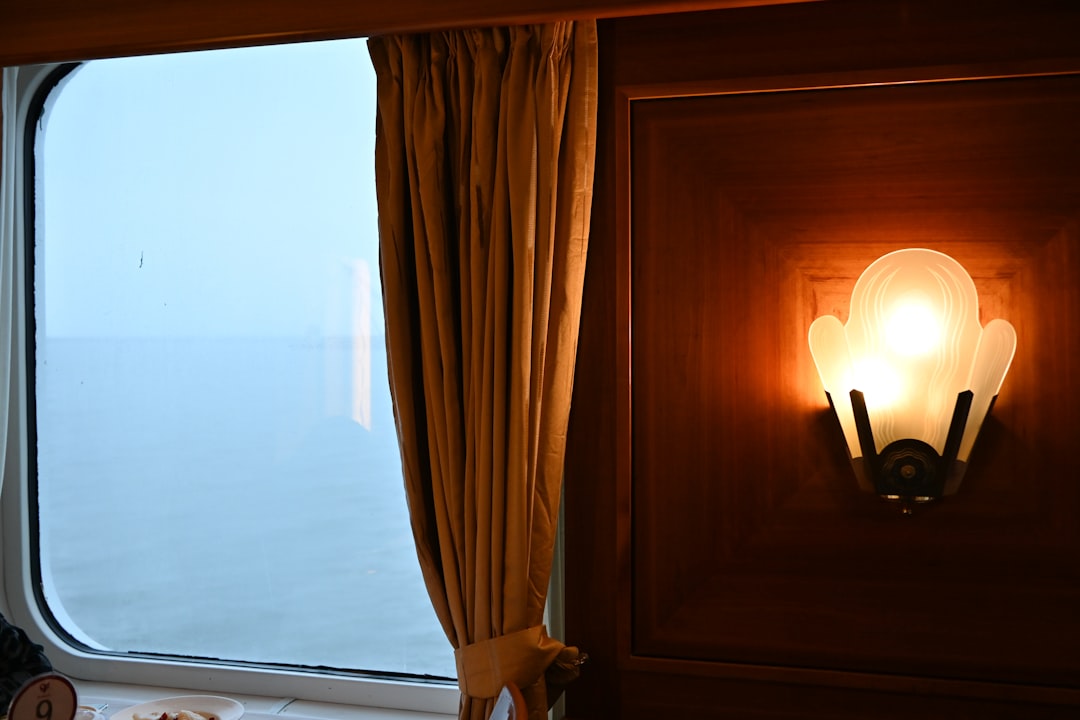
Here’s the thing — the luxury rail market isn’t just the Venice Simplon-Orient-Express (though yes, that train is still extraordinary). The landscape has expanded dramatically, and 2026 is genuinely one of the most exciting years in recent rail history.
The Venice Simplon-Orient-Express (VSOE), Europe An icon of Art Deco design and an enduring symbol of luxury, the Venice Simplon-Orient-Express is a true classic, offering a singularly elegant rail adventure. Authenticity is everything here — the train comprises the original sleeping cars of the 1920s and 30s, along with three dining cars: Etoile du Nord, Cote d’Azur and L’Oriental. The train recently introduced the L’Observatoire Suite, a carriage-sized accommodation priced at roughly USD $103,000 per journey, currently considered the most expensive rail suite in the world. Yes, really.
Dream of the Desert, Saudi Arabia Brand new for 2026. Set to become the Middle East’s first ultra-luxury train, Dream of the Desert will debut in late 2026, introducing a 14-car, 33-suite train that accommodates up to 66 guests, with interiors blending Saudi heritage with contemporary elegance, designed in collaboration with Italian artisans.
Golden Eagle Silk Road, Central Asia Launching in September 2026, Golden Eagle Luxury Trains is partnering with GeoEx on a 22-day expedition following one of history’s most storied trade routes — a 2,400-mile journey running from Beijing to Tashkent, crossing six countries including China, Kazakhstan, Kyrgyzstan, Tajikistan, Turkmenistan and Uzbekistan. Fares for this journey start at US $50,700 per person.
Al Ándalus, Spain A refurbished vintage train, Al Ándalus returned to the rails in April 2026, offering a new seven-day, six-night luxury roundtrip from Madrid through Andalucía’s sunlit south, carrying up to 64 guests on a 480km route through Córdoba, Seville, Cadiz, Extremadura and Castilla-La Mancha. Fares start from €6,600 per person — which, compared to the VSOE’s L’Observatoire, practically counts as budget travel.
Railbookers 60-Day World Journey For the genuinely committed. Railbookers has unveiled a 60-day round-the-world rail journey departing 2 September 2026, stringing together some of the world’s most luxurious trains — including Canada’s Rocky Mountaineer, Belmond Royal Scotsman, Venice Simplon-Orient-Express, Maharajas’ Express, Rovos Rail and the Eastern & Oriental Express — spanning Europe, Asia, Africa and North America, priced at US $125,000 per person. If you’re booking that one, you probably already know who you are.
Why Luxury Train Journeys Redefine Sustainable Travel (And Mean It)
Greenwashing is everywhere in luxury travel right now. Most of it is cosmetic — a bamboo toothbrush in your $900-a-night hotel room, congratulations. Luxury rail is different, and the sustainability argument is actually legitimate here.
A significant driver is the global trend toward sustainable and responsible tourism — luxury train travel, by nature, promotes slower, more environmentally conscious journeys compared to air or car travel. Operators are investing in eco-friendly technologies, sustainable sourcing for onboard dining, and collaborations with local communities to minimize environmental impact and promote regional economies.
But it’s not just carbon math. There’s an economic argument too. Rail is a catalyst for regional growth that air travel cannot match — while planes fly over rural landscapes, trains move through them, creating a direct physical link between high-spending travelers and remote communities. Routes like the Britannic Explorer are designed to highlight local craftsmanship — when a train stops in Cornwall or the Lake District, it is supporting local artisans, farmers, and historians through curated excursions and hyper-local sourcing.
That’s the kind of travel story that actually holds up under scrutiny.
The Onboard Experience: What You’re Actually Paying for
I once spent twenty minutes trying to explain to a skeptical friend why anyone would pay $15,000 for a single night on a train. By the end of the conversation, he’d looked up the Venice Simplon-Orient-Express on Belmond’s website and started checking availability.
The honest answer: you’re not paying for transport. You’re paying for a world that moves.
Here’s what distinguishes a luxury train experience from everything else:
- Private suites with dedicated butler service, often with en-suite bathrooms and bespoke interior design
- Fine dining that sources ingredients along the route — each dish lovingly prepared with seasonal and local ingredients, with staff inspecting lobsters from Brittany or salt marsh lamb from Mont St Michel
- Cultural immersion built into the itinerary — excursions, performances, historians, local guides
- No airports, no check-in queues, no boarding gates — you walk onto a train, and that’s it
- Observation cars with panoramic glass, often running through landscapes you genuinely cannot access any other way
Japan’s Train Suite Shiki-Shima is often regarded as the ‘epitome of modern elegance on rails,’ departing from Tokyo with 2-night/3-day or 3-night/4-day journeys across the scenic regions of Tōhoku and Hokkaido, with interiors blending traditional Japanese minimalism and futuristic design, featuring glass observation lounges, tatami-style suites, and seasonal gourmet cuisine prepared by top chefs.
Demand consistently outstrips supply for Shiki-Shima (I had to learn this the hard way after missing a booking window by about 48 hours — those seats go fast). The waitlists are real.
How Luxury Train Journeys Redefine Market Expectations Going into Late 2026
The numbers matter here. The luxury travel market was valued at USD $2,400 billion in 2025 and is projected to reach USD $2,556 billion in 2026, according to Future Market Insights analysis. Rail’s slice of that is growing faster than most segments.
According to Growth Market Reports, Europe is the largest luxury train market, followed by North America and Asia Pacific — Europe accounted for 38% of the global market share in 2024, with strong growth also seen in India, Japan, and North America.
The momentum isn’t slowing. Railbookers reported at its global summit in December 2024 that the company saw a record year with 30% growth in revenue and an already strong start to bookings in 2025, leading 31% ahead of the previous year at that time. Those figures pointed squarely at 2026 as the growth year. So far, that projection looks accurate.
Experiential travel demand is shifting luxury spending from material goods toward curated journeys — a generational preference for experiences over possessions among affluent millennials and Gen-X travelers. Rail sits right in the middle of that shift. Honestly, it’s almost perfectly positioned.
Mostly. The one caveat? Availability. You can’t impulse-book the Maharajas’ Express for next month. These trains sell out months — sometimes over a year — in advance. That’s the catch.
Africa and Asia: The Routes You’re Probably Overlooking
Europe gets all the attention. The Orient Express is famous. Fine. But some of the most extraordinary rail experiences on the planet are happening in Africa and Asia, and they deserve more coverage than they get.
Rovos Rail, Pride of Africa — South Africa. Passengers can choose from journeys ranging from classic routes like Cape Town to Pretoria — traversing Cape winelands, historic towns, and diverse landscapes — to epic cross-continent adventures spanning multiple countries and thousands of kilometres, with dining cars serving gourmet cuisine and an observation car offering panoramic views of Africa’s vast natural beauty.
The Blue Jasmine, Thailand — Launched in August 2025, DTH Travel’s Blue Jasmine is a nine-day luxury rail journey using a beautifully restored Japanese sleeper train to offer a boutique-hotel-on-wheels experience across Bangkok, Ayutthaya, Sukhothai, and Chiang Mai, with private cabins, fine dining, and limited passenger capacity for an intimate slow-travel experience.
The Maharajas’ Express, India — Regarded as among the most prestigious trains in the world, the Maharajas’ Express blends royal heritage with modern luxury, operated by India’s IRCTC with curated routes through Rajasthan and beyond. Top-tier cabins can exceed $25,000 for full journeys.
These aren’t consolation prizes for travelers who couldn’t get onto the VSOE. These are genuinely world-class experiences in their own right.
Frequently Asked Questions
What Makes Luxury Train Journeys Redefine Travel Compared to Flying First Class?
Luxury train journeys redefine travel by making the journey itself the destination, not just the transport. Flying first class gets you to a city faster — but on a luxury train, you’re watching the Swiss Alps slide past your private suite window while a butler pours Champagne and dinner is sourced from towns you’ll pass in an hour. The scale, pace, and intimacy of rail travel simply cannot be replicated at 35,000 feet.
How Much do Luxury Train Journeys Cost in 2026?
Prices range enormously. Entry-level luxury train experiences on routes like the Al Ándalus in Spain start from around €6,600 per person for a week-long journey. Mid-range options like the Golden Eagle Silk Road run from about $50,700 per person for 22 days. At the top end, the Venice Simplon-Orient-Express’s L’Observatoire Suite is priced at approximately $103,000 per journey — and yes, people book it.
Do Luxury Train Journeys Redefine Sustainable Travel in a Meaningful Way?
Yes, and more genuinely than most luxury travel marketing would have you believe. Rail is dramatically lower in carbon emissions than air travel over equivalent distances, and luxury train operators increasingly source food locally, work with regional communities, and design routes that channel spending into areas bypassed by airports entirely. The sustainability case is real, not just a talking point.
Which Luxury Train Routes are New in 2026?
Several major routes are launching or resuming in 2026: Saudi Arabia’s Dream of the Desert (late 2026), the Golden Eagle Silk Road from Beijing to Tashkent (September 2026), the Al Ándalus roundtrip through Andalucía (April–October 2026), Le Grand Tour across France (June 2026), and Railbookers’ 60-day round-the-world journey departing September 2026. It’s a genuinely strong year for new rail launches.
How Far in Advance do You Need to Book a Luxury Train Journey?
For most top-tier trains, plan 6 to 12 months ahead — minimum. Trains like Japan’s Shiki-Shima have waitlists that stretch considerably longer, and popular VSOE routes during peak season sell out fast. The Railbookers world journey departing September 2026 is already attracting serious interest. If you see a departure date that works, book it. Waiting is usually the wrong call.
The One Takeaway Worth Keeping
The real reason luxury train journeys redefine modern travel isn’t the price tag, the butler, or the Champagne (though none of those hurt). It’s the mindset shift. You stop treating transit as something to endure and start treating it as the actual product — the thing you paid for, the thing you’re going to remember.
Rail culture is enjoying a massive global revival because it offers something aviation cannot provide: time. The journey is becoming the destination once again.
Book the train. Wear the dress for dinner. Watch the Alps go dark outside the window. You can figure out the flight home later.
