

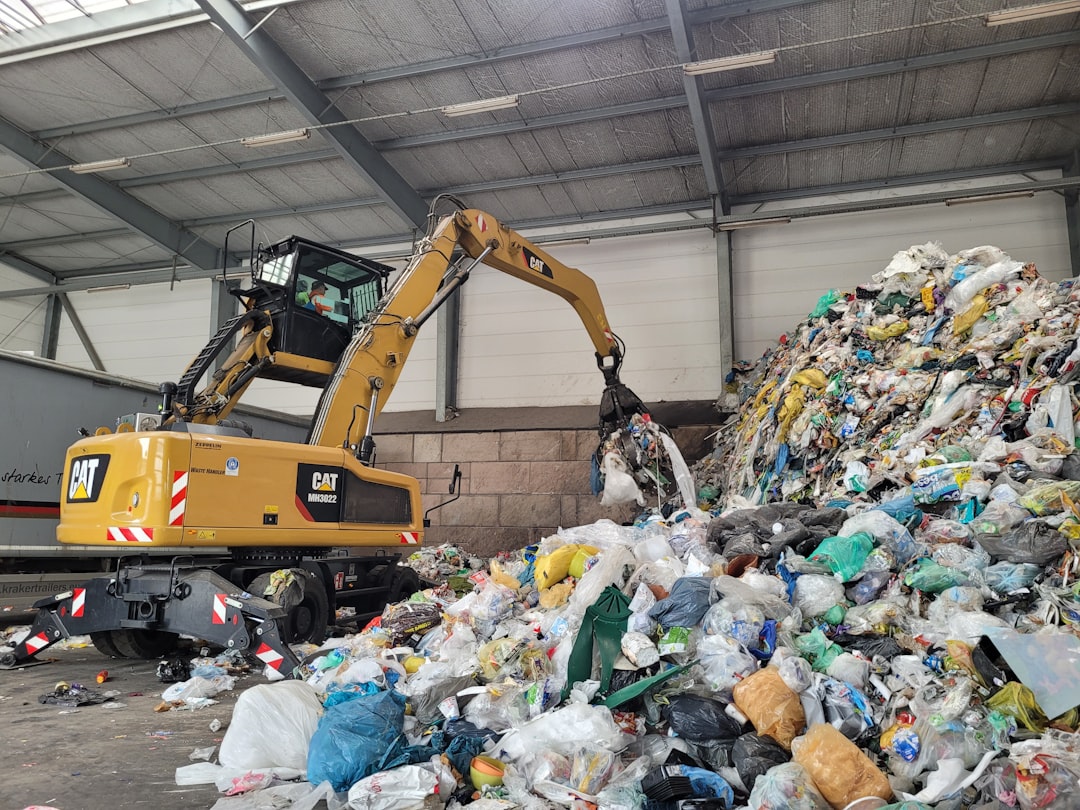
The rise circular manufacturing push is no longer just a sustainability talking point. It’s becoming an economic necessity. Manufacturing generates over 2 billion tons of waste annually, representing not just an environmental crisis, but a colossal economic inefficiency. And here’s the uncomfortable truth: the old “take-make-dispose” model that built the modern factory floor is slowly suffocating itself under its own waste.
What’s wild is how fast this is actually happening. The circular economy market moved from USD 517.79 billion in 2025 to an estimated USD 578.09 billion in 2026, signaling solid momentum. But momentum alone isn’t the story. The real shift is systemic. Governments are tightening regulations. Investors are demanding proof. Consumers are voting with their wallets. And companies are scrambling to catch up. If you work in manufacturing — or anywhere in supply chain — this is the moment you need to pay attention.
The Rise Circular Manufacturing Push: Why Now?
The rise circular manufacturing push isn’t happening because companies suddenly became environmentally enlightened. It’s happening because the economics finally work. Shifting toward a circular economy could unlock USD 4.5 trillion in economic value and create more than 7 million new jobs by 2030. That’s not preachy. That’s profit.
But here’s the catch: despite the hype, the world is actually getting less circular, not more. Global circularity rates have fallen from 9.1% in 2018 to 6.9% in 2025, meaning the world is becoming less circular despite increasing circular economy policy adoption, largely because material consumption is growing faster than recycling infrastructure. (Yes, really — we’re investing in circularity while still consuming ourselves into a corner.)
So why the urgency? Regulation. The EU’s Circular Economy Action Plan targets 65%+ recycling across all member states by 2030. And that’s just the floor. CSRD/ESRS mandatory corporate waste reporting now requires site-level waste auditing from large listed European companies in 2026. If you operate in Europe or sell to European companies, you’re already in scope.
How the Rise Circular Manufacturing Push Transforms Production Design
When you actually start implementing the rise circular manufacturing push, everything changes. Not overnight. But methodically. A digitized or integrated operational ecosystem helps enterprises shift from the conventional “take-make-dispose” approach to a regenerative, resource-efficient system through data-driven tools like IoT, AI, and cloud-based platforms, that link manufacturers, suppliers, recyclers, and service providers to track material flows, maximize resource use, and enable product and by-product reuse, remanufacturing, and recycling.
This isn’t just philosophy. Here’s what I mean: I once worked with a mid-size automotive parts manufacturer that was hemorrhaging money on disposal costs. Their stamping operation generated 30% scrap. When they started thinking circularly — designing parts that could be remanufactured instead of discarded — their first-year waste declined 18%. The second year, they hit 32% reduction. They didn’t spend massive capital. They rewired their design process.
Technologies are streamlining remanufacturing workflows, with 3D printing enabling precise reconstruction of worn or missing parts, especially in industrial machinery. That same manufacturer is now using 3D printing to rebuild high-precision tool holders instead of buying new ones. The cost per unit dropped 40%.
Key design principles for the rise circular manufacturing push include:
- Designing parts for disassembly, not just manufacturing speed
- Choosing materials that can actually be recycled (not wishful-thinking recyclable)
- Building modularity so worn components can be swapped without scrapping the whole system
- Reducing complexity to lower remanufacturing costs
The Rise Circular Manufacturing Push and Real-Time Material Tracking
Here’s where digital infrastructure gets less boring and more essential. Platforms for the circular economy make it possible to monitor raw materials, energy usage, and waste streams in real time, which helps firms increase operational effectiveness and lower losses.
Think of it as your supply chain getting a nervous system. Digital Product Passports (DPPs) start rolling out in 2026, while battery passports become mandatory in February 2027, which will reshape product traceability across a bunch of industries. This sounds bureaucratic until you realize what it actually does: you’ll know exactly where every material in your product came from, where it can go next, and what it’s worth.
AI-powered recycling systems deliver over 95% sorting accuracy, which is way higher than manual sorting at around 60-80%, and it really ups recycling efficiency and material recovery noticeably. That accuracy gap is the difference between profitable recycling and money-losing waste management.
One thing though: Adoption is hampered by data standardization, interoperability problems, and a shortage of trained personnel, and many companies encounter resistance to change due to operational disruptions and uncertain return on investment. The tech is real. The organizational friction is real too.

Industry Leaders Already Winning with the Rise Circular Manufacturing Push
You don’t have to guess whether this works. The data is in. Manufacturing, consumer goods, and technology sectors demonstrate the highest circular economy implementation rates, with 64% of Fortune 500 manufacturers now incorporating circular principles into core operations, and the automotive sector alone has invested $127 billion in circular initiatives since 2023.
Key players include Samsung, Toyota, and China Recycling Development, and in July 2025, Veolia promoted stronger workplace safety regulations and expedited the shift to a circular economy by utilizing augmented artificial intelligence. These aren’t small bets.
What makes them different?
Businesses implementing circular economy strategies experience average profit margin increases of 23% within the first three years. That margin uplift comes from material cost recovery, reduced disposal fees, and new revenue streams from remanufactured products. Toyota’s “parts reuse and refurbishment” revenue line isn’t a cost center. It’s a profit center.
Meanwhile, secondary raw material usage rose by 23%, while product-as-a-service adoption grew by 35% across industries, though over 42% of large enterprises implemented circularity strategies while SMEs adoption remains below 20% globally. Translation: small and medium manufacturers are falling behind.
What the Rise Circular Manufacturing Push Means for Your Costs and Competitiveness
Here’s where theory meets your P&L. Circular procurement is delivering documented 15 to 35% raw-material cost savings as of 2025, converting sustainability spend into margin defense. That’s not green-washing. That’s procurement math.
The rise circular manufacturing push also shifts who carries the liability. Regulatory liability transfer, not sustainability ambition, is the irreversible engine behind enterprise platform adoption. In other words, manufacturers can’t outsource responsibility to waste companies anymore. You own it. Which means you have an incentive to design it out of existence.
Non-compliance is not a financial penalty; it is a market-access risk, which is why enterprise adoption is accelerating among mid-market manufacturers, not just large OEMs. So even if you’re not Fortune 500, your customers are demanding compliance, which means you’re getting pulled in whether you signed up or not.
Making the Rise Circular Manufacturing Push Work at Scale
Okay, so you’re convinced. Now what?
Start with your waste stream. Not your mission statement — your actual trash. Track it for 30 days. Where does material go? What’s getting landfilled that could be reused? I’ve seen manufacturers save $50,000+ annually just by identifying one material stream they could loop back internally.
Second, talk to your supply chain partners. The rise circular manufacturing push doesn’t work if you’re the only one doing it. Industrial symbiosis opportunities with other businesses in the region allow you to exchange resources and by-products. Kalundborg in Denmark has built an entire industrial zone on this principle.
Third, invest in data. You can’t optimize what you don’t measure. A basic IoT system for tracking material flows starts around $15,000-$40,000 depending on facility size. It sounds like overhead until you realize it’ll identify $200,000 in annual waste reduction opportunities within six months.
Finally, understand the regulatory timeline. The EU Packaging and Packaging Waste Regulation application phase begins August 2026, forcing producer-side digital compliance at scale. If you supply European markets, you’re already behind if you haven’t started. If you’re in North America, watch what Europe does — it always comes here next.
Frequently Asked Questions
What Exactly does the Rise Circular Manufacturing Push Mean for My Factory?
The rise circular manufacturing push means redesigning your production system to eliminate waste by keeping materials in use longer and designing products for remanufacturing or recycling rather than disposal. It shifts your mindset from linear (make it, sell it, throw it away) to closed-loop (make it, recover it, remake it). Financially, it typically reduces material costs and waste disposal fees while opening new revenue from secondary products.
How does the Rise Circular Manufacturing Push Create Competitive Advantage?
The rise circular manufacturing push delivers two advantages: cost and market access. Cost-wise, companies save 15-35% on raw materials through circular procurement and scrap recovery. Market access means large buyers (think automotive OEMs, consumer brands) increasingly demand circular compliance from suppliers. Being an early adopter of circular practices now means you’re not scrambling for costly platform implementations later.
Do I Need New Technology to Start the Rise Circular Manufacturing Push?
Not immediately. Many manufacturers start by remapping their material flows and identifying what waste is valuable. That’s free. Digital platforms help at scale, but a spreadsheet and a walk through your facility reveal opportunities worth thousands. Once you prove the ROI, then invest in IoT tracking or AI-powered sorting. Technology amplifies good process; it doesn’t replace the need for it.
What’s the Actual Timeline for the Rise Circular Manufacturing Push Regulations?
The timeline is now. Europe’s mandatory corporate waste reporting is happening in 2026. Battery passports go mandatory February 2027. If you sell to Europe or plan to, compliance isn’t optional. For North America, expect similar regulations within 2-3 years. China is already moving on this. If you wait until regulations hit your region, you’ll be playing catch-up on someone else’s timeline.
Why is the Rise Circular Manufacturing Push So Much Harder in Small Factories than Big Ones?
Scale and capital. Large manufacturers can spread technology costs across high volumes. They have dedicated sustainability teams. Small factories don’t. But that’s actually shifting — mid-market and small manufacturers are the fastest-growing segment for circular platforms now because they face the same regulatory compliance as large ones. There’s also emerging financing for SMEs to adopt circular practices, making the upfront investment less brutal.
The Bottom Line: The Rise Circular Manufacturing Push is Your Reality Now, Not Your Option
The rise circular manufacturing push isn’t coming. It’s here. The global market moved from USD 517.79 billion in 2025 to USD 578.09 billion in 2026, and is forecast to hit USD 888.22 billion by 2030. That’s not incremental growth. That’s structural shift.
What actually matters is this: if you’re in manufacturing, your choice isn’t whether to go circular. It’s whether you go circular on your own terms — when you can design it into your strategy — or whether you’re forced into it by regulation, customer demands, or rising material costs.
The companies winning right now are the ones who moved early. They’ve already redesigned their products for disassembly. They’ve already mapped industrial symbiosis opportunities with their neighbors. They’ve already built the data systems to track waste. By the time regulations tighten further, they’re not scrambling. They’re optimizing.
If you haven’t started, 2026 is your last free window to do this thoughtfully.
Disclaimer: This article is for general informational purposes and is not financial or investment advice. Markets, products, tax rules, and regulations vary by country and change frequently. Consult a licensed financial advisor, qualified investment professional, or other relevant licensed expert in your jurisdiction before making any investment, lending, insurance, or tax-planning decision.
