


Top Digital Marketing Trends Shaping Brands in 2026: What’s Actually Working Right Now
The top digital marketing trends hitting brands this year aren’t incremental tweaks — they represent a structural rewiring of how audiences discover, evaluate, and buy from companies. Some of it is predictable. Most of it is faster and messier than anyone planned for.
I remember sitting in a strategy session in late 2024, watching a CMO confidently point to a slide that said “SEO remains our #1 acquisition channel.” Twelve months later, that brand’s organic traffic had dropped 30%. Not because they did anything wrong. Because the search landscape had fundamentally changed around them. That experience — that specific, disorienting moment — is what this article is really about.
Here’s what’s actually reshaping digital marketing strategy right now, and what you should be doing about it.
Why Top Digital Marketing Trends Are Being Driven by AI Infrastructure, Not Tools
A lot of people still talk about AI as a “tool.” Like it’s Canva or Hootsuite. It’s not.
Artificial intelligence now sits at the center of how many campaigns are planned and executed. What started as a tool for automation has quickly become a strategic layer that supports content creation, performance optimization, and customer targeting. And the adoption numbers back this up. According to recent data, 88% of marketers use AI daily, with 85% planning to increase usage in 2026.
The shift is about workflow, not widgets. In 2026, agentic AI in particular is driving marketing and customer data analysis forward — AI agents are taking on autonomous roles in marketing by performing complex tasks such as data analysis, personalization, and campaign optimization independently without much human intervention.
That last part matters. The word “independently” is doing a lot of work in that sentence.
At the same time, businesses are becoming more aware of the limits of AI. Questions around bias, compliance, and originality mean human judgment remains essential. The most effective teams in 2026 are those that combine automation with strong strategic thinking and creativity.
Honestly? AI fluency is now table stakes. The brands winning aren’t the ones with the most AI tools — they’re the ones with the most intentional AI workflows. According to Adobe’s 2026 AI and Digital Trends research, organizations report measurable improvements in key CX performance metrics, such as personalization (70% say this has somewhat or significantly improved), lead generation (64%), and customer retention (59%).
Mostly. Though results vary wildly based on how mature the implementation is.
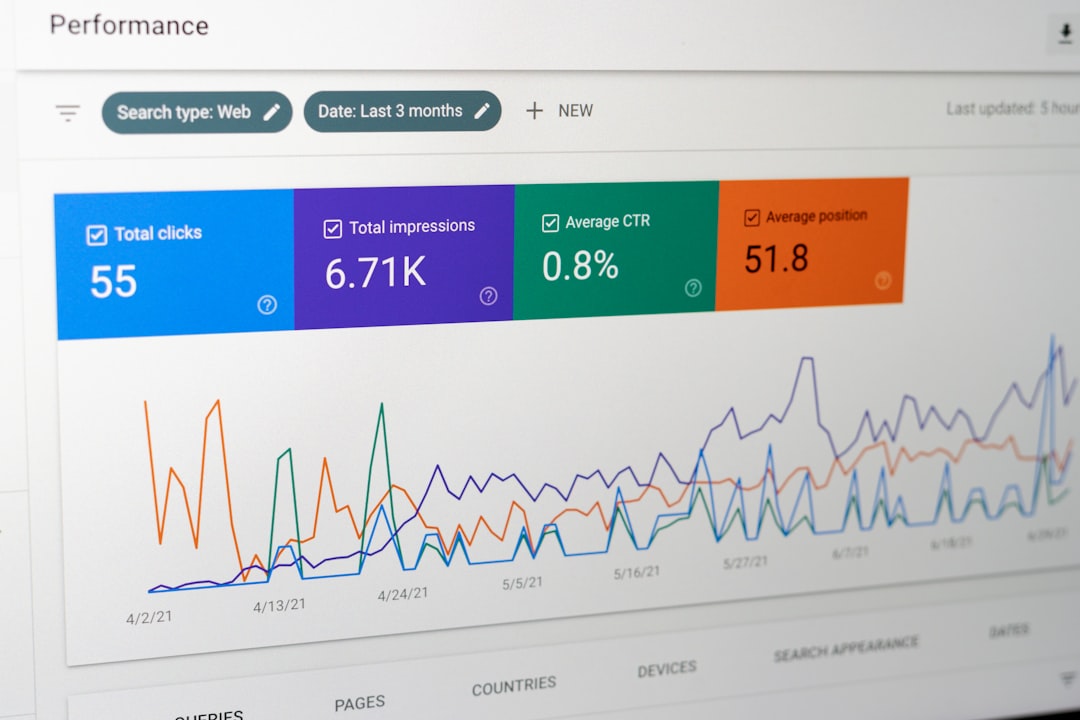
How Top Digital Marketing Trends Are Redefining Search: The GEO Shift
This is the one that’s genuinely blindsiding teams who didn’t see it coming.
Traditional SEO — the blue-link, rank-number-one, drive-organic-traffic kind — is not dead. But it’s no longer enough on its own. In 2026, over 60% of all Google searches now end in a “zero-click.” A user types a question, an AI Overview or a chatbot generates a synthesized answer instantly, and the user never clicks through to a website.
Read that again. More than half of all searches. No click.
By May 2025, that number had climbed to 69% for news-related queries — a 13-percentage-point jump in the year following Google’s AI Overviews rollout, according to Similarweb’s zero-click research. The trajectory is clear.
Enter Generative Engine Optimization, or GEO. GEO is the process of structuring and enhancing content to maximize its likelihood of being cited as a source when AI platforms generate responses to user queries. It’s a different game from SEO. Totally different victory conditions. Where traditional SEO focuses on ranking in the list of blue links, GEO aims to become the trusted source that AI assistants cite.
Here’s the kicker though: ranking on page one of Google does not guarantee you will appear in AI answers. And appearing in AI answers does not require ranking on page one. The overlap between the two is shrinking fast.
The conversion payoff for cracking GEO is significant. LLM visitors convert at 15.9% from ChatGPT, 10.5% from Perplexity, and 5% from Claude, compared to a 1.76% organic search conversion rate. These are not small differences. These are people who arrive pre-convinced. They’ve already been recommended to you by an AI.
What you actually need to do:
- Write content that answers specific questions directly and concisely
- Include data, statistics, and named sources frequently
- Use FAQ schema, Article schema, and structured headings that mirror how people actually phrase questions
- Build a presence on third-party platforms — you need a presence beyond your own domain, because AI learns about your brand from third-party sources too.
Hyper-Personalization: The Most Misunderstood of All Top Digital Marketing Trends
Most brands think they’re doing personalization. They’re not.
Putting someone’s first name in a subject line is not personalization. Sending the same promotional email to your whole list with “Hi [First Name]” prepended is not personalization. If you’re still sending the same email to everyone on your list, you’re already losing. But true hyper-personalization — the kind that treats each customer uniquely without drowning in manual work — is finally becoming accessible in 2026.
The data on this is stark. 91% of consumers are more likely to shop with brands providing personalized experiences, and AI-powered personalization improves conversion rates by 202%. And yet the gap between aspiration and execution remains brutal. 96% of retailers say they struggle with personalization execution across technical, data, and resource dimensions.
The companies closing that gap are investing differently. Marketers now allocate approximately 40% of their budgets to personalization, versus 22% in 2023. That’s a dramatic budget reallocation in under two years. But it’s paying off — 75% of consumers are more likely to buy from brands delivering personalized content, and 48% of personalization leaders exceed their revenue goals.
The practical advice? Don’t try to do everything at once. Start with email and product recommendations. Prove the ROI there. Then expand.
Privacy-First Marketing: The Top Digital Marketing Trend Nobody Wants to Talk About (But Has To)
Look — privacy isn’t exciting. It doesn’t generate conference keynotes or get people excited at offsites. But it is now one of the highest-impact areas in your entire marketing strategy.
Third-party cookies are deprecated across all major browsers. You must master first-party data, server-side tracking, and privacy-safe targeting. This isn’t a future consideration. It’s today’s operational reality.
By January 2026, more than 19 US states had enacted comprehensive data privacy laws, with Indiana, Kentucky, and Rhode Island joining that year. The regulatory environment is tightening, not loosening. Multiple laws took effect in January-February 2026 with penalties up to €35 million or 7% of revenue.
The brands that are treating this as a strategic opportunity rather than a compliance headache are pulling ahead. Organizations with mature first-party data programs achieve 2.9 times higher revenue growth than those relying primarily on third-party sources.
That number — 2.9x — is one of the most consequential figures in this entire list.
The catch? Building genuine first-party data takes time. It requires offering real value in exchange for data: loyalty programs, exclusive content, useful quiz tools, preference centers. First-party data — information collected directly from your own customers with their explicit permission — is more accurate, more compliant, and more stable than third-party behavioral data ever was.
I’ve watched teams spend six months trying to find workarounds for the cookieless world when they could’ve spent three months building a loyalty sign-up flow and had better data quality than they ever had before. The workaround mindset is expensive. The foundation-building mindset compounds.

The $1 Trillion Moment: Understanding the Scale of Today’s Marketing Strategy Landscape
Numbers matter here. Context matters more.
Global advertising spend is forecast to increase by 5.1% in 2026, surpassing $1 trillion US dollars for the first time and outpacing the projected 3.1% expansion of the global economy. Let that settle. One trillion dollars.
Digital advertising remains the primary growth engine, expected to account for 68.7% of total spend in 2026. And within digital, the fastest-growing segment? Retail media, expanding 14.1% as brands leverage first-party shopper data and closed-loop measurement.
Social and Connected TV are carrying enormous weight too. Social investment rose from approximately $74.9 billion to $83.3 billion — an increase of more than 11% year over year — pushing social’s share of tracked digital spend to more than half of all dollars in these channels.
According to the IAB’s January 2026 ad spend forecast, social media (+14.6%) and CTV (+13.8%) are projected to have the greatest growth, while traditional media (-1.1%) and linear TV in particular (-1.7%) are in negative territory.
The channel consolidation is real. If you’re still spreading budget evenly across a dozen channels “for diversity,” you’re probably leaving performance on the table.
Short-Form Video and Creator Culture: Still One of the Top Digital Marketing Trends in 2026
I’ll be honest — this is simultaneously the most obvious and the most under-executed trend on this list.
Everyone knows short-form video works. 68% of people prefer learning about products via video. 90% of marketers say video ads increase conversions. And yet most brands are still producing polished, over-produced, slightly robotic brand videos that nobody watches past the three-second mark. Half of customers say promotional emails, ads, and social media posts have only two to five seconds to capture their interest.
Two to five seconds. That’s the window. Not a minute. Not thirty seconds. Two to five.
The creator economy is the distribution layer for video that actually gets watched. In 2026, advertiser interest in Gen Alpha — those born between 2010 and 2024 — is becoming more concrete. The cohort already wields $28 billion in direct spending power. They don’t watch ads. They watch creators. The strategic implication is obvious.
Here’s what this means practically:
- Partner with micro-influencers (10k–100k followers) in your niche before chasing macro reach
- Repurpose creator content for paid amplification — it almost always outperforms brand-produced content
- Mobile video ads are growing 20% year-over-year, so vertical-first production is no longer optional
Frequently Asked Questions
What are the top digital marketing trends brands should prioritize in 2026?
The top digital marketing trends most worth prioritizing in 2026 are AI-driven personalization, Generative Engine Optimization (GEO), privacy-first first-party data strategy, retail media investment, and short-form video. These aren’t separate initiatives — they compound. Brands winning in 2026 are treating them as a connected marketing strategy, not a checklist. The single biggest leverage point is probably GEO, because the search behavior shift is structural and most competitors haven’t adapted yet.
How are the top digital marketing trends different in 2026 compared to previous years?
The top digital marketing trends in 2026 are different primarily in their pace and structural nature. Previous years brought incremental shifts — more mobile, more video, more social. In 2026, the changes are fundamental: how search works (zero-click AI answers), how data is collected (no third-party cookies), and how campaigns run (agentic AI). These aren’t trend-cycle shifts. They require rebuilding parts of your marketing infrastructure.
What is Generative Engine Optimization (GEO) and why does it matter?
GEO is the practice of structuring your content so AI tools like ChatGPT, Perplexity, and Google AI Overviews cite your brand in their generated answers. It matters because over 60% of searches now end without a click to any website — meaning traditional SEO rankings don’t guarantee visibility. Brands appearing in AI-cited answers see dramatically higher-intent traffic, with conversion rates from AI referrals reaching 15.9% from ChatGPT versus 1.76% from organic search.
How should brands build a first-party data strategy in the cookieless environment?
Start with consent-based data collection points: loyalty programs, email signups, quiz tools, and customer accounts. Use a Customer Data Platform (CDP) to unify all of it into a single customer profile. Implement server-side tracking to recover 15–30% of lost conversion signals that ad blockers and browser restrictions suppress. The goal is to make your data more valuable than anything you could buy from a third party — which is actually achievable when you control the collection.
What role does AI personalization play among the top digital marketing trends in 2026?
AI personalization is arguably the most impactful of the top digital marketing trends right now. According to 2026 figures, AI-powered personalization can improve conversion rates by over 200%, and organizations already report a 70% improvement in personalization as a CX metric. The gap between brands investing seriously in personalization and those doing surface-level segmentation is widening every quarter. The investment threshold has dropped enough that even mid-sized brands can build real personalization engines — particularly in email, product recommendations, and dynamic landing pages.
The One Takeaway You Can Use Tomorrow
Everything on this list feeds back into a single principle: the old playbook optimized for platforms. The new playbook optimizes for trust, relevance, and machine-readability.
You can’t track users the old way. You can’t rank the old way. You can’t win attention the old way. The brands that accept this — and build accordingly — are the ones still standing three years from now.
Pick one thing from this article. Seriously, just one. Maybe it’s auditing where your brand appears in ChatGPT and Perplexity responses. Maybe it’s launching a proper first-party data collection flow. Maybe it’s cutting your brand video budget by 20% and redirecting it to creator partnerships.
One concrete move. This week. The rest compounds from there.
