

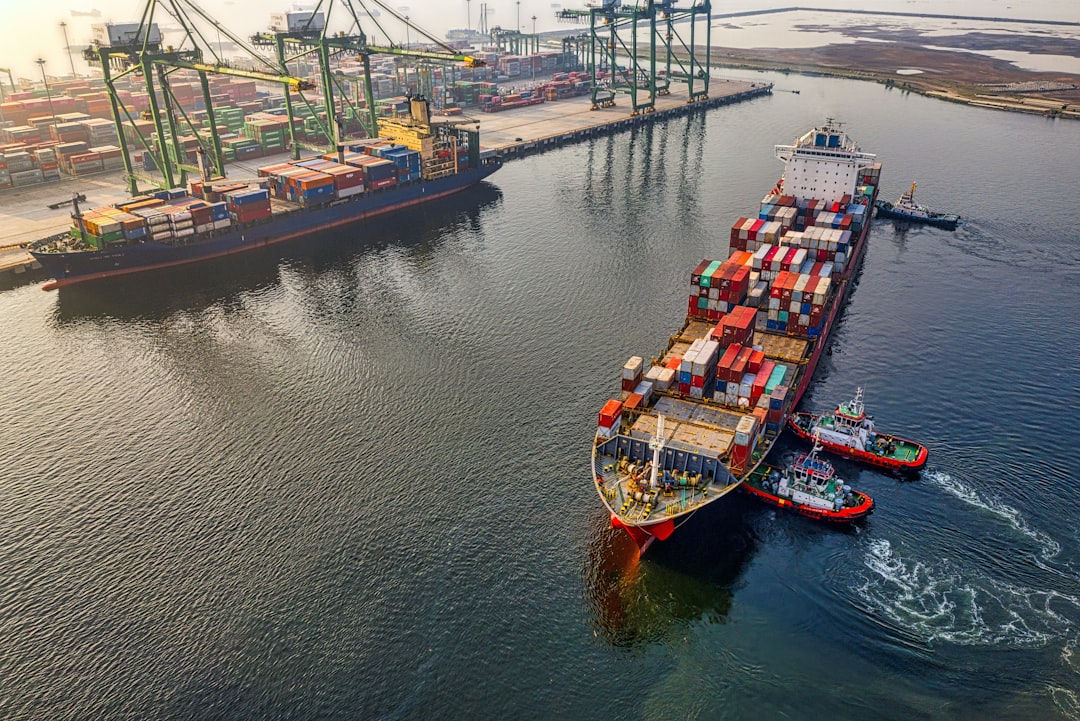
The truth about global supply chains economic uncertainty in 2026 is this: companies aren’t just adapting anymore. They’re fundamentally redesigning how they think about sourcing, risk, and resilience. No more incremental fixes. The game has changed.
For decades, supply chain success meant squeezing cost and efficiency. Find the cheapest supplier. Minimize inventory. Assume nothing will go wrong. That playbook is dead. Persistent geopolitical uncertainty, tariff related adjustments, and economic headwinds mean that supply chains will continue to operate in a state of elevated volatility and continuous adaptation throughout 2026.
You’re watching tariffs reshape sourcing decisions. Geopolitical risk isn’t theoretical anymore—it’s on the P&L. Cybersecurity threats can freeze entire networks in minutes. And the old “single-hub, low-cost” model? It’ll expose you the moment something breaks.
This isn’t doom. It’s opportunity—but only for companies willing to think differently.
Understanding the Economic Uncertainty That’s Reshaping Global Supply Chains Economic Strategy
The top concerns for industry leaders include: Economic volatility (51%), trade barriers and tariffs (48%), and geopolitical instability (38%). That’s not a tie. Economic volatility is winning. And it’s winning big.
Here’s what that means in practice: you can’t forecast demand six months out anymore. For supply chains, this translates into persistent uncertainty around volumes, inventory levels, and capacity needs – making long-term planning increasingly difficult, as consumer and industrial demand is now highly sensitive to interest rates, energy prices, and geopolitical events.
A year ago, a supply chain manager could build annual contracts with reasonable confidence. Now? You’re signing agreements knowing they might become obsolete in weeks if tariffs shift or geopolitical winds change. The math becomes impossible.
In mid‑2025, the OECD downgraded its projection for global economic growth from 3.3% (previous estimate) to 2.9% for both 2025 and 2026, signifying a 0.4 p.p. revision linked to rising trade barriers and geopolitical tensions. That downgrade cascades through every network. Slower growth means weaker demand. Weaker demand means excess capacity. Excess capacity means carriers and suppliers will cut prices—but only for customers flexible enough to take advantage.
If you’re locked into rigid contracts? You lose. If you built flexibility in? You win.
How Tariffs are Permanently Restructuring Global Supply Chains Economic Decisions
Forget the idea that tariffs are temporary.
According to recent industry research from McKinsey, tariffs affected supply chain activity for 82% of surveyed global supply chain organizations in 2025, influencing sourcing and logistics strategies across sectors. That’s nearly universal exposure. And it’s not slowing down.
What’s really happening is this: tariffs have shifted from occasional trade friction to structural costs. Tariffs added a permanent layer of structural uncertainty, making proactive modeling, tariff‑impact simulations, and multi‑route planning essential. Tariffs have had the strongest impact on industries with globally distributed component supply—most notably automotive, electronics, and machinery. In these sectors, supply chain resilience has become a competitive differentiator, as tariffs now function as a persistent structural cost layer.
If you’re in automotive or electronics, you feel this acutely. A single vehicle might require parts sourced from seven countries. Now multiply that by tariff scenarios. Then model demand uncertainty on top. The complexity balloons.
The response? Companies are absorbing costs or moving production entirely.
39% of respondents now report their organizations are either absorbing or considering absorbing tariff costs rather than passing them to customers — up from just 13% the previous year. That’s a massive shift in one year. Margins are shrinking. Profitability is under pressure. But some companies are making the harder choice: they’re absorbing losses to keep customers loyal. It’s defensive, but it might be necessary.
Others are moving to nearshoring and reshoring strategies. Rapid shifts in trade policy, combined with geopolitical tensions, have accelerated “China+1” and nearshoring strategies, but often without equivalent infrastructure or capacity in alternative markets. Vietnam. India. Mexico. Companies are pouring capital into these regions. But here’s the catch: there’s only so much capacity. Replacing single-source models with multi-tier sourcing and China Plus One regional hubs in Vietnam and India. (I watched this firsthand with a client trying to move electronics assembly to Bangalore in 2025—the waiting lists for factory space were already six months long.)
Why Technology Investments in Global Supply Chains Economic Visibility are Non-Negotiable
You can’t manage what you can’t see.
70% of semiconductor manufacturers plan to deploy advanced mapping and visibility platforms before the end of the 2026 fiscal year to address sub-tier vulnerabilities. That tells you something important: companies know they’re blind beyond Tier 2 suppliers. And that blindness is becoming unacceptable.
AI‑enabled visibility platforms, predictive analytics, and real‑time monitoring tools are increasingly necessary for operational continuity. This isn’t hype. This is necessity.
The problem is that only 56% of organizations can trace material origins to Tier-3 or Tier-4 sources. Less than 60%. You’re running supply chains where you can’t tell where half your materials actually come from. That’s not resilient. That’s reckless.
The challenge is no longer about reacting to disruption but about being ready for it, with companies focusing on implementing new technologies, strengthening governance and redesigning networks to adapt to a world where volatility is the norm.
Here’s what that looks like in practice: Digital twins are increasingly moving from pilot projects to strategic tools. Companies use these tools to create virtual models of their operations, allowing teams to simulate “what-if” scenarios to test their response strategies in a risk-free environment before a crisis actually hits. You’re building digital replicas of your supply network. When a crisis hits (and it will), you already know how to respond because you’ve practiced it 100 times in simulation.
Supplier Diversification as a Competitive Weapon in Global Supply Chains Economic Networks
The old model was centralized. One hub. One country. One supplier per component (maybe a backup).
That’s gone.
Organizations are balancing sourcing across regions and networks rather than relying on a single country or low‑cost strategy. Diversification used to be nice-to-have. Now it’s mandatory.
Companies have moved away from the ‘single-hub’ model that dominated the last decade. The shift happening now is toward adaptability: redundant suppliers, real-time data visibility, documented protocols, and systems that can reroute before a disruption becomes a crisis. But here’s what matters: this isn’t about having five mediocre suppliers instead of one excellent one. It’s about having multiple strong suppliers in different geopolitical zones so that when one fails, your network remains stable.
The financial impact is real. Your COGS goes up in the short term because redundancy costs money. But your exposure to catastrophic disruption goes down. And in a volatile environment, that tradeoff is almost always worth it.
That said—and this is the hedge you need to hear—OECD modelling shows that efforts to relocalise supply chains could decrease global trade by over 18% and reduce global real GDP by more than 5%. Yet, these measures do not consistently improve resilience. In fact, GDP volatility increased in more than half of the economies modelled, challenging claims that relocalisation is inherently more stable. Nearshoring and reshoring aren’t panaceas. They can work—but only if you do them strategically, not reactively.
Using AI and Automation to Navigate Global Supply Chains Economic Shocks
Here’s the real thing nobody says out loud: 95% of AI projects fail because companies chase technology before defining the outcome. That’s brutal. But it’s true.
When companies start talking about AI for supply chain optimization, they’re often just throwing money at the problem. The most successful organizations are shifting from technology-first to problem-first strategies. A growing cohort of industry leaders are switching that order to lead with the problem, co-innovating with customers and measuring success in weeks, not years. The difference: figuring out what you need to solve before you pick the tool.
52.4% of semiconductor firms currently use AI specifically for quality control and defect detection. That’s focused. That’s solving a real problem. Not “let’s get AI to manage our entire supply chain.” Just: “AI can catch defects faster than humans. Let’s deploy it there.”
86% of supply chain executives plan AI/analytics investments for cost reduction across the supply chain. The intent is clear: they’re betting on AI to offset margin pressure from tariffs and inflation. And honestly? It might work for some. The companies that use AI to genuinely improve forecasting or reduce waste will gain real advantage. Others will just spend money.
In 2025, 82% of supply chain organisations reported an increase in IT spending, highlighting a strong focus on digital transformation, AI, automation, and visibility tools to enhance operational efficiency and resilience. The capital is flowing. The question is whether it’s being deployed wisely.
Building Adaptive Systems Over Rigid Efficiency in Global Supply Chains Economic Management
This is the mindset shift that matters most.
Systems and teams must be able to reconfigure in real time. Re-routing, re-prioritizing or re-allocating resources as conditions evolve. Adaptability, not redundancy becomes the new resilience metric. You don’t need five backups for everything. You need systems that can move quickly when something fails.
Companies are focusing on implementing new technologies, strengthening governance and redesigning networks to adapt to a world where volatility is the norm. That’s the operational philosophy for 2026: design for constant change.
What this means practically:
- Don’t lock yourself into five-year contracts. Build in flex clauses for tariff changes and regulatory shifts.
- Don’t optimize for pure cost. Optimize for resilience-adjusted cost. (A 5% more expensive supplier in a stable country might be cheaper than a 3% cheaper one in a geopolitically fragile zone when you factor in disruption risk.)
- Don’t rely on annual forecasts. Build rolling forecasts updated monthly or weekly.
- Don’t treat supply chain planning as IT’s job. It’s strategic. Board-level strategic.
Companies that thrive won’t be those that do everything, they’ll be those that adapt fastest. That’s your north star.
Frequently Asked Questions
What is the Biggest Threat to Global Supply Chains Economic Performance in 2026?
Economic volatility ranks as the #1 concern, with 51% of supply chain leaders naming it their primary worry. Persistent uncertainty around volumes, inventory levels, and capacity needs makes long-term planning difficult, as consumer and industrial demand is now highly sensitive to interest rates, energy prices, and geopolitical events. You can’t forecast when the market might contract or rebound, which makes inventory and capacity planning a guessing game. Tariffs (48%) and geopolitical instability (38%) follow closely behind.
How are Companies Adapting Their Sourcing Strategies for Global Supply Chains Economic Uncertainty?
Companies are moving away from single-source, single-country strategies toward multi-tier supplier diversification. The shift is toward adaptability: redundant suppliers, real-time data visibility, documented protocols, and systems that can reroute before a disruption becomes a crisis. Many are implementing “China Plus One” strategies, sourcing from both established suppliers and emerging hubs in Vietnam, India, and Mexico to reduce concentration risk. This increases complexity but improves resilience.
Should Companies Invest in Nearshoring or Stay Global?
Neither extreme is the answer. OECD modelling shows that efforts to relocalise supply chains could decrease global trade by over 18% and reduce global real GDP by more than 5%, and these measures do not consistently improve resilience—in fact, GDP volatility increased in more than half of the economies modelled. The smart play is selective reshoring for critical components and nearshoring to reduce lead times, while maintaining global sourcing for cost-competitive, non-critical materials. It’s hybrid, not binary.
What Role Should AI Play in Managing Global Supply Chains Economic Challenges?
AI should solve specific, high-impact problems—not be a solution looking for a problem. 52.4% of semiconductor firms currently use AI specifically for quality control and defect detection. That works because it targets a real bottleneck. AI is most valuable for demand forecasting, supply-demand matching, and detecting hidden vulnerabilities in sub-tier suppliers. But 95% of AI projects fail because companies chase technology before defining the outcome. Define your problem first.
How Critical is Supply Chain Visibility for Global Supply Chains Economic Resilience?
It’s non-negotiable. Only 56% of organizations can trace material origins to Tier-3 or Tier-4 sources. You can’t manage risk you can’t see. 70% of semiconductor manufacturers plan to deploy advanced mapping and visibility platforms before the end of the 2026 fiscal year to address sub-tier vulnerabilities. Without visibility into your entire supplier network—including the ones three tiers down—you’re vulnerable to hidden disruptions. Digital twins and real-time monitoring platforms are becoming baseline requirements, not competitive advantages.
The Real Takeaway: Speed and Smarts Beat Size and Scale
Here’s what I keep seeing across the companies that are actually winning in 2026: they’re not trying to predict the future. They can’t. Nobody can.
Instead, they’re building organizations that sense changes faster and respond quicker than competitors. Companies must fight volatility with velocity: not only moving faster, but making smarter decisions—supported by visibility, optionality, and disciplined governance. That’s the core of it.
Global supply chains economic uncertainty isn’t ending. A return to ‘normal’ volatility is unlikely. Persistent geopolitical uncertainty, tariff related adjustments, and economic headwinds mean that supply chains will continue to operate in a state of elevated volatility and continuous adaptation throughout 2026. So stop waiting for stability. Build for disruption.
Invest in visibility. Diversify your risk. Build adaptive systems. And hire people who are comfortable with ambiguity—because that’s your new operating environment.
The companies that make these shifts now won’t just survive 2026. They’ll turn uncertainty into competitive advantage.
Disclaimer: This article is for general informational purposes and is not financial or investment advice. Markets, products, tax rules, and regulations vary by country and change frequently. Consult a licensed financial advisor, qualified investment professional, or other relevant licensed expert in your jurisdiction before making any investment, lending, insurance, or tax-planning decision.
