

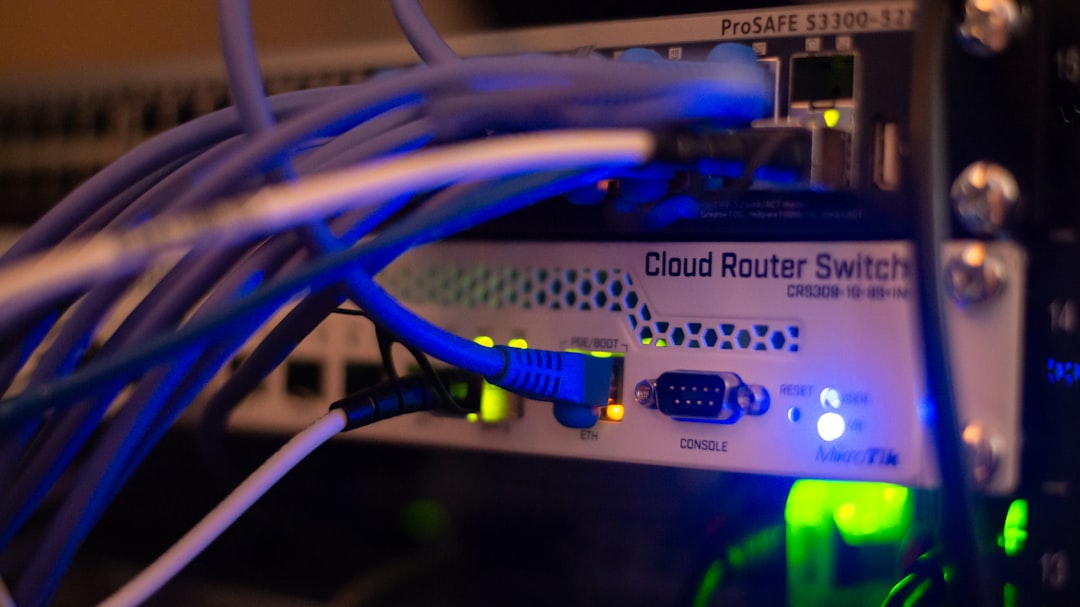
You probably think of data centers as a utility. Boring pipes and electricity. Here's the thing: data centers become strategic in ways governments never expected. And we're living through the exact moment that shift flipped into high gear.
Five years ago, a data center was a real estate play. You bought cheap land, plugged in some servers, rented rack space to whoever paid. Today? AI has turned GPUs into geopolitical assets, and export controls are now shaping where training can legally occur, which directly impacts data center strategy. That's not a marginal footnote—that's the entire foundation of how countries now think about digital power.
I spent last month talking with infrastructure investors who used to focus only on power costs and uptime. Now they're tracking sanctions. Sanctions. For physical buildings. That tells you everything.
This isn't just about capacity anymore. Governments are increasingly embedding data centers into national digital strategies, with incentives tied to AI sovereignty, energy availability, and industrial policy. The shift from a technical problem to a geopolitical one happened quietly, and most people missed it entirely.
Why Governments Started Paying Attention to Data Centers Become Strategic
For the first two decades of the internet, data centers were invisible. Cloud companies built them overseas, wherever was cheapest. Nobody cared. It was efficient. Markets worked.
Then AI changed everything.
Every government now wants AI capabilities, increasingly built on their soil, with their data, under their legal structure. That's a direct statement of strategic intent. Not "we'd like to have some AI companies." We want computational power—the actual infrastructure that runs nation-scale intelligence.
Why? Because computation is power. Military, economic, intelligence—all of it flows through data centers. A White House memorandum deemed AI infrastructure vital to the nation's strategic interests, with one FERC dissent arguing that 'access to reliable electricity is the lifeblood of those data centers' and calling digital infrastructure a national imperative, not merely a private utility load.
The US isn't alone. China is doing the same thing. Europe wants the same. India's building its own cloud. Singapore's turned into a regional compute hub. They all understand the same thing: data centers become strategic the moment they touch AI.
This fundamentally changed how operators think about location. Operators used to model risk around land, permitting, and fiber, but now they model risk around sanctions, trade corridors, chip restrictions, and which countries are likely to tighten data sovereignty laws overnight.
The Power Crisis: Why Data Centers Become Strategic but Fragile
Here's where the real threat lives.
Data centers need electricity. A lot of it. The data center sector is projected to increase by 97 GW between 2025 and 2030, effectively doubling in size over a five-year period, with global data center capacity potentially reaching 200 GW by 2030.
That's not a gentle increase. Power infrastructure spending is projected to reach $27.8 billion in 2026, and power constraints represent a critical factor for continued expansion—the pace of new power generation capacity will potentially restrain future data center development unless new sources, including off-grid and privately developed generation, can be found quickly.
You can feel this constraint in the real world. I watched a 500-MW facility get delayed by two years because the local power authority couldn't guarantee delivery. Not a technical problem. Not a permitting problem. Raw electrical capacity didn't exist.
The data center sector's expansion shows a compounded annual growth rate of 98% from 2021 to 2025, with construction costs rising rapidly and power availability now the primary driver for site selection.
This creates a strange incentive. On-site generation, storage, and energy strategy move from optional to essential, and AI workloads are driving higher power density requirements, forcing developers toward "bring your own power" strategies. Some of the largest operators now own nuclear power plants. Microsoft is striking deals for renewable generation. Google is literally negotiating with utilities to build dedicated transmission lines.
That's a sign of desperation, honestly. When you own power plants just to run your data centers, you've moved beyond "normal business" into infrastructure ownership that rivals small governments.
The national security angle kicks in here too. If your data centers can't run because the grid failed, your AI services fail. Your military systems fail. Your economy slows. That risk is now a policy priority.
The Capital Flood: How Big Money Validates Data Centers Become Strategic
Money talks. Capital reveals priorities.
The top 5 hyperscalers (Amazon Web Services, Microsoft Azure, Google, Meta, and Oracle) are projected to spend as much as $602 billion in 2026. Let that sink in. $602 billion. In one year. By five companies.
Alphabet, Amazon, Microsoft, and Meta plan to invest about $400 billion in data centers in 2026, though current investment levels fall short of projected needs. This isn't optional growth. These companies are betting their futures on infrastructure buildout.
Why the shortfall? Power constraints, not capital limitations, create the main bottleneck for building data centers. They'd spend more if they could. The physics is limiting them, not the budget.
Spending by six US hyperscalers—Microsoft, Amazon, Alphabet, Oracle, Meta, and CoreWeave—hit nearly $400 billion in 2025 and is expected to grow by another $200 billion in the next two years, a staggering sum required to keep pace with AI-driven capacity growth.
This capital concentration matters strategically. About 70% of data center spending is expected to come from hyperscalers, with leading players including Amazon, Microsoft, Google, and Meta already building in the US and planning to invest even more. A handful of private companies now control the computational infrastructure that governments depend on.
Sovereignty, Supply Chains, and Strategic Competition
This is where data centers become strategic in a way that keeps policy makers awake at night.
The sovereignty wave is accelerating—every government wants AI capabilities, increasingly on their soil, with their data, under their legal structure, meaning operators must redesign deployment strategies market-by-market with no assumption of uniformity.
The practical result? You can't just build a global data center anymore. You need India data centers for India, EU data centers for EU, UK data centers for UK. Each with different rules, different power sources, different labor costs, different risks.
I watched one operator try to build a facility in a Southeast Asian nation that changed its data residency law mid-construction. Year of work, tens of millions in sunk costs, suddenly inaccessible. In many markets, technical feasibility matters less than legislative alignment—a country can be ideal on paper with cheap land, cheap power, and favorable climate, yet still be effectively off-limits because the regulatory environment shifts under your feet.
That's not risk management anymore. That's geopolitical roulette.
The supply chain angle adds another layer. GPUs are scarce. Power equipment is scarce. Fiber optic cable is scarce. Whoever controls those resources controls data center expansion. The US has export controls on advanced chips. China has rare earth material leverage. Europe has energy scarcity.
Every nation now sees data center capacity as essential infrastructure, like airports or power grids. And that fundamentally changes how investment, regulation, and competition work.
What this Means for You???and for Everyone
Honestly? Most people don't realize their digital life depends on geopolitical stability.
Your cloud backups live in a specific country, under specific laws, powered by specific grids. If that region becomes unstable—sanctions, war, power crisis, regulatory crackdown—your data becomes inaccessible. Maybe temporarily. Maybe permanently.
The consolidation risk is real too. This capital-intensive environment changes the AI technology landscape and might concentrate power among well-funded players, forcing companies to choose between risking stranded assets by overinvesting or falling behind competitors by underinvesting.
That's the paradox: the most important infrastructure of the digital age is increasingly controlled by a handful of companies in a handful of countries, subject to the whims of government policy that can shift overnight.
For business leaders, the takeaway is sharper: don't assume cloud is location-agnostic anymore. The market shows structurally constrained capacity with vacancies near ~1% and most new supply precommitted, with growth moving from legacy hubs to frontier markets like Texas where power and land availability enable scale. Plan for geographic diversification. Plan for power availability as a primary constraint. Plan for regulatory shifts.
Frequently Asked Questions
Why Exactly do Data Centers Become Strategic Now and Not Before?
AI fundamentally changed the compute equation. Before, data centers were just rack space. With AI, data centers are where large language models train, where military simulations run, where intelligence agencies process information. They're not utilities anymore—they're power generation facilities for digital sovereignty. Governments realized this gap and moved to close it.
How do Sanctions Actually Affect Data Centers Become Strategic?
Export controls on GPUs and advanced chips mean certain nations can't legally purchase the hardware they need for certain workloads. This reshapes where data centers can be built and what they can run. A sanctions regime can instantly render a facility partially useless. Operators now have to track geopolitical risk like they track latency.
Is the Power Grid Actually Going to Fail Because of Data Centers Become Strategic Demand?
Not dramatically, but regionally, yes. Power availability is already the primary constraint on new facility deployment. Peak load from AI workloads is outpacing generation growth. On-site power generation has moved from "luxury" to "standard practice." Some regions will hit true capacity limits within 2-3 years unless new generation comes online fast.
Who Actually Controls Data Centers Now???Companies or Governments?
Both. Private companies own and operate them. Governments set the rules: data residency laws, export controls, energy regulations, labor standards. The future is shared sovereignty—companies can't move freely, governments can't ignore market forces. It's an awkward, unstable equilibrium.
Are Data Centers Become Strategic a Sign that AI Scaling is Slowing Down?
No. It's the opposite. The fact that power, not demand, is the constraint shows demand is exceeding expectations. Companies would spend more, build more, if they could get the power. That's not a bubble—that's a ceiling. The constraint is real physics, not market sentiment.
The Real Takeaway
Data centers become strategic because computational power became a national resource. Not optional. Not peripheral. Central.
This changes everything: where investment flows, which countries gain influence, how companies operate, what security looks like, how geopolitics evolve. Data centers are no longer a local concern—they are a global priority with strategic significance on the future of AI, energy, and economic growth.
The next decade belongs to whoever can solve the power problem while navigating geopolitical fragmentation. That's not the cloud infrastructure story you heard five years ago. It's harder, more constrained, and infinitely more important.
The infrastructure that runs the world is no longer invisible. And that makes it dangerous.
