

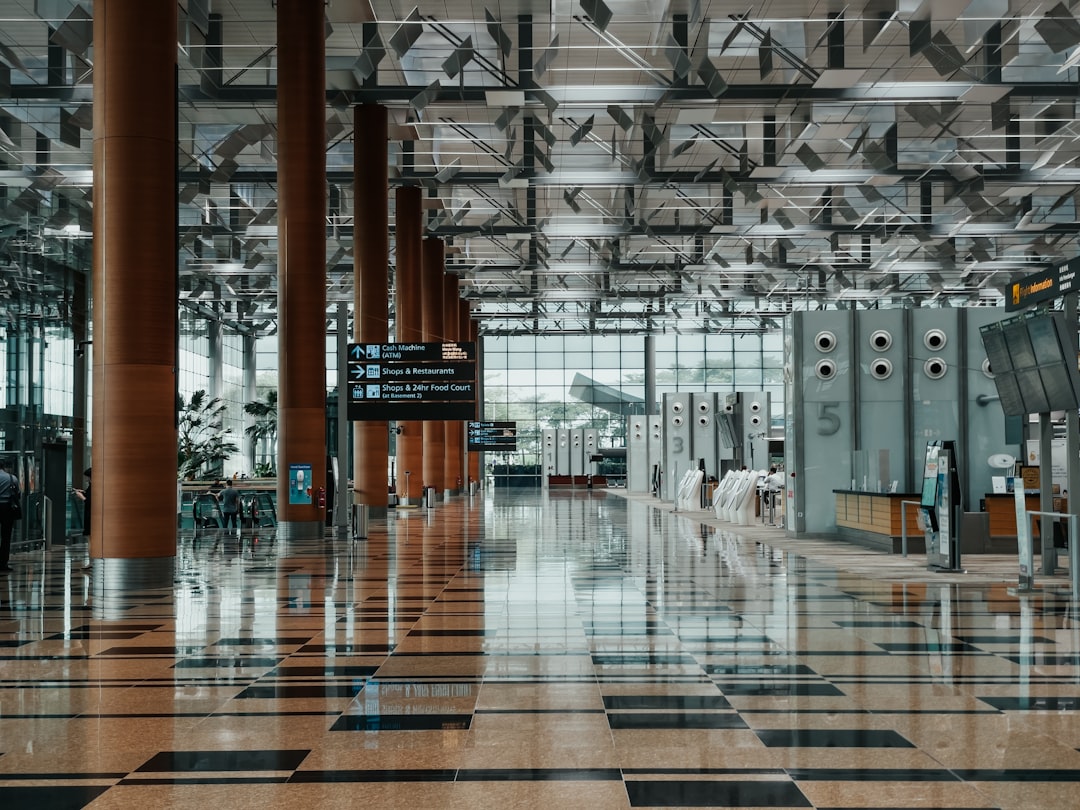
Hang around enough airports and you notice the same thing every year: the evolution airport experiences digital has gone from buzzword territory straight into your reality. You’re no longer hunting for a person to scan your boarding pass. You’re walking through a gate that just reads your face. The wait times keep dropping. The frustration — well, it’s getting lower too, mostly.
The shift from manual, paper-centric operations to AI-powered, touchless systems is happening faster than most travelers realize. 2026 is poised to be a defining year for the sector’s sustainability and digital transformation, with airports worldwide moving from isolated infrastructure hubs into something altogether different.
What’s changed in just the past eighteen months is startling. The technology is no longer theoretical. It’s live at Singapore Changi, at Dubai, at Orlando International, and spreading fast. But adoption isn’t uniform — far from it. Some terminals are genuinely smart. Others still have you standing in line with your boarding pass printed on thermal paper, wondering if it’s 2006.
This article walks you through what’s actually happening on the ground in 2026, the real winners and the honest problems nobody talks about, and why the next few years will separate the airports that stay relevant from those that get left behind.
The Evolution Airport Experiences Digital Means Abandoning Lines (Finally)
What used to take seven, eight, sometimes nine minutes at an international checkpoint now takes seconds. Singapore Changi Airport, where 95% of immigration processing will be automated by 2026, allows passengers to clear security in 10 seconds. That’s not hyperbole — that’s real data from one of the world’s busiest airports.
But here’s the thing: this isn’t coming from faster humans or more checkpoints. It’s biometrics. Real, widespread, every-passenger biometrics.
Facial recognition segment is estimated to contribute the highest market share of 45.4% in 2026, owing to its non-invasive nature and growing preference of travellers. You walk up. A camera reads your face. The system matches it against your passport photo, compares it to your boarding pass, and either waves you through or flags a mismatch for a human to check. All in roughly the time it takes to blink.
The adoption numbers are real. The share of travelers who hadn’t used airport biometrics dropped to 31% in 2025, down from 41% in 2024. That shift in a single year tells you something: passengers aren’t resisting this anymore. They’re actually embracing it.
Why? Because nobody wants to stand in a line. Biometric programs introduced in 2026 reduced airport wait times by 25%. One quarter off your wait time. For most travelers, that’s worth a facial scan. In 2024, 73% of airport passengers said they preferred biometrics over passports or boarding passes.
The Evolution Airport Experiences Digital Powered by Intelligent Automation
Okay, so faces get read. But what’s happening behind the scenes is what actually makes modern airports work.
2026 marks the advent of agent-based AI, where we are moving from AI that makes suggestions to AI that takes action. This is the big shift. It’s not a system that alerts a human manager that the left security lane is backing up. It’s a system that autonomously redistributes staffing, adjusts baggage handling flows, and reroutes ground vehicles — all without waiting for approval.
The ongoing airport digital transformation involves modernizing legacy systems, streamlining operational processes, like check-in, boarding and immigration, improving data sharing among stakeholders and enabling real-time decision-making.
The ROI is stupid-good, honestly. AI-powered predictive maintenance consistently delivers the highest measurable ROI across airport operational domains in 2026, with predictive maintenance analytics generating $2–8M in annual savings at mid-size airports while simultaneously improving OTP metrics and reducing safety incidents. Mid-size airports. That means if your regional hub isn’t doing this yet, the financial argument is already ironclad.
I spent two hours with a head of operations at a mid-tier US airport about six months back, and he was blunt: the airports not investing in this stuff right now are going to lose talent, lose efficiency metrics, and eventually lose the contracts that keep them running. The ones that move first get the advantage. The ones that wait? They’re playing catch-up forever.
The use of digital twins — virtual replicas of airport and airspace operations — is also expanding. They allow airports and air navigation service providers (ANSPs) to run “what-if” testing and to optimise scenarios without disrupting live traffic. You’re literally testing changes in a simulation before you implement them on a live tarmac. That’s not theoretical. That’s operational maturity.
What Evolution Airport Experiences Digital Really Looks Like for Passengers
Alright. You booked a flight. You show up at the airport. What’s different?
Most of the change is invisible. Better invisible. You walk in, your phone app has already started the check-in process if your airline supports it (and most now do). You don’t need to print a boarding pass if you don’t want to. The bag you drop off goes into a system that tracks every movement using RFID and IoT sensors — you can pull up your phone right now and watch that bag get loaded onto the plane, basically.
But the change you actually see happens at security and immigration. Biometric verification of boarding passes and travel documents enables queue-less boarding for flights through e-gates. This significantly reduces congestion at checkpoints and allows airports to process high volumes of passengers seamlessly.
You’re walking through an e-gate. Your face is read. Your data is cross-checked in maybe 500 milliseconds. You’re through. Next person steps up. Then the next. And the next.
The psychological difference is huge. Instead of a bottleneck where you’re standing shoulder-to-shoulder with forty other people, you’re in a flowing system where people move through at the pace the gates can process them. It feels faster, even if the average time saved is “only” 3 to 4 minutes. Psychologically, queue-less feels exponentially better than a shorter queue.
But here’s a honest hedge: not all airports are there yet. Implementation varies wildly. This has shaved minutes off processing times, a boon for airlines facing record-breaking passenger numbers projected to hit 2.8 billion globally in 2026. The tech is live. The rollout isn’t uniform. Some major hubs are cutting-edge. Others are rolling it out in phases. And yeah, a few are still figuring out how to get started.
Privacy Concerns are Real (And Nobody’s Fully Solved Them)
Let’s be honest about the elephant in the terminal: this stuff collects a lot of data. A lot.
Critics argue that while the tech streamlines travel, it collects vast amounts of sensitive data with insufficient safeguards. Posts on X (formerly Twitter) from users and experts reflect growing unease, with many questioning the permanence of “deleted” images promised by the TSA.
It’s not like passengers don’t want the speed. They do. About 40% of travelers would be more open to biometric solutions if they knew their personal information was secure. Notice that phrasing? “If they knew.” Not “if the data was actually secure” — if they believed it was secure. That’s a trust problem, not necessarily a technical one.
The Department of Homeland Security says the images are deleted. They say it’s compliant. The data shows people still don’t fully believe it. In 2022, the primary concerns with biometric technologies were linked databases causing mass surveillance (73%) and misidentification (59%). Those numbers are from 2022, and trust hasn’t gone up since then. It’s stayed roughly flat or drifted slightly worse.
Here’s what matters: For industry leaders, the key is building trust. Transparent audits and user education could mitigate backlash, ensuring that facial recognition enhances rather than undermines the travel experience.
The Evolution Airport Experiences Digital Across Different Airports
Not all airports are equal. There’s a tier system emerging, and it’s widening.
Tier 1: Dubai International Airport, where biometric smart gates now verify travelers at security, immigration, and boarding gates without manual checks. Singapore Changi. A handful of others in Europe and Asia. These places have biometric-first architectures. They’ve committed the money. They have executive leadership backing the tech.
Tier 2: Major US hubs and some European airports rolling this out in phases. Terminal by terminal. Gate cluster by gate cluster. At Orlando International, as highlighted in a New York Times piece from late 2025, e-gates equipped with cameras verify identities for international departures, flagging mismatches in real time. It’s spreading. Not everywhere, not uniform, but spreading.
Tier 3: Regional airports and secondary international hubs. Still running dual systems. Biometric gates next to traditional passport control lines. It works, but it’s clunky.
What determines which tier an airport lands in? Money. Operational infrastructure. Executive vision. Whether the board even understands why this matters. Not all do.
Why this Matters in 2026
In 2026, airports worldwide are no longer static infrastructure hubs—they are evolving into intelligent, interconnected ecosystems powered by artificial intelligence, predictive analytics, and real-time data integration. That’s not marketing copy. That’s observable fact at the leading airports right now.
The second-order effects are starting to show. Better passenger experience means higher ratings. Higher ratings attract both business and leisure travelers. The airlines pay better terminal fees (or negotiate harder ones). The airports invest more in their infrastructure. The cycle perpetuates upward. Or, if you’re not evolving, it perpetuates downward.
Frequently Asked Questions
What does the Evolution Airport Experiences Digital Mean for My Next Trip?
It means you’ll likely encounter at least one biometric checkpoint, probably facial recognition. You walk up, look at a camera, and move on in seconds. No boarding pass required at some gates. It’s faster, sometimes disorienting if you’ve never done it before, and becoming the norm. Most passengers report satisfaction with the process.
Is My Data Safe in the Evolution Airport Experiences Digital?
That’s the trillion-dollar question, isn’t it. Officially, yes — images are deleted, systems are encrypted, processes are audited. Practically, some people don’t fully trust it. About 40% of travelers want stronger guarantees before they’re fully comfortable. The technology is more secure than the trust level reflects, but transparency could help close that gap.
How is the Evolution Airport Experiences Digital Changing Security Screening?
Security is now multi-layered and mostly autonomous. Facial recognition, biometric gates, AI-powered screening systems, and real-time pattern recognition all work together. Wait times are down 25% at airports that have fully deployed these systems. Mismatches are flagged for human review, but most passengers now clear checkpoints without talking to a single person.
Which Airports Have the Best Evolution Airport Experiences Digital Systems Right Now?
Singapore Changi, Dubai, some major European hubs (Amsterdam, Vienna), and Orlando are leading. Most major US hubs are mid-rollout. The gap between Tier 1 and Tier 3 airports is significant — if you’re traveling through a Tier 1 airport, you’ll see dramatically better biometric integration. If you’re at a smaller hub, the tech is there, but implementation is patchier.
Will the Evolution Airport Experiences Digital Replace All Manual Checkpoints?
Not completely, at least not in the next 2–3 years. Some travelers will always need human assistance. Some documents won’t scan cleanly. Some edge cases require judgment. But for 85–90% of travelers on routine journeys, the automated path is now the default. Manual checkpoints are becoming backup infrastructure, not primary infrastructure.
The Bottom Line
Success will be measured by safer airports, shorter queues, greener operations and a seamless traveller experience. That’s what 2026 is delivering — at least at airports that have committed to it.
The evolution airport experiences digital isn’t coming. It’s here. It’s uneven. It’s slightly creepy if you think too hard about facial databases. But it works, and passengers clearly prefer it. The airports that move fast on this get better metrics, happier passengers, and stronger financials. The ones that don’t? They get left behind.
If you’re traveling in the next year, expect biometrics. Pack your patience for the process if you’ve never done it. And if your airport hasn’t upgraded yet — well, maybe it’s time to send them an email asking when they plan to.
