

I'll research the latest developments in smart ports and then craft your article.# How Smart Ports Global Shipping and Trade Are Being Modernised Through Automation
Ports used to be chaotic, inefficient places where you'd have ships waiting days just to dock and unload. The entire process felt stuck in the 1990s. Then smart ports entered the scene, and now, smart ports use sensors, shared operational data, and machine learning to plan and run daily operations with fewer surprises. This shift from reactive scrambling to predictive planning is reshaping how goods move around the world. We're talking about real, measurable changes—not vague tech buzzwords.
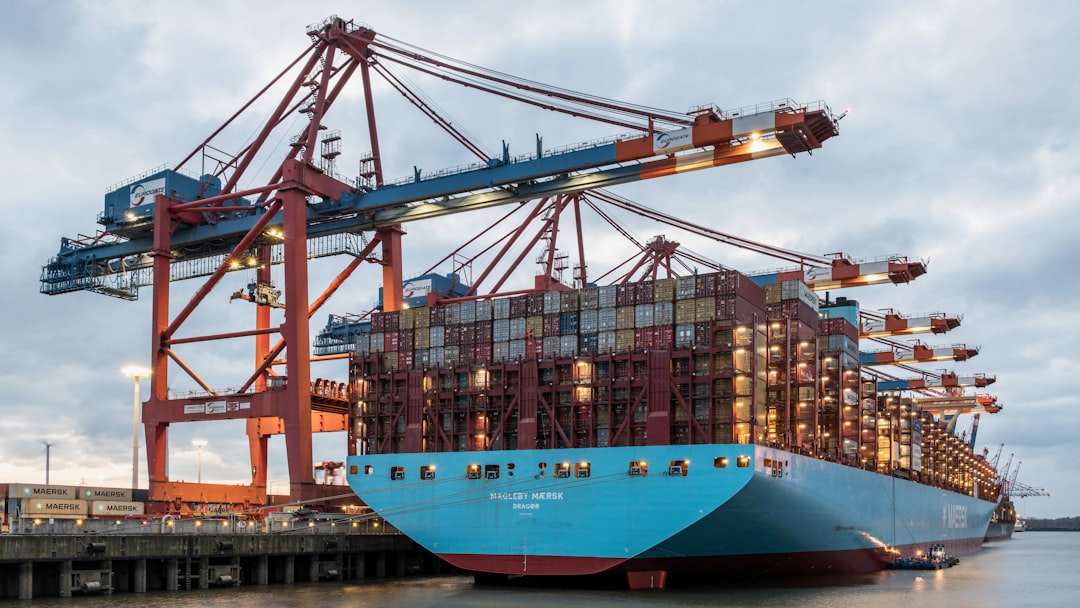
With dramatically increasing worldwide demand for goods, modern ports have achieved greater efficiency and increased capacity through automation, including integrated coordinated use of automated vehicles and cranes, drones, smart sensors, robots and robotic devices. The numbers prove it. In 2025, the world's top 20 ports generated a combined traffic of nearly 450 million TEUs, representing growth of around 5 to 6% compared to the previous year. But here's the catch: growth without efficiency just means more chaos. That's where smart ports global shipping infrastructure comes in.
This isn't some distant future. It's happening now. Port operators in Rotterdam, Hamburg, Shanghai, Singapore, and Valencia are actively deploying these systems. Early adopters are already seeing competitive advantages. And if you're shipping anything internationally, you're going to feel the effects—whether through faster delivery, better reliability, or yes, different pricing.
What Actually Counts as a Smart Port?
Not every port with Wi-Fi is "smart." Look, there's real confusion here because the term gets thrown around loosely. Large ports are pushing deeper automation and "port of the future" programs, while others focus on practical AI layers that improve planning (berth, yard, gate) without needing a full terminal rebuild.
Here's the real distinction: a true smart port integrates three things. First, it collects real-time data from sensors, GPS devices, and IoT networks across the facility. Second, it uses machine learning algorithms to predict bottlenecks, equipment failures, and optimal routing. Third, it acts on those predictions automatically—or at minimum, alerts operators quickly enough that delays don't cascade.
A smart port maintains a single, continuously updated operational picture instead of each party guessing at ETAs and readiness. That's the key difference. When a vessel schedules a 6 a.m. arrival, your berth crew, crane operators, yard handlers, and truck drivers all see the same timeline and receive live updates. You're not running blind anymore. Real intelligent systems also account for external variables—weather delays, equipment breakdowns, labor availability—and recalculate in minutes instead of hours.
Smart Ports Global Shipping Driven by AI and Predictive Analytics
Here's where the actual competitive advantage lives. Digital transformation in the maritime sector is shifting from reactive operations toward proactive, data-driven decision-making.
Think about the old way. A crane breaks down at 2 p.m. You don't find out until a handler tries to use it. Operations grind to a halt. Vessels sit idle. Now with AI, AI-driven models will forecast equipment failures months in advance rather than days. Your maintenance team replaces the part during a scheduled window. No surprise downtime.
Same logic applies to vessel scheduling. The International Maritime Organization (IMO) reports that digital technologies can reduce port dwell times by 25%, but only when properly implemented and integrated across stakeholders. A 25% reduction. That's not marginal. That's transformative. On a vessel costing $15,000–$25,000 per day to operate, cutting 2 days off port time saves real money.
By 2026, competitive advantage will accrue to ports that completed serious digital twin implementation 2-3 years prior, and early adopters aren't just operationally more efficient, they attract shipping lines seeking faster, more predictable service. This creates a feedback loop. Faster ports attract volume. Higher volume justifies further investment in smart ports global shipping systems. Slower ports fall behind.
One concrete example: Shanghai's Yangshan Port operates China's most automated container terminal with a digital twin architecture operating in three layers: modeling (algorithms, dock planning, 3D visualization), data integration (equipment controls, IoT sensors, system logs), and presentation (operator dashboards, control panels, process tracking). Shanghai's volume proves the model works—and it's not alone.
Smart Ports Global Shipping: Automation, Cranes, and Real-Time Control
Okay, this one actually excites port operators. For decades, people talked about remotely controlling massive gantry cranes. The technology wasn't there. Or more accurately, the latency was too high—a 200-millisecond delay means a swinging load crashes into a container stack.
But now it's real. Private 5G networks are turning ports from chaotic, manually operated facilities into intelligent, automated systems, with clear business case: more containers moved, fewer costs, better safety, and cleaner operations.
Driven by automation, artificial intelligence, and the growing pressure to reduce emissions, container gantry cranes are no longer just mechanical workhorses – they are becoming intelligent, connected systems, with leading manufacturers such as Voitto Crane delivering next-generation crane solutions. These new systems combine smart controls, energy efficiency, and seamless integration with port management systems.
Here's the tactical benefit: One of the most significant advances in container gantry cranes is AI-powered anti-sway technology, where traditional cranes rely heavily on operator skill to stabilize swinging loads. Automated stabilization means fewer load drops, fewer damaged containers, fewer injuries, and higher throughput. A single prevented accident can pay for the system in six months.
Container movement becomes faster. Working programs improve dispatch and reduce idle equipment time using predictions and scenario testing. You're not waiting for a crane to become free—the system routes your container to available equipment automatically.
Environmental Impact: How Smart Ports Reduce Emissions and Pollution
Port operations generate massive emissions. Diesel equipment running 24/7 burns fuel like crazy. But smart ports global shipping infrastructure is tackling this directly.
Port of Genoa in Italy is using 5G sensors to monitor air quality throughout their facility, and when pollution gets too high, alerts go out immediately; ports that have embraced this kind of monitoring have reduced their own emissions by 20-30% while staying on the right side of environmental rules. Think about that: 20-30% reduction without shutting down operations.
How does it work? With private 5G networks, ports can monitor air and water quality in real time, where sensors spread throughout the facility constantly measure pollution, and when pollution spikes, the system automatically tells robot trucks to slow down or keeps polluting equipment offline.
This matters for two reasons. First, it's ethically the right thing—ports sit in or near residential areas, and emissions are a genuine public health issue. Second, it's good business. Ports such as Hamburg are utilizing AI to support sustainability by decreasing fuel consumption and reducing output emissions. If you're shipping goods through a port, do you prefer one with a reputation for pollution or one with verifiable emissions reductions? Clients increasingly do.
Singapore's Real-Time Adaptation: The Living Lab Approach
Singapore's port authority didn't wait for a perfect system. Singapore's "living lab" tests AI-driven automated guided vehicles that adjust paths in real time when vessel schedules change, preventing cascade disruptions where one element shifts and dependent operations automatically recalibrate.
This matters because port disruptions cascade. One delayed vessel throws off the dock schedule. Cranes get reassigned. Yard logistics shift. Trucks queue differently. Suddenly you have congestion everywhere. But in Singapore's system, if a vessel is delayed by four hours, the AI reroutes AGVs, adjusts berth prep, and resequences yard movements. The rest of the port absorbs the shock.
I once watched a traditional port try to handle a three-hour vessel delay. By the end of the day, 14 hours of disruption rippled through. Different terminals operated in different ways and nobody had real-time visibility. Singapore's approach—treating the whole port as an integrated system rather than separate fiefdoms—prevents that cascading failure.
The Real Challenges: Implementation, Data, and Governance
Here's where honesty matters. Smart ports aren't magic. They have serious limitations.
AI cannot fix fragmented processes, weak governance, or poor data discipline. You can't automate your way out of bad management. If your berth planning process is broken, smarter software just makes it fail faster and with better documentation.
When every port implements systems independently, integration at supply chain endpoints becomes extremely complex, and though industry groups are beginning to address this, fragmentation remains. This is the real barrier. A shipping line serving 20 ports encounters 20 different systems, APIs, data formats, and operational protocols. Integrating all that data is harder than building the AI.
Cyber resilience and data governance are being treated as part of the program, not an afterthought—or at least they should be. Smart ports mean more connected systems, more data flowing around, more attack surface. A port's terminal operating system getting ransomware-encrypted would be catastrophic.
There's also the reality that scaling is slow. The quickest way to stay honest is to pilot on one terminal or trade lane, measure plan changes and hours saved, and scale only after 60 to 90 days of stable KPI improvement. One terminal can adopt smart ports global shipping practices in 18 months. A 50-terminal port operator? That's a five-year program with tens of millions in investment.
Frequently Asked Questions
What Exactly is a Smart Port and How does it Differ from a Traditional Port?
A smart port uses sensors, shared operational data, and machine learning to plan and run daily operations with fewer surprises. Traditional ports operate reactively—you learn about delays after they happen. Smart ports predict problems and act preemptively, with all stakeholders (vessel operators, crane crews, yard handlers, truck drivers) working from a shared, live operational picture instead of fragmented information.
How Much do Smart Ports Global Shipping Systems Cost to Implement?
Implementation costs vary wildly by scope. A basic AI planning layer for scheduling might run $2–5 million for a mid-size terminal. Full terminal automation with cranes, AGVs, and integration typically runs $50–150 million. ROI timelines depend on volume and labor costs, typically 3–7 years through dwell time reduction, fewer delays, and equipment utilization gains.
Can Smart Ports Global Shipping Really Reduce Emissions?
Yes. Ports that have embraced real-time monitoring have reduced their own emissions by 20-30% by optimizing equipment cycles and reducing idle time. The key is real-time visibility—not just data collection, but automated response when conditions drift.
What is the Biggest Barrier to Smart Ports Adoption Worldwide?
Fragmentation. When every port implements systems independently, integration at supply chain endpoints becomes extremely complex and fragmentation remains. Standardization across ports, shipping lines, and logistics providers is the missing piece. Profit motives work against standardization, so this will take regulation or industry coordination.
Are Automated Cranes and Agvs the Most Important Part of Smart Ports Global Shipping?
Not exactly. Automation is visible and impressive, but the real advantage is predictive planning and real-time coordination. Knowing four hours in advance that you'll have a bottleneck at the gate, then preemptively adjusting crane schedules and yard routes, prevents more delays than any single piece of equipment. Cranes and vehicles matter, but orchestration matters more.
The Takeaway: Adapt or Get Left Behind
Smart ports global shipping infrastructure is no longer experimental. It's operational at scale in Rotterdam, Hamburg, Shanghai, Singapore, and emerging ports worldwide. The question for port operators isn't whether to invest—it's when and how much.
For shippers and freight forwarders, the play is simpler. Route cargo through early-adopter ports when it makes economic sense. You'll get faster, more predictable service. The cost savings from reduced dwell time and fewer delays will outweigh any terminal fee premium. Within 2–3 years, as more ports adopt these systems, speed becomes table stakes. So start now.
And if you're running a port that hasn't started this journey, understand that you're conceding market share to faster, smarter competitors. Competitive advantage accrues to ports that completed serious digital twin implementation 2-3 years prior, with early adopters attracting shipping lines seeking faster, more predictable service. Waiting until it's trendy means starting from behind. The infrastructure battle is happening now. Move or lose.
