

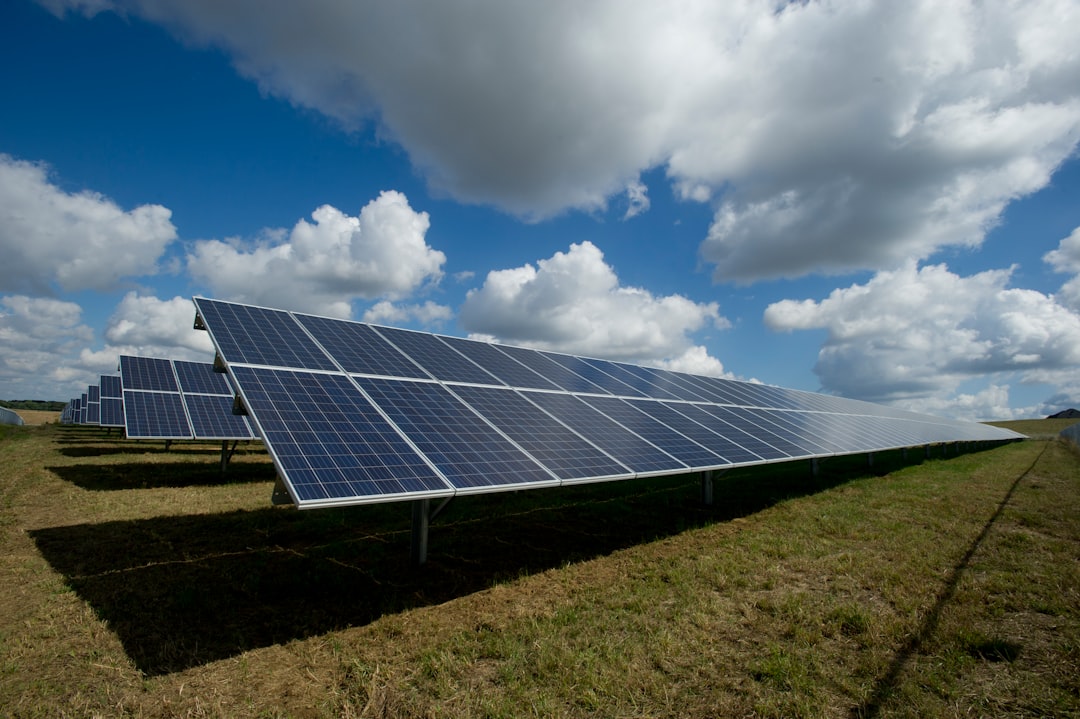
Microgrids essential energy resilience has shifted from a niche concept to mainstream infrastructure necessity. That’s not marketing speak — it’s happening right now, in 2026, across military bases, hospital campuses, industrial parks, and even neighborhoods trying to survive the next grid collapse.
Here’s the thing: your traditional power grid is old, fragile, and increasingly stressed. When the central grid fails — whether from a cyberattack, extreme weather, or simply aging infrastructure — entire regions go dark. A microgrid doesn’t have to. It’s a localized energy system that can disconnect from the main grid and keep running on solar panels, battery storage, backup generators, and whatever other power sources sit nearby. No utility trucks needed. No waiting for distant power plants to restart. Just local resilience.
The numbers back this up. The microgrid market grew from $20.2 billion in 2025 to $23.75 billion in 2026, and that’s just the start. Growth is being driven by growing demand for backup power reliability, rising investment in smart grid modernization, expansion of electrification initiatives, and increasing deployment of AI optimized energy management.
But this isn’t about the money. It’s about keeping the lights on when everything else fails. Let me walk you through what microgrids are, why you should care, and what’s actually happening on the ground in 2026.
What Microgrids are (And Why They’re Different from Regular Power)
A microgrid isn’t magic. It’s just a smarter, more independent way to manage electricity at a local level.
Traditional grid design is centralized: massive power plants generate electricity hundreds of miles away, send it down transmission lines, and hope nothing breaks. When something does break — and it will — an entire region suffers cascading failures. You’ve seen this. Rolling blackouts. Hospitals running on emergency generators. Neighborhoods without power for days.
Microgrids strengthen resilience, helping to mitigate against grid disturbances with their ability to operate reliably (including providing ancillary grid supportive services) when the main grid is either stressed or down. That “island mode” capability is the whole reason microgrids essential energy resilience matters. When the grid goes down, your microgrid doesn’t go down with it.
How does it work? A microgrid combines multiple energy sources — solar, wind, battery storage, backup generators — with intelligent software that decides in real time where power should come from. If solar is running hot, draw from solar. When clouds roll in, switch to batteries. If batteries run low, fire up the backup generator. The system learns patterns, optimizes automatically, and keeps power flowing to your facility.
The catch? You need serious coordination. Solar alone isn’t enough. Batteries alone aren’t enough. You need software that can talk to all these systems and make intelligent decisions in milliseconds. That’s why falling inverter and battery costs, grid-forming technology that lets renewable penetration exceed 90%, and policy mandates that now tie resilience directly to regulated returns are reshaping the economics of microgrids essential energy resilience right now.
Why Microgrids Essential Energy Resilience is Becoming Mandatory (Not Optional)
Five years ago, microgrids were for researchers and forward-thinking military bases. Now? States that frequently experience disasters, and hence have high resilience concerns are more likely to adopt microgrids.
That’s not abstract. California is literally watching its grid collapse every summer. Texas almost lost everything in 2021 and still hasn’t recovered. East Coast grids are straining under wildfire smoke blocking solar and extreme heat spiking demand. Frequent power outages and risks from extreme weather or cyberattacks highlight the need for localized, independent systems capable of islanding from the main grid.
Here’s a real example. In 2026, a mid-size hospital in California installed a microgrid because — get this — their regional utility literally could not guarantee power during peak heat hours anymore. The hospital had two choices: install a microgrid for about $3–5 million, or risk losing critical care capabilities when the grid buckles. They chose resilience. Now when the grid melts during a heatwave, their emergency room stays lit.
Same story at data centers. Military bases are racing toward net-zero targets, and software has become the margin engine even as hardware commoditizes. A data center that goes offline costs millions per minute. A microgrid that keeps it running costs money upfront but becomes mandatory the moment you do the math.
Commercial and industrial facilities get it now. In California’s challenging grid environment, microgrids and hybrid solar + storage systems moved from pilot projects into mainstream deployment, with facilities including campuses, industrial parks, and critical infrastructure leading adoption.
Microgrids Essential Energy Resilience: Hardware and Software Working Together
You can’t build a microgrid without both.
The hardware side seems obvious: solar panels, wind turbines, battery systems, backup generators, controllers. But honestly, those components are becoming commodities now. Siemens led with over 13.5% market share in 2025, with top 5 players including ABB, General Electric, Schneider Electric, and S&C Electric Company collectively holding 40.5%. Those vendors matter, but so do a dozen others. The real differentiation is software.
A microgrid’s intelligence lives in its control software. The software watches demand patterns, predicts solar output, optimizes battery charging cycles, and decides whether to pull from the grid or island mode. It does this in real time. Get that wrong and your facility either stays grid-dependent (defeating resilience) or burns through battery reserves too fast (defeating economics).
This is why microgrids are increasingly functioning as integration infrastructure for distributed renewables, not just backup systems. The software enables renewable sources — solar especially — to work reliably even when they’re unpredictable. That’s a massive shift.
I spent an afternoon once with an energy manager at a mid-size manufacturing facility who told me their microgrid software alone took six months to tune. Not because the software was bad — it was Schneider Electric’s, one of the best in the industry — but because optimizing for their specific load patterns, weather, and economic incentives took real data and real expertise. That’s the hidden cost nobody talks about in articles like this.
Who’s Deploying Microgrids in 2026
Let me be blunt: adoption is uneven. Some sectors are racing ahead. Others are stuck.
Military bases are the proving ground. Military bases are racing toward net-zero targets and using microgrids to get there. Why? Because the Department of Defense has the budget, the mandate, and the urgency. A military installation that loses power during a crisis isn’t acceptable. Full stop.
Hospitals and healthcare systems are second. They have similar constraints: downtime is unacceptable, budgets exist, and regulatory pressure is real. A 100-bed hospital with a reliable microgrid becomes a community asset during grid outages.
Educational campuses are third. Universities have large distributed loads (dorms, labs, sports facilities), existing solar installations, and the technical talent to manage complex systems. Education held the largest revenue share of approximately 37.1% in the microgrid market in 2025.
Commercial and industrial is where real volume is now. North America is projected to reach USD 4.90 billion in 2026, driven by grid modernization initiatives, resilience investments, and increasing deployment across commercial and industrial facilities. That’s factories, office parks, data centers, and distribution centers all installing microgrids not because it’s trendy but because the business case is solid.
Residential and community microgrids are still mostly pilots. A single family can’t justify a $500K microgrid. But neighborhoods, managed as a collective? That’s starting to work in a few places.

The Economics are Finally Working (And Subsidies Help)
For years, microgrids made sense conceptually but not financially. Too expensive. Too complex. Too new.
That’s changed. Increasing adoption of distributed energy resources, rise in remote area electrification projects, growth in grid resilience requirements, early deployment of renewable integration systems, and expansion of industrial and campus microgrid pilots have driven costs down and created standardized deployment patterns.
Battery costs dropped 90% in the last decade. Solar is now cheaper per watt than coal. Software automation is getting smarter. And this matters: government mandates are starting to tie regulated returns to resilience metrics. That means utilities get rewarded financially for microgrids, changing the entire incentive structure.
At the federal level, the Department of Energy is actively funding this. The Department of Energy has $3.5 million available to strengthen microgrids in remote regions (as of May 2026). State-level incentives vary wildly. California throws money at it. Texas is slower. But the trend is clear.
Here’s the honest calculus: A 500-kW microgrid for a commercial facility costs roughly $2–3 million installed. That’s $4–6 per watt. Battery system, solar, controller, integration, commissioning — all in. Five years ago? $8–10 per watt. The curve is bending.
Payback timelines are shrinking too. If you’re avoiding even one week-long outage every five years, and that outage would cost you $100K+ (lost production, spoiled inventory, emergency repairs), the math works. Add in demand charge management — shaving your peak power draw to avoid utility penalties — and payback gets even faster.
Frequently Asked Questions
What Exactly does Microgrids Essential Energy Resilience Mean in Practice?
It means your facility or community can generate, store, and manage its own power locally, and keep running when the main grid fails. Practically, that’s solar + batteries + controls operating in island mode without any outside electricity supply. You’re independent instead of dependent.
Are Microgrids Expensive? will They Break My Budget?
Not anymore. A commercial microgrid runs $2–3 million for typical facilities, with payback in 5–7 years through avoided outages, reduced demand charges, and efficiency gains. Federal and state grants can cover 20–40% of costs. It’s significant money, but for critical facilities the ROI is real.
How do I Know if Microgrids Essential Energy Resilience Makes Sense for My Situation?
Ask three questions: One, do you have critical loads that can’t go offline? Two, do you have roof space, land, or budget for solar? Three, does your utility’s grid reliability suck? (Check local outage statistics.) If you answered yes to any two, you should talk to a microgrid developer. This isn’t a luxury anymore.
What’s the Biggest Barrier to Installing a Microgrid Right Now?
Regulatory complexity, honestly. Interconnection rules vary by state and utility. Some utilities make it deliberately hard because they see distributed energy as competitive threat. That’s starting to change at the policy level, but it’s slow. Technical barriers are almost solved. Financial barriers are almost solved. Regulatory barriers are the real problem.
Will Battery Technology Get So Good that I Should Just Wait to Install a Microgrid?
No. Battery costs will keep falling another 5–10% annually, but the rest of the stack (solar, controls, integration) is already cheap. Grid reliability isn’t waiting for perfect technology. Waiting five years for marginally better batteries means five years without resilience. The math says: install now.
The Bottom Line: Microgrids Essential Energy Resilience Isn’t Coming ??? It’s Here
The question isn’t whether microgrids essential energy resilience is worth building. The question is whether you can afford NOT to.
For critical facilities — hospitals, data centers, military bases, essential manufacturers — the calculus is already solved. You need local resilience. The grid will continue to fail more often. Batteries and software are cheap enough. Install a microgrid.
For commercial and industrial facilities, the payback is real and shortening. If you’re paying $100K+ annually in electricity costs or managing any risk from power outages, get a feasibility study. Cost is typically $10–20K and takes eight weeks. That study might reveal you save money by going microgrid.
For community and residential projects, it’s still harder, but that’s changing fast. The capabilities of microgrids to provide localized, reliable, and sustainable power are being demonstrated across the nation, and the US is well-positioned to leverage microgrids as a cornerstone of its energy future, moving toward the ambitious goal of 30% energy independence by 2028.
The grid won’t be fixed overnight. Centralized power systems are slow to modernize. But you don’t have to wait for the grid to fix itself. A microgrid is a local solution to a systemic problem. Stop betting on utilities to solve this. Build your own resilience instead.

2 Comments
Pingback: Forest Restoration New Economic Opportunity: 2026 Market Guide
Pingback: Semiconductor Packaging Next Technology: 2026 Guide