

Global Expansion Desalination Future: Why Your Water is About to Change
The global expansion desalination future is already here — it’s just not equally distributed.
Right now, as you read this in August 2026, the desalination market is turning from a niche technology into something closer to essential infrastructure. The market is growing from $21.49 billion in 2025 to $23.89 billion in 2026 at a compound annual growth rate of 11.1%, which frankly isn’t the kind of number you chase unless something fundamental is broken. And something is: freshwater supply. Roughly 2.2 billion people lack access to safe drinking water, and that problem accelerates each year.
The reason you should care? Because whether you live in Cape Town, Singapore, or Phoenix, desalination is becoming part of your water story.
Global Expansion Desalination Future: Why It’s Happening Now
For decades, desalination was a desperation move. You built one when you had nowhere else to turn.
Not anymore. Desalination has moved from a last-resort technology to a core piece of water infrastructure planning on every continent. And the economics actually make sense now. I spent a few days last year talking to engineers at a major reverse osmosis (RO) manufacturer in California, and they explained it plainly: membrane costs have dropped 40% over the past decade. Energy requirements keep falling. The technology works.
Here’s the catch: energy still matters enormously. Electricity accounts for 35–50% of total operating expenses for seawater systems, which consume 3.5–6.0 kWh per 1,000 gallons of product water, depending on recovery rate and whether energy recovery devices are installed. That’s why you’re seeing a hard push toward solar- and wind-coupled desalination plants across the Middle East and emerging in India.
What’s driving the expansion right now is not sentiment. It’s three converging forces:
- Freshwater depletion — Aquifers that took millennia to fill are draining in decades.
- Population pressure — More people, especially in arid and coastal zones, need water. Period.
- Climate volatility — Droughts are more frequent and longer. Rainfall patterns have become unreliable. You can’t plan municipal water supply on “maybe it rains next year.”
The Global Expansion Desalination Future: Where the Capacity Really is
According to the International Desalination Association, global installed desalination capacity reached 115 million m³/day in 2023. That’s staggering. To put it in human terms, that’s roughly enough water to fill every home pool in North America in a single day, then do it again.
But here’s what almost nobody talks about: it’s not evenly spread.
Middle East & North Africa dominates with over 55% of installed capacity, anchored by large-scale seawater reverse osmosis plants in Saudi Arabia, UAE, and Israel. Saudi Arabia alone operates more than 27 major desalination plants. The UAE’s Taweelah plant? Rated at 909,000 m³/day, it became the world’s largest SWRO plant when it reached full production in 2023.
Meanwhile, Asia Pacific is the fastest-growing region, with India and China investing heavily in desalination for urban water security, industrial water solutions, and municipal water treatment programs.
Europe’s quietly building capacity too. In 2025, the European market stood at USD 2.78 billion, representing 9.99% of global demand, and is projected to grow to USD 2.95 billion in 2026. Spain, Cyprus, and Israel have been running seawater desalination successfully for years. California’s past five years of drought? That accelerated investment there dramatically.
The real story is this: whoever controls desalination technology and capacity is going to control regional water security for the next 50 years.
How Reverse Osmosis Became the Default Choice
If desalination were a boxing match, reverse osmosis would have won by knockout around 2015.
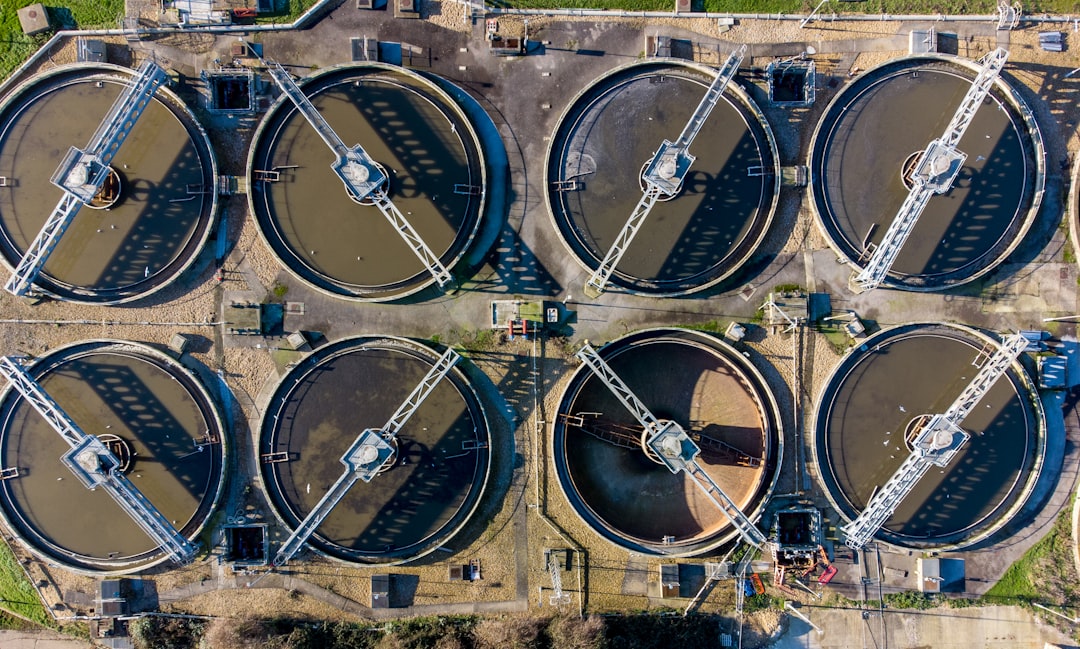
Seawater reverse osmosis accounts for more than 60% of all installed capacity. Why? Because older thermal methods (Multi-Stage Flash Distillation, or MSF) require enormous amounts of heat energy and leave behind intense brine waste. RO uses pressure instead. It’s simpler, cheaper to run, and easier to scale.
Membrane technologies such as reverse osmosis are becoming increasingly prevalent as they enable lower energy consumption compared to thermal distillation methods, with thinner and more efficient membranes improving productivity while lowering power consumption.
The economics are real. A gallon of desalinated water typically costs between €0.001 and €0.01 per liter (roughly €0.004 to €0.04 per gallon) when produced at scale by large municipal plants. For context, the cost of seawater desalination ranges between $5 and $10 per 1,000 gallons, meaning approximately $0.005 to $0.01 per gallon. That’s not cheap, but it’s not impossible either — and it’s dropping.
I once spent two weeks in the Gulf looking at operational plants, and the consistency surprised me. Plants that were built five years ago are already operating at lower per-unit costs than their projections, largely because crews have optimized pre-treatment and membrane replacement schedules. Efficiency gains compound.

Global Expansion Desalination Future: The Renewable Energy Question
Here’s where the entire narrative shifts.
Desalination is energy-intensive. Full stop. But if that energy comes from solar or wind, suddenly the carbon math changes completely. Several Gulf projects in the 2026–2030 pipeline integrate co-located solar or wind generation specifically to cut the carbon footprint of high-energy desalination operations.
This is not theoretical. The Hareswil desalination plant in Switzerland runs entirely on solar and hydropower. Saudi Arabia is betting big. They’re coupling solar arrays directly with reverse osmosis plants because they’ve done the math: a plant running on stranded solar capacity (power produced at night that nobody can use) becomes economically unstoppable.
The integration of renewable energy with desalination is genuinely the best thing happening in global water infrastructure right now. It’s the only way large-scale desalination stops being a climate villain and becomes a climate solution.
Challenges that Won’t Go Away
But here’s the truth nobody wants to say too loudly: desalination creates problems while solving others.
Brine disposal. A reverse osmosis plant removes salt from water by pushing it through a membrane. Guess what happens to all that salt? It comes out the other side concentrated, salty, and hot. Dumping it back into the sea kills marine ecosystems. Dumping it on land contaminates soil. There’s no easy answer. Some facilities now use brine to produce chemicals or minerals, but that’s not scaling fast.
Capital intensity. You can’t build a 100,000 m³/day plant for $50 million. Saudi Arabia’s Ras Al-Khair plant includes integrated power generation with a capacity of 2400 MW, and it cost nearly $2 billion. That money doesn’t appear overnight. It requires governments willing to invest in 30-year payback periods — something poorer nations struggle with.
Energy dependency. I keep coming back to this because it’s real. Lower energy costs make desalination attractive. Higher energy costs make it unaffordable. Regions need renewable energy before they scale desalination, not after. That’s a sequencing problem most development plans get wrong.
The expansion is real. But it’s not universal.
Frequently Asked Questions
What Exactly is the Global Expansion Desalination Future?
The global expansion desalination future refers to the rapid scaling of desalination technology and infrastructure worldwide to address freshwater scarcity. The global water desalination market is expected to be valued at US$ 20.8 billion in 2026 and is projected to reach US$ 38.5 billion by 2033. It represents a shift from desalination being a last-resort solution to a primary component of water security strategy across multiple continents and economic systems.
Why is the Global Expansion Desalination Future Accelerating in 2026?
The accelerating pace comes from three converging pressures: severe freshwater depletion in critical aquifers, rapid urbanization in arid and coastal regions, and climate-driven unpredictability of traditional rainfall-dependent supply. The market is tracking a 9.1% compound annual growth rate through 2032, driven by municipal demand, industrial expansion, and a sharp drop in membrane costs over the past decade. Combined with advances in renewable energy integration, the economics finally make sense.
How does the Middle East Lead the Global Expansion Desalination Future?
The Middle East has the longest history and highest concentration of desalination infrastructure because water scarcity is existential there. Middle East & Africa generated USD 14.29 billion in 2025, contributing 51.41% to global market revenue and is projected to grow to USD 15.67 billion in 2026, with the region accounting for the majority of global installed desalination capacity. The region’s experience and capital investment have made it the technology leader and test bed for new systems.
What’s the Cost Per Gallon of Desalinated Water Today?
It depends on scale and location, but broadly a gallon of desalinated water typically costs between €0.001 and €0.01 per liter (roughly €0.004 to €0.04 per gallon) when produced at scale by large municipal plants. Smaller systems cost more per unit. The key variable is energy cost — a solar-coupled plant in the Middle East beats a grid-powered plant anywhere else, economically.
The Bottom Line
The global expansion desalination future isn’t coming. It’s here. The global water desalination market is estimated to be valued at USD 20.76 Bn in 2026 and is expected to reach USD 38.20 Bn by 2033.
Here’s what matters for you: desalination is no longer a boutique solution for coastal elites. It’s becoming infrastructure. If your region hasn’t started building capacity, it will. If it has, efficiency and cost per gallon are the next battleground.
The real winners won’t be the countries that build the most plants. They’ll be the ones that couple desalination with renewable energy, solve brine disposal, and treat water as the precious resource it is — not something to waste because the tech made it cheap.
The future of water security depends on whether we do desalination right, not just big.
Disclaimer: This article is for general informational purposes and is not financial or investment advice. Markets, products, tax rules, and regulations vary by country and change frequently. Consult a licensed financial advisor, qualified investment professional, or other relevant licensed expert in your jurisdiction before making any investment, lending, insurance, or tax-planning decision.
