

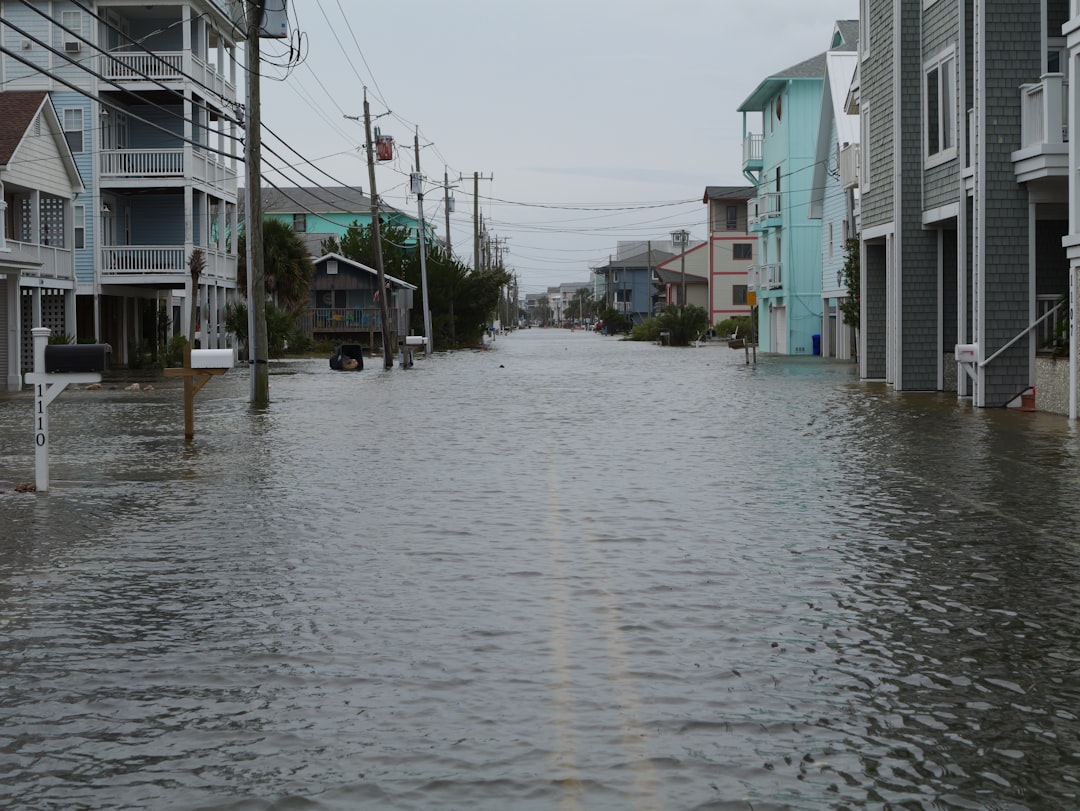
About one quarter of U.S. homes face severe or extreme climate risk from wildfires, storms or flooding. That statistic alone should alarm every property owner, investor, and lender. But it's not the number itself that's reshaping the market—it's the invisible hand of insurance premiums, lending restrictions, and migration patterns that actually moves deals now. Climate risk global real estate isn't some distant scenario anymore. It's here. And honestly, most people haven't caught up yet.
I watched this unfold firsthand last year when a client in Miami tried to refinance a commercial property. The appraisal came in solid. The credit was spotless. But the lender wanted updated flood risk modeling before committing. That six-week delay cost them money and options. Today, that's standard practice everywhere. The industry has shifted, and if you're not thinking about climate risk in your underwriting, you're operating with incomplete information.
Climate Risk Global Real Now Shapes How Banks Price Loans
Here's what's changed: Global banks and conventional lenders are embedding physical climate risk directly into credit pricing and covenant structures, and a low resilience profile can result in tighter financing terms or an outright loan denial. This isn't subtle. This is the market telling you that climate exposure matters as much as debt-to-income ratios.
The consequences hit fast. When a lender tightens terms by 50 basis points because of flood zone exposure, that's real money vanishing from your deal. In 2026, global banks and conventional lenders are embedding physical climate risk directly into credit pricing and covenant structures. Developers used to worry about zoning and construction costs. Now they're worried about whether they can even get financing if the property sits in a high-risk zone.
What's driving this? According to recent data from the First Street Foundation, insurance costs have spiked substantially since 2017, severely expanding the "insurance burden" on residential assets, particularly multifamily and single-family rentals. When insurance premiums jump 30%, 50%, sometimes doubling in a single cycle, the math changes. When insurance costs double, property valuations face immediate downward pressure.
Insurance Crisis is Hollowing Out Property Values
Let me be direct: Nearly half of home buyers and sellers encountered issues with home insurance, while 21 percent reported that a transaction fell through.
Think about that for a second. One in five deals is blowing up because insurance won't cooperate. That's not a market headwind—that's a structural rupture.
A 2025 report by First Street Foundation projects $1.47 trillion in net property value losses over the next 30 years due to "insurance pressures and shifting consumer demand". That's trillion with a T.
The problem cascades. Rising insurance rates, or a lack of coverage altogether, increase household operating costs in the immediate term and imply future catastrophic risk in the longer term, and these factors discourage prospective buyers, thus decreasing demand and lowering home values.
Here's what I've learned: the investors who survive this are the ones who accept insurance cost as a primary underwriting variable, not an afterthought.
Climate Risk Global Real Pricing Gaps Still Exist???for Now
The weird part? Despite all this data, Some indications suggest that buyers aren't immediately dissuaded by long-term climate risks when home shopping, and "Buyers are not seeking risk—but in markets where affordability has long been an issue, price is the dominant signal, and high-risk homes happen to offer the discount that makes ownership possible".
Affordability is winning over caution. People need a place to live. If a property in a flood zone costs 20% less than the same home two neighborhoods over, price becomes the story. Urgency overwrites prudence.
But this won't last. The home insurance business model relies on carriers accurately predicting risks, and because of climate change, providers cannot necessarily rely on historical data to predict catastrophes, so more sophisticated tools are needed, and as they adopt better risk modeling, companies may find that they have been underestimating climate risks, which could drive home insurance rates even higher.
In other words, whatever discount exists today will evaporate once insurers refine their models (which they're actively doing right now). The buyers getting deals on high-risk properties today might be the ones underwater tomorrow.
Where People are Moving???and Why Developers Must Follow
Buyers are more sensitive to climate risk than today's sellers might realize, and according to a report by Zillow, 83% of buyers have considered at least one climate risk when entering the real estate market.
That's not fringe behavior. That's the mainstream. This means climate risk global real estate markets are seeing capital flow toward lower-risk geographies. Some Americans are reconsidering coastal and wildfire-prone areas, leading to migration toward regions with lower climate risk, and developers are pivoting to construct homes in safer locations, factoring in access to emergency services and resilient infrastructure.
The smart developers aren't fighting migration patterns—they're betting on them. Developers are integrating advanced materials and innovative design features: fire-resistant roofing, elevated foundations for flood-prone areas, hurricane-proof windows, and backup energy systems, and neighborhoods that invest in climate-resilient infrastructure are seeing increased property demand and higher values.
The regions gaining population and property value right now? The ones with lower climate risk. The ones losing both? You can guess.
Climate Risk Global Real Hits Commercial Real Estate Differently
Residential gets the headlines. Commercial is where the real reckoning happens.
The CREDA Research Foundation released a new report examining how the commercial real estate industry assesses, manages and mitigates physical climate risk amid a sharp rise in weather-related losses. Institutional investors, lenders and insurers are increasingly incorporating forward-looking physical risk analytics into underwriting, alongside historical data and engineering-based resilience assessments.
Commercial properties have longer hold periods. They require more precise forecasting. A 40-year office building purchased today at a cap rate of 5.5% is making a 40-year bet on the climate stability of its location. That's not insurance—that's prophecy.
Frankly, the analysis here is more sophisticated than in residential. But that also means the repricing is faster. Climate-related disasters cost up to USD 430 billion per year globally (about 0.5% of global GDP), with total damages from disasters reaching USD 131 billion in the first half of 2025.
That kind of cumulative damage is already baked into cap rate expectations in high-risk markets.
Frequently Asked Questions
What does "Climate Risk Global Real" Mean?
Climate risk global real describes how physical climate hazards—flooding, wildfires, storms, heat—affect real estate values, insurance availability, and investment returns across the world's property markets. It encompasses both immediate risks (an upcoming flood season) and long-term exposure (a property's 30-year flood probability). For investors and buyers, it's the factor that now determines whether a property gets financing, what it sells for, and whether you can even insure it.
How is Climate Risk Global Real Affecting Property Values in 2026?
In 2026, climate risk global real is creating a two-tier market. High-risk properties are seeing discounts of 15-25% in some regions, while resilient properties command premiums. Insurance availability is the main driver—properties that can't get affordable coverage lose buyer demand. Lenders are also tightening terms in high-risk zones. Net effect: climate risk global real has become a primary variable in underwriting, not a secondary one.
Will Insurance Costs Keep Rising Due to Climate Risk Global Real?
Yes. Insurance carriers are upgrading their risk models to better account for climate change. As models improve, insurers will likely discover they've been underpricing risk. This means rates will rise faster in high-risk zones, and some properties may become uninsurable altogether through private markets (forcing buyers to seek state FAIR plans, which are more expensive). This compounds the climate risk global real problem: higher insurance cost → lower property value → less buyer demand.
Should I Avoid Buying in High-Risk Climate Areas?
Not necessarily. It depends on your time horizon and risk tolerance. If you're buying to live in for five years and can afford premiums, you might find good value. If you're investing for long-term appreciation, high-risk properties are increasingly risky bets. The smart move: buy only if the discount is steep enough to absorb 10+ years of rising insurance and maintenance costs—and make sure you can actually get insurance first.
How do Developers Adapt to Climate Risk Global Real Threats?
Adaptive developers are doing three things: (1) Building in lower-risk geographies where possible, (2) Hardening properties with resilient materials (fire-resistant roofing, elevated foundations, backup power), and (3) Locating near good emergency infrastructure and community resilience investments. Properties with these features are seeing higher demand and stronger valuations, especially in transitional markets.
The Bottom Line
Climate risk global real estate markets are no longer theoretical. They're operational. In 2026, climate change is no longer a distant concern—it's an everyday reality shaping decisions in the U.S. real estate market, with extreme weather events becoming more frequent and severe, pushing homebuyers, developers, and policymakers to rethink how and where homes are built.
Here's what you actually need to do:
If you're a buyer, get a climate risk assessment before you make an offer. Not after. Knowing your property's flood probability, wildfire exposure, and 30-year insurance outlook should be as standard as a home inspection. Ideally, negotiate repairs or credits that address those risks upfront.
If you're an investor, run climate modeling on every acquisition. Treat it like you'd treat title insurance or a environmental Phase I. The discount you get today on a high-risk property will disappear fast once the market reprices around better data—and it's repricing now.
If you're a developer, stop fighting migration patterns. Build in lower-risk zones. Harden everything. Invest in infrastructure resilience. The properties that will hold value over the next 20 years are the ones that don't rely on insurance bailouts or lender forbearance.
The real estate market in 2026 is pricing climate risk faster than most people expect. Don't get caught behind that curve.
Disclaimer: This article is for general informational purposes and is not financial or investment advice. Markets, products, tax rules, and regulations vary by country and change frequently. Consult a licensed financial advisor, qualified investment professional, or other relevant licensed expert in your jurisdiction before making any investment, lending, insurance, or tax-planning decision.
