

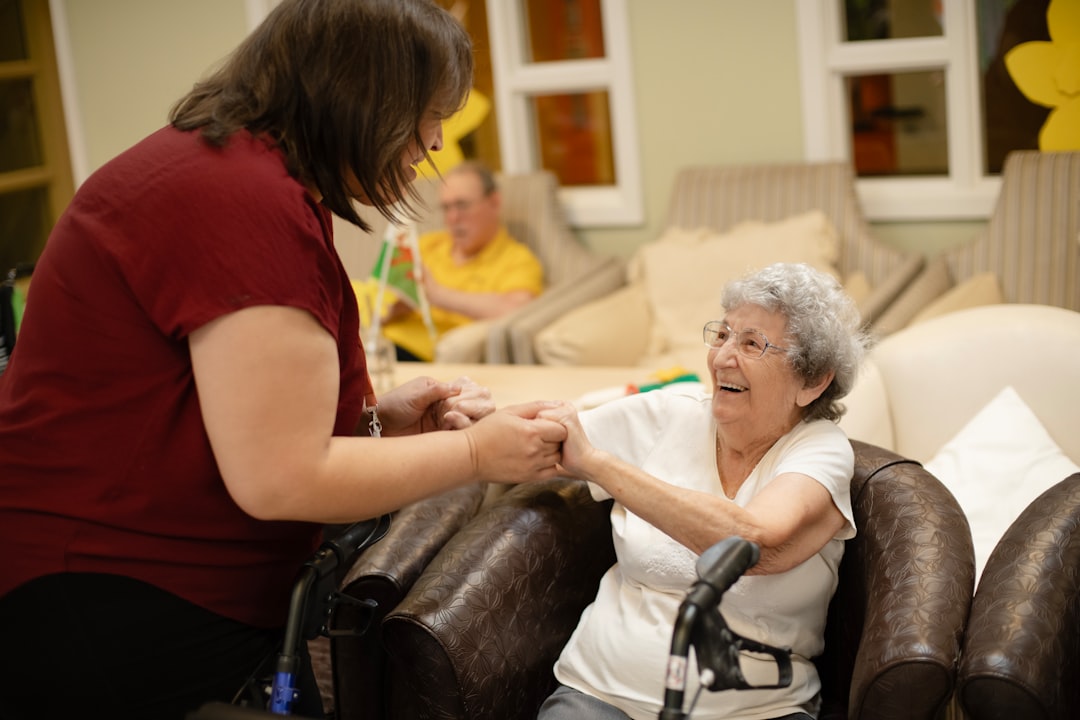
# Future Robotics Healthcare Elder ??? the Real Story Behind the Transformation
Here’s the truth: future robotics healthcare elder is no longer science fiction. It’s happening in nursing homes in Tokyo, surgical suites in Manhattan, and care facilities across China. But the narrative you hear is usually wrong — either oversold as the robot apocalypse or undersold as “a nice tool that helps.” Neither is accurate.
The reality is messier, more interesting, and honestly, more hopeful than either extreme. Robots in healthcare and elder care are solving a genuine crisis (not replacing humans, but buying time for overwhelmed systems). They’re doing specific things remarkably well. They’re also expensive, sometimes awkward, and nowhere near the sci-fi fantasy you might imagine.
The healthcare robotics market is projected to grow from USD 22.5 billion in 2026 to USD 84.5 billion by 2034, and the elder care robotics segment is growing even faster. This isn’t just venture capital theater — real robots are in real care facilities right now, doing real work. But before you assume a future robotics healthcare elder world means grandma gets replaced by a machine, read on. That’s not what’s happening.
## Future Robotics Healthcare Elder: The Market That’s Actually Moving
Let’s start with numbers that matter. The eldercare robot market is valued at $3.56 billion in 2026, growing at 12.5% CAGR. That’s not tiny. That’s a real market with real money behind it.
But here’s what’s actually driving this. It’s not some futuristic vision of robot utopia. It’s demographics, and demographics is ruthless.
Global demographic shifts, with over 2 billion people aged 60+ by 2050, are increasing demand for assistive and rehabilitative robots in elder care. Japan already has 29.3% of its population over 65. South Korea became a “super-aged society” in 2024. China’s elderly population is growing so fast the government literally launched a national pilot program in 2025 requiring robotics firms to deploy 200 robots to 200 families.
The catch? Healthcare worker shortages are projected at 18 million by 2030, according to current forecasts. You can’t just hire your way out of that. So robots fill a gap — not perfectly, not romantically, but practically.
## Future Robotics Healthcare Elder in Surgical Settings: Where Precision Matters
Surgical robotics is where future robotics healthcare elder gets the most attention, and for good reason. Approximately 20 to 30% of general surgical procedures in the U.S. are now performed using robotic systems. That’s not a niche. That’s mainstream.
Consider this real case: A trial involving 29 surgeons across nine UK hospitals found that patients who received robot-assisted surgery stayed in the hospital for an average of eight days—two days fewer than traditional open surgery. The study also indicated that robotic-assisted surgery achieved a 52% reduction in readmission rates.
I spent an afternoon once watching a surgeon explain da Vinci systems to residents. The skepticism was thick. “Why do I need a robot?” one asked. But here’s what shifted the room: Robotic surgical systems help reduce fatigue among surgeons through ergonomic enhancements, minimal instrument movement restrictions, comfortable seating and stable visualization, putting less pressure on the cervical spine. A surgeon working 8 hours straight at a traditional console is more likely to make mistakes. A surgeon in an ergonomic seat, with magnified 3D visualization? Different calculus.
Over 6,700 robotic surgery systems are installed worldwide. The U.S. leads in hospital adoption, but Canada and Europe are catching up.
## Companions, Monitoring, and the Emotional Work that Matters
This is where future robotics healthcare elder shifts from pure mechanics to something weirder and more powerful.
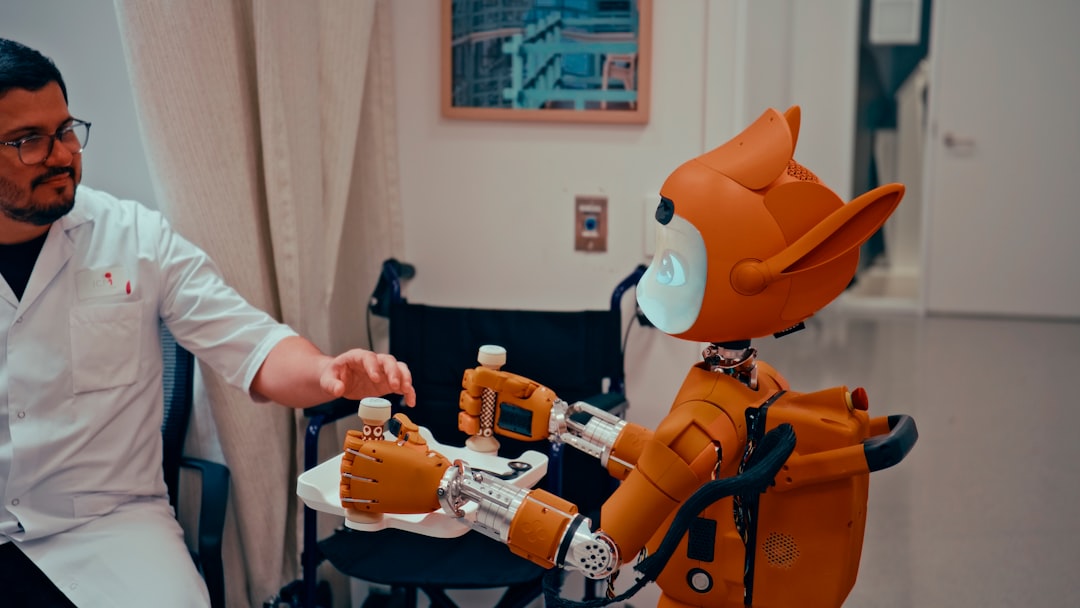
Robots like Paro (a therapeutic seal), ElliQ (conversational AI in a screen), and humanoid systems like Fourier GR-3 are not trying to replace nurses. Every researcher and developer interviewed consistently positions robots as supplements to human care, not replacements. Robots handle routine tasks (medication reminders, basic monitoring, companionship during off-hours) so human caregivers can focus on complex, empathetic care.
That distinction matters. A lot.
Robots like Paro, Hyodol, ElliQ, and Fourier GR-3 are actively deployed in nursing homes and private residences across Japan, South Korea, China, the US, and Europe — providing companionship, medication reminders, health monitoring, and physical assistance.
Here’s what nobody talks about: isolation kills. South Korea has some of the highest elderly suicide rates in the OECD. Japan’s been using robot companions for decades specifically because the human shortage is so acute that isolation became a larger problem than any single medical condition. A robot that reminds you to take your medication at 9 AM, checks your heart rate, and makes conversation? That’s not replacing a nurse. That’s filling a void that shouldn’t exist but does.
The clincher: Clinical studies show measurable benefits: reduced anxiety, improved mood, better social engagement, and relief for overburdened care staff.
## the Cost Problem that Won’t Go Away (Yet)
Let’s talk about the elephant in the room.
Advanced surgical robots exceed $2 million per unit. Smaller facilities struggle with ROI timelines often stretching beyond five years, limiting widespread penetration. Honestly, that’s the real barrier to adoption — not whether the tech works, but whether anyone can afford it.
Home-based elder care robots are better on that front but still steep. Premium pricing of home elderly care robots, often exceeding $5,000 per unit, limits penetration in middle-income households, particularly in developing markets where affordability remains a barrier despite long-term savings on caregiving.
What actually matters? Reimbursement. The North America elder care assistive robots industry dominated in 2025 and accounted for the largest revenue share of 39.8%, owing to its advanced healthcare infrastructure and significant investments in healthcare technology. The rapid adoption of innovative technologies and a strong focus on improving the quality of life for the elderly are accelerating regional growth.
In places where insurance covers it, adoption grows. Where it doesn’t, adoption stalls. It’s that simple.
## the Adoption Reality: Not Everyone’s Ready Yet
Here’s something that frustrates tech evangelists but should comfort you: adoption is slower than the hype suggests, and that’s okay.
Elderly users frequently face difficulties with intuitive interfaces, leading to underutilization rates as high as 40% in early deployments. Extensive training programs are needed to build confidence. One 75-year-old I spoke to had a robot delivered to her assisted living facility. She was terrified of it. She called it “the thing.” After three weeks and two training sessions, she still preferred asking staff.
That’s not a failure. That’s real life. Robots work best when you want to use them, not when they’re forced on you.
## Frequently Asked Questions
### What does Future Robotics Healthcare Elder Mean for Jobs in Nursing and Caregiving?
Robots are supplement, not replacement. The fundamental problem is that there aren’t enough human caregivers to meet demand, and robots help bridge that gap. A nursing home with 40 residents and 8 staff members still needs 8 staff members — but those staff members can spend more time on complex care and less time on repetitive tasks like reminding someone to take medication or monitoring for falls during night shifts.
### How Realistic is it that I or My Family Member Could Have a Robot Caregiver in 2026?
Very realistic if you have money, less so otherwise. In March 2026, a New York-based senior care technology company, Sage, announced that it raised $65 million in new funding to expand its artificial intelligence platform to support caregivers in nursing homes and assisted living facilities. Nursing homes and assisted-living facilities are where adoption is fastest. Home ownership is climbing but still requires significant upfront investment.
### is Future Robotics Healthcare Elder Going to Work for Dementia and Severe Cognitive Decline?
This is where robots genuinely struggle. They’re good for people who can follow instructions, understand what a robot is, and tolerate the interaction. For severe dementia, human connection is critical and irreplaceable. Robots can help with monitoring and simple tasks, but they don’t solve the core problem of what dementia patients need: patience, recognition, presence. A robot can’t do that last one.
### will Surgical Robots Make Surgery Cheaper or More Affordable?
Not yet. About 2.63 million surgical procedures were performed in the U.S. last year using da Vinci systems — a 17% increase from 2023. Volume is up, but cost remains high because hospitals amortize equipment cost, training, maintenance, and the robot’s limited lifespan into each procedure. As more hospitals adopt them and competition increases (new entrants like Medtronic’s Hugo and J&J’s Ottava are coming), prices will eventually drop. We’re maybe five years from that shift.
### is Future Robotics Healthcare Elder Actually Beneficial, or is it Just Venture Capital Hype?
Both. The hype is real. The benefits are also real — just more specific and less universal than the hype suggests. Robots reduce surgical complications, improve monitoring, free up staff time, and provide companionship in isolated settings. Those are genuine wins. But they don’t replace skilled nurses, don’t work for every condition, and don’t solve systemic healthcare failures. They work within broken systems, making them slightly less broken.
## Conclusion: The Unglamorous Truth
Future robotics healthcare elder isn’t about robots taking over medicine. It’s about robots doing exactly one thing well — handling routine, repetitive, or monitoring tasks — so that humans can do what they actually do best: critical thinking, empathy, complex decision-making.
Your grandparent’s future care probably includes a robot. That robot won’t be sentient, won’t be your grandparent’s best friend, and won’t replace the humans in the room. What it will do is remind them to take pills, alert staff if they fall, maybe keep them company on a Tuesday afternoon when nobody else is around.
And honestly? In a world with 2 billion people over 60 and nowhere near enough human caregivers, that’s not just hype. That’s necessary.
Medical disclaimer: This article is for general informational purposes and is not medical advice, diagnosis, or treatment. Always consult a qualified physician or healthcare professional for guidance specific to your condition. Do not start, stop, or change any treatment based solely on what you read here.
