


Ocean technology sustainable industries aren’t some distant fantasy anymore — they’re reshaping everything from fishing to energy, right now in 2026. The world is waking up to what’s been there all along: the ocean holds tremendous power, both literal and economic.
For decades, we’ve treated the seas like they’re infinite and disposable. Solar panels on rooftops, wind turbines on hills. But the real opportunity? It’s in the water.
Ocean Technology Sustainable Industries are Finally Getting Real Capital
Blue economy startups raised $2.1B in 2025, with autonomous vessels and sustainable seafood taking the biggest chunks. That’s not chump change. That’s not incubator money. That’s real institutional capital flowing into companies building solutions that actually work at ocean scale.
I remember talking to a founder of a marine robotics company a few years back who couldn’t get anyone to pay attention. No one understood the market. Now? Ocean tech investment doubled from 2024 to 2025. That founder would have a line of investors around the block today.
The surge isn’t random. Maritime decarbonization regulations kicked in, forcing shipping companies to find zero-emission solutions. The UN Ocean Decade pushed government funding toward ocean monitoring and restoration. Aquaculture is scaling because wild fish stocks can’t meet protein demand.
The real story: ocean technology sustainable industries aren’t competing for scraps anymore. They’re now the place where climate money actually flows.
How Marine Renewable Energy is Becoming Economic Reality
Here’s what surprised me most when I dug into the data: The marine energy market size exceeded USD 2.11 billion in 2025 and is expected to grow at a CAGR of 9.7% from 2026 to 2035, driven by rising adoption of low-emission renewable energy technologies. That’s consistent, steady growth. Not a bubble. Not hype.
The market’s momentum is clear. The market size is projected to reach USD 2.14 billion in 2026. By itself, that’s not huge. But watch what happens next: The marine energy market is expected to reach USD 4.94 billion by 2035, propelled by technological advancements, offshore renewable integration, and growing demand for reliable clean energy sources.
That’s the trajectory governments and investors want to see.
Ocean Technology Sustainable Industries: The Renewable Energy Mix
What’s actually working right now (and what’s still stuck in the lab):
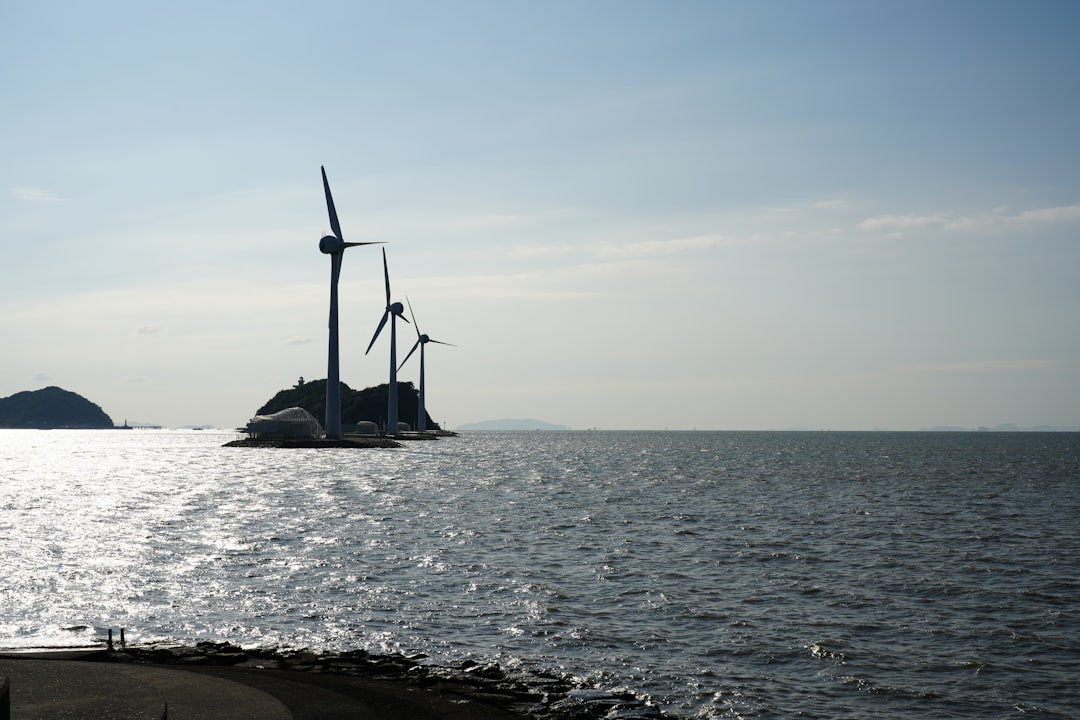
- Offshore wind. Mature. Scaling. Thousands of MW already deployed across Europe and Asia.
- Tidal energy. Tidal energy dominated with about 60.6% market share in 2025, leading the market with consistent and predictable power generation capabilities. Why? Because unlike wind, tidal and ocean current energy follow astronomical cycles — knowable years in advance. That predictability makes marine energy uniquely valuable as a firm, dispatchable complement to variable renewables, supporting grid stability without large-scale storage.
- Wave energy. Promising. Offshore wave energy is still at the pre-commercialization stage for many developing countries. Translation: getting closer, but not ready yet.
- Ocean thermal energy. Ocean current, ocean thermal, marine biomass, and salinity gradient energy are part of the toolkit, but each comes with its own physics headaches.
The catch? Cost and predictability. The harsh natural environment of the ocean adds another layer of difficulty to building marine renewable energy projects by increasing the installation, operation, and maintenance costs of the infrastructure to account for the corrosion caused by the sea water. Development is further constrained by the lack of high-quality meteorological data, which is necessary for predictive models to determine the best locations for marine renewable energy projects to be built.
It’s not impossible. It’s just real.
Monitoring, Data, and the Tech that Keeps Industries Accountable
Solutions from AI, robotics and autonomous systems, to GIS, cloud analytics and integrated platforms, to monitoring, resilience and compliance technology, will enable engineers, scientists, operators, surveyors and geotechnical professionals to discover and assess next-generation marine technology, while learning more about how the latest ocean innovations can advance sustainable practices, cut costs, improve safety and lower risk.
This is where the action is for most companies I’ve seen. Not just generating power. Not just catching fish differently. But knowing what’s happening in the ocean in real time.
Imagine a fishing company that actually knows where sustainable stock populations are instead of just hoping. Or an offshore platform that predicts maintenance needs before equipment fails. Or coastal protection that responds to storms hours before they hit.
Ocean technology sustainable industries are building these solutions today. Autonomous drones. Subsea sensors. Predictive analytics platforms. Most aren’t flashy. Most don’t make headlines. But they’re the backbone of any sustainable ocean operation.
Aquaculture: Where Sustainability Met Profit
Here’s the thing: sustainable seafood doesn’t mean less seafood. Wild fish stocks are tanking. The math is brutal. Aquaculture is scaling because wild fish stocks can’t meet protein demand.
Modern aquaculture is nothing like the fish farms that made your parents skeptical. Smart systems monitor water quality. Automated feeders reduce waste. Genetic improvements (yes, they’re controversial, but they work) create faster-growing, disease-resistant stock.
Jala Tech $13M Series A (2025), Aquaconnect $4M (2024), XpertSea $11M Series A (2022) … They have connections to food companies and understand aquaculture unit economics. That’s real capital. That’s real confidence.
The investors backing aquaculture aren’t tree-huggers or sentimentalists. They’re looking at a market that has to feed billions of people without destroying what’s left of the ocean. Ocean technology sustainable industries solve that equation.
Coastal Protection and the Race Against Rising Seas
This one hits different. We’re not talking about profit margins or market share. We’re talking about whether entire regions remain habitable.
A new Coast exhibition and conference topic has been added to make the already varied Oi event even better, in response to the problems coasts face from storms, flooding, erosion, and rising sea levels. This new focus aims to show progress in protecting coasts, stopping erosion, studying how sand and soil move, keeping shorelines stable, and adapting to climate change to help coasts grow in ways that protect nature.
The technology here ranges from natural solutions (seagrass restoration, oyster reefs) to engineered approaches (floating barriers, smart breakwaters). Ocean technology sustainable industries aren’t choosing between them. They’re deploying both.
I talked to a coastal engineer last year who’d spent three decades building seawalls. Now she’s installing living shorelines instead. Same mission — protect the coast. Different tools. Better outcomes.
Frequently Asked Questions
What is Ocean Technology Sustainable Industries Exactly?
Ocean technology sustainable industries refers to technologies and business solutions that harness ocean and marine resources responsibly while meeting environmental and economic goals. This includes renewable energy generation, aquaculture, monitoring systems, and coastal protection — all powered by innovation in robotics, AI, and sensor networks.
How Much Investment is Flowing into Ocean Technology Sustainable Industries in 2026?
The marine energy market size exceeded USD 2.11 billion in 2025 and is projected to reach USD 2.14 billion in 2026, growing at a CAGR of 9.7% through 2035. Beyond energy, ocean tech sectors like aquaculture and monitoring solutions are attracting billions more in venture and government funding globally.
Why is Ocean Technology Sustainable Industries Growing Faster Now than Before?
Three reasons converge in 2026: regulatory pressure (shipping decarbonization, fishing restrictions), capital availability (impact funds finally understand ocean carbon removal and sustainable seafood), and market urgency (wild stocks collapse, renewable energy demand surges). Ocean tech went from niche to essential overnight.
Which Ocean Technology Sustainable Industries Applications are Ready to Deploy Today?
Offshore wind is commercial and scaling. Tidal energy is cost-competitive in high-flow regions. Autonomous monitoring systems are live. Aquaculture tech is increasingly profitable. Wave energy and ocean thermal are still 3-5 years out for most markets. The best approach: don’t wait for perfection. Deploy what works now.
The Bottom Line
Ocean technology sustainable industries aren’t a moonshot. They’re the only rational response to two realities: the ocean is running out, and we need it more than ever.
The capital is flowing. The technology is here (mostly). The political will is building. What’s left is execution — scaling from prototype to operation, from lab to ocean, from hope to impact.
If you’re in maritime, energy, food production, or coastal management, you can’t ignore this shift anymore. The ocean economy is becoming the economy that matters. And it’s being built right now by teams armed with better data, smarter robots, and the understanding that sustainable doesn’t mean small.
It means profitable. It means essential. It means inevitable.
