

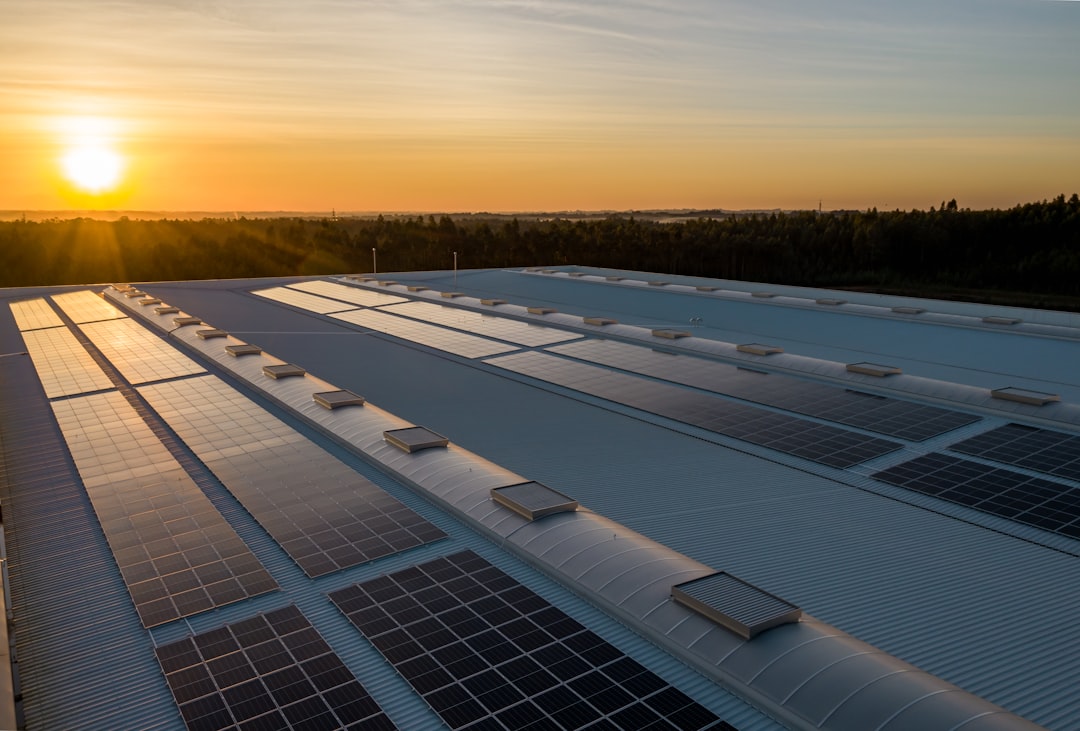
The future renewable energy storage is reshaping how the world captures, stores, and distributes clean energy — and the shift isn’t coming in 2030 or 2035. It’s happening right now, in 2026. What used to be a niche technology wedged between solar panels and utility companies has become mainstream infrastructure. The numbers prove it: in 2025, 108 GW of new battery storage capacity was deployed worldwide, 40% more than in 2024. Utility companies are ditching natural-gas peakers. Data centers are scrambling to secure storage capacity. Residential homeowners can now afford batteries that made economic sense only years ago.
But here’s the catch: this explosion of capacity has revealed an uncomfortable truth. The future renewable energy storage isn’t a single technology. It’s a portfolio. Lithium-ion still dominates (yes, still), but sodium-ion, solid-state, and iron-air batteries are racing toward commercial viability. Each solves a different problem. The question you need to ask isn’t which one wins—it’s which ones you need for your specific application. This article breaks down what’s actually happening in the storage space and why it matters to anyone watching energy markets shift.
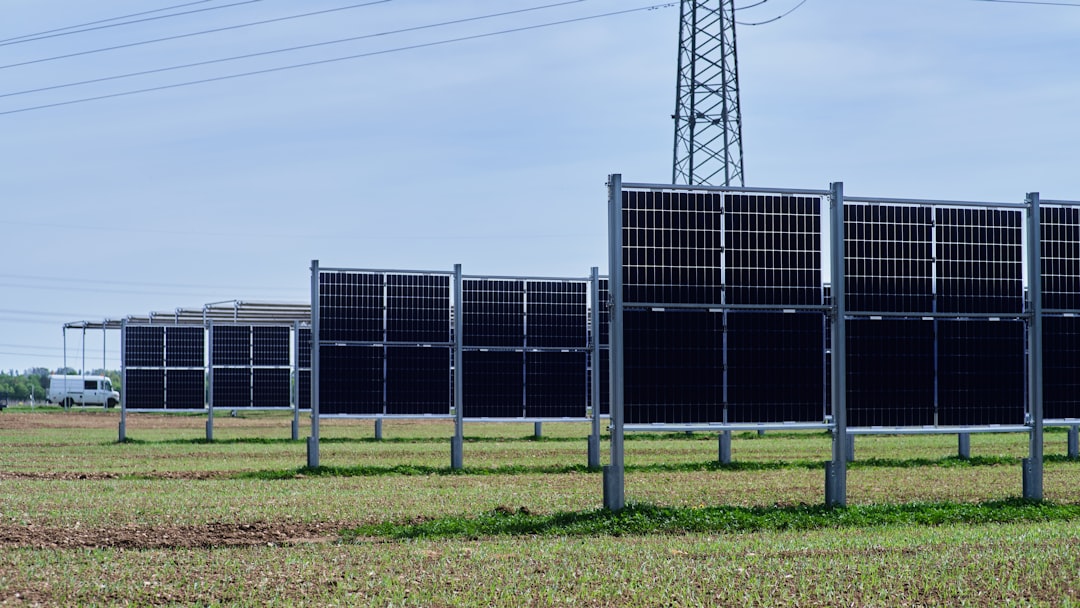
The Future Renewable Energy Storage Market is Exploding. Here’s Why Nobody Saw it Coming.
Remember when energy storage was a afterthought? A nice-to-have appendage to renewable projects? Those days are dead.
The renewable energy storage market will grow from $167.89 billion in 2025 to $218.53 billion in 2026 at a compound annual growth rate (CAGR) of 30.2%. And that’s not some bullish startup projection. That’s official market data. The speed is jaw-dropping—not because the technology improved dramatically (though it did), but because the economics finally flipped. When storage costs become competitive with fossil-fuel peaking plants, adoption stops being a climate gesture and starts being a business decision.
The real kicker? In 2026, the world is expected to add another 353.4 GWh of energy storage capacity, driven by demand from artificial intelligence (AI) data centers. AI didn’t kill the grid. AI just forced utilities and operators to solve storage problems they’d been ignoring. Hyperscale data centers suck massive amounts of power on unpredictable schedules. Batteries let them flex and manage that load without bringing down the wider grid.
In Q1 2026, battery energy stationary storage (BESS) installations reached 9.7 GWh, the largest Q1 in history and a 32% year-over-year increase. Let that sit for a second. The strongest quarter ever. In January, February, March. While the rest of 2026 still has five more months left.
What’s Driving Future Renewable Energy Storage Adoption (And It’s Not What You Think)
Most articles tell you it’s climate change or renewable intermittency. That’s true—but incomplete.
Here’s what’s actually happening: costs collapsed, and policy finally got smart. Stationary-grade lithium-iron-phosphate cell prices slid to USD 70 per kWh in late 2025, down from USD 115 a year earlier, enabling six-hour and eight-hour installations to beat natural-gas peakers wherever peak-to-off-peak spreads exceed USD 40 per MWh.
Translation? In parts of the grid where there’s a big price gap between peak and off-peak hours, a battery system can now earn money faster than a fossil fuel plant. You don’t need subsidies when the math works. You just need permits.
Lithium-iron phosphate (LFP) batteries now account for around 90% of deployments; while less energy-dense than rival chemistries commonly used in EVs, LFP batteries are typically cheaper and better suited to more frequent cycling. Five years ago, LFP was a curiosity. Today it’s the default choice. That’s not innovation at the lab level—that’s a wholesale industry pivot toward what actually works at scale.
The United States is leading (well, racing to keep up). The utility-scale market continued growth with 7.8 GWh/1.5 GW installed in Q1 2026, with six states adding more than 500 MWh of new capacity. Texas, California, Arizona. The same three states that keep the lights on during peak demand. They’re not installing storage because it’s trendy. They’re doing it because they have to.
Future Renewable Energy Storage Technologies are Finally Getting Diverse
And here’s the thing: lithium-ion is no longer the only game in town.
For years, every energy storage conversation started and ended with lithium-ion. Reliable? Yes. Proven? Absolutely. Scalable? More or less. But if your industry depends on it, you’re hostage to supply chains. Since January 2025, battery storage costs have risen 56% to 69% due to Trump’s tariffs. So developers started asking: what else is out there?
Sodium-ion batteries. China is leading the charge, with companies scaling production and deploying sodium batteries in both vehicles and grid storage systems. In a major milestone, the first mass-produced sodium-ion electric vehicle has already hit the road, signaling real-world viability. Recent advances show sodium-ion batteries reaching ~175 Wh/kg energy density (competitive with LFP lithium batteries) near cost parity with lithium-ion, with projections to become cheaper long-term. CATL, the Chinese battery giant, committed to mass production in 2026. Not 2027. Not 2028. This year. Sodium doesn’t require lithium mining, which means fewer geopolitical risks and (eventually) lower costs.
Solid-state batteries. Solid-state batteries remain one of the most anticipated breakthroughs—and 2026 marks a turning point. Automakers and manufacturers are investing billions, with commercialization timelines converging around 2027–2028. BYD recently announced a new sulfide solid-state battery patent as the company continues supporting China’s plans to begin pilot-scale solid-state battery production around 2027. Higher energy density, better safety, longer life. The trade-off? Still expensive. Still early. But no longer science fiction.
Iron-air batteries. One of the most unexpected breakthroughs comes from iron-air batteries—often described as “rust-based” storage. This approach eliminates dependence on lithium and rare minerals. This technology could solve one of energy’s biggest challenges: storing power for days, not hours. Form Energy and other companies are already scaling production. A battery made from iron and air. That’s almost absurdly simple—until you realize simplicity is exactly what grid storage needs.
The future renewable energy storage isn’t a single chemistry. It’s a toolkit. Lithium-ion for most use cases. Sodium-ion where cost matters most. Solid-state when energy density is critical. Iron-air for long-duration needs. Different problems, different solutions.
The Utility-Scale Vs. Behind-The-Meter Split is Reshaping Everything
You can talk about technology all you want, but the real story is where storage is getting deployed.
Around 80% of new battery capacity in 2025 was utility-scale. Eighty percent. That’s a historic shift. Five years ago, the conversation was all residential. Home batteries! Distributed solar! Prosumers! Those are real things, but they’re a rounding error in the total market now.
Why? Utility-scale projects are where the money is. A 100 MW facility serving the grid can be profitable at a smaller per-unit cost than a home system. The economics work. The permitting (mostly) works. Big players like NextEra and Brookfield can finance them. And they’re racing to build before interconnection queues get any longer.
The behind-the-meter (BTM) market deployment fell to 1.91 GWh in Q1 2026, largely due to the decrease of deployments in the residential industry to 515 MWh, a 35% quarter-over-quarter decline. Behind-the-meter storage (home batteries, C&I systems) was supposed to be the future. Turns out it’s 20% of the market, max. This doesn’t mean home batteries are dead—it means the money and the growth is happening at utility scale.
The real implications? If you’re betting on the energy storage future, you’re betting on industrialized deployment models, standardized hardware, and grid-scale economics. Small is beautiful. But big is lucrative.
Frequently Asked Questions
What is Future Renewable Energy Storage and Why does it Matter?
The future renewable energy storage refers to advanced battery systems and technologies that capture and store energy from renewables like solar and wind for later use, replacing fossil fuel peaking plants. It matters because it’s becoming essential infrastructure—the economics work, utilities are building it at scale, and it’s fundamentally changing how grids operate from moment to moment.
What’s the Fastest-Growing Chemistry in Future Renewable Energy Storage Right Now?
Lithium-iron phosphate (LFP) dominates at 90% of current deployments, but sodium-ion is accelerating rapidly with mass production timelines in 2026. Both are cheaper and more practical than traditional lithium chemistries. The future renewable energy storage market includes multiple technologies, not just one winner.
How Much does Battery Storage Cost in 2026?
LFP cell costs dropped to $70/kWh in late 2025, down from $115 the year before. A complete installed system (cells, electronics, containers, labor) costs roughly $300–400/kWh, depending on location and scale. That’s low enough that storage can now compete head-to-head with natural-gas plants when peak-to-off-peak price spreads are large enough.
Where is Most Future Renewable Energy Storage Being Installed?
About 80% of new capacity in 2025 was utility-scale (large grid-connected systems), concentrated in the United States (Texas, California, Arizona), China, and Europe. China alone accounted for roughly 60% of global additions, driven by both grid stability mandates and AI data center demand.
When will Solid-State Batteries be in the Market?
Pilot production is expected around 2027, with broader commercialization targeted for 2027–2028. Companies like BYD and Greater Bay Technology are actively scaling. They’ll be expensive at first (premium for vehicles and specialized grid applications), but eventually could replace lithium-ion in performance-critical applications.
The Uncomfortable Truth About Future Renewable Energy Storage in 2026
Look, I had to spend two weeks digging into supply-chain reports and tariff data to write this piece. What I found is messier than most articles admit. The future renewable energy storage is exploding, yes. But it’s not a clean story of innovation defeating fossil fuels. It’s utilities making economic decisions. It’s Chinese manufacturers outcompeting Western ones. It’s data centers dragging the grid forward by sheer demand. It’s tariffs and geopolitics disrupting costs.
The technology is real. The scale is real. The momentum is undeniable. But the future renewable energy storage doesn’t replace coal because coal is bad. It replaces coal (and gas) because, in more and more places, it’s cheaper. That’s not cynical—that’s actually how lasting change happens. When the business case aligns with the climate case, you get exponential growth.
The question for you: Are you ready for a grid that runs on batteries half the time? Because if deployment trends continue, that’s coming faster than anyone predicted. The future renewable energy storage just stopped being a future thing. It’s infrastructure. It’s here.
