

Aerospace innovation new commercial opportunities are transforming industries at a speed that would’ve seemed impossible just five years ago. We’re not talking about some vague future—this is happening right now in 2026. The aerospace and defense sector is entering a new phase of expansion, driven by advancements in AI, digital sustainment, and increasing demand across both commercial and defense markets. The money is real. The timelines are compressed. And if you’re paying attention, you can see where the real value is being created.
Let me be straight: most people think aerospace innovation still means building bigger airplanes or faster military jets. That’s outdated thinking. The aerospace market will grow from $340.04 billion in 2025 to $356.93 billion in 2026, but the growth isn’t just about volume. It’s about entirely new revenue streams that didn’t exist two years ago.
Aerospace Innovation New Commercial Opportunities in Space Travel
Space tourism is no longer a billionaire’s vanity project. It’s a structured commercial market. The global space tourism market is set to be worth USD 8.9 billion in 2026 and reach USD 62.1 billion by 2036, witnessing 21.8% CAGR during the study period. Let that sink in. That growth rate is what venture capitalists dream about.
The global space tourism industry is entering a historic transformation as private aerospace companies, government agencies, and international regulators accelerate the shift from experimental missions to structured commercial space travel. According to frameworks supported by NASA, the US Federal Aviation Administration (FAA), and international aviation bodies such as the International Civil Aviation Organization (ICAO), space tourism is no longer a distant concept but an emerging sector of premium experiential travel.
Blue Origin isn’t flying billionaires to space for fun anymore. Axiom Space is leading the next phase of commercial space exploration with its plan to send three private astronaut missions per year by 2026. This initiative is not just about tourism—it is laying the foundation for a fully commercialized low Earth orbit economy.
The catch? Scale matters. Virgin Galactic is aiming to fly at least 1,000 passengers per year by 2026. That changes everything about unit economics. More flights mean training infrastructure, spare parts, maintenance facilities, ground services. All new businesses.
Aerospace Innovation New Commercial Opportunities in Satellite and Space Infrastructure
I spent hours digging through supply chain data once, trying to understand where real value accumulates in aerospace. Spoiler: it’s the services, not the hardware.
Commercial satellite services lead the market, generating USD 293 billion in the last year and accounting for 71% of total space activity. Satellites. Not rockets. Not spacesuits. Satellites and the services around them.
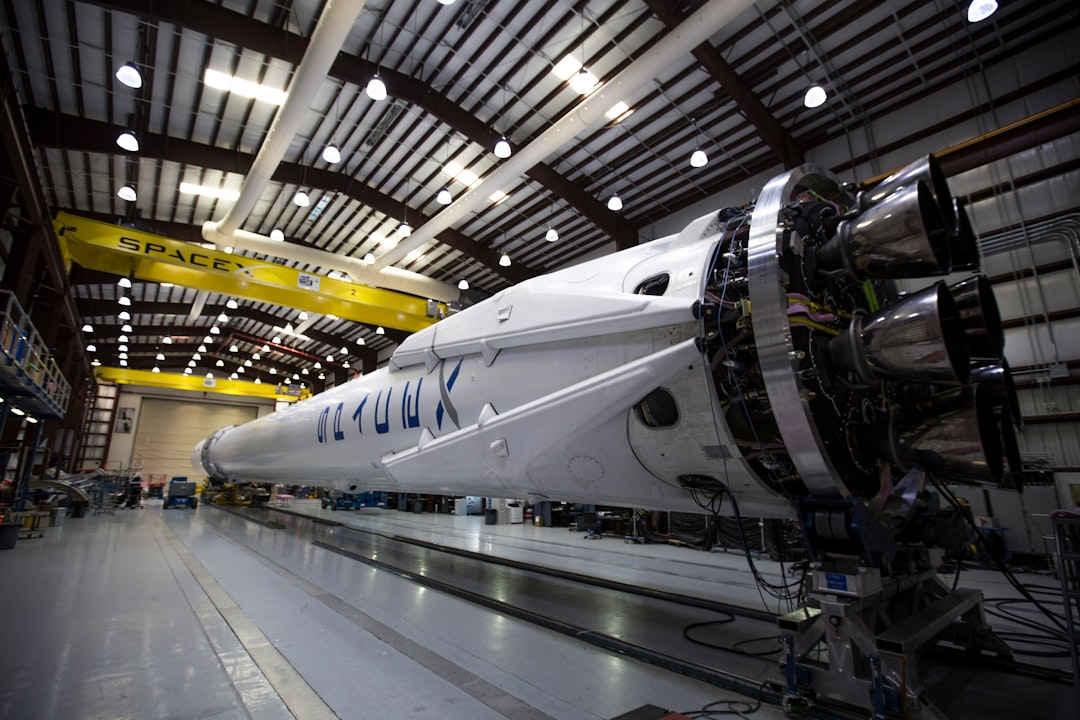
An aftermarket opportunity is emerging that goes beyond Earth’s stratosphere. The new aftermarket is being driven by a proliferation of satellites that have been deployed for communication, observation, and scientific purposes, combined with the rise of reusable vertical-landing rockets such as the SpaceX Falcon 9 and the newly developing Starship.
Here’s what’s actually happening: reusable rockets make frequent launches routine. Routine launches mean more satellites get deployed. More satellites means someone has to fix them, refuel them, upgrade them. That’s a new aftermarket worth real money.
Commercial Aircraft Maintenance and the Mro Revolution
Maintenance, repair, and overhaul (MRO) services aren’t sexy. But they’re absurdly profitable. Global commercial aftermarket MRO demand is projected to grow at a 3.2% CAGR between 2026 and 2035, with an increasing focus on engines. The engine segment’s share of total MRO demand is expected to rise to 53%, reflecting its faster growth compared to other MRO categories.
Why engines? Because modern turbine engines are complex, expensive to replace, and keep commercial airlines grounded if they fail. That’s a captive customer base.
Aftermarket companies report robust momentum, citing double-digit growth and record sales and backlogs; engine activity is the dominant driver. Double-digit growth. In maintenance. Think about that. You’re not building anything new—you’re servicing existing fleets that can’t afford downtime. The margins are textbook.
But here’s where aerospace innovation new commercial plays in: AI is cutting unscheduled maintenance by predicting failures before they happen. Artificial intelligence is cutting unscheduled maintenance by 30%, optimizing flight routes, and enabling autonomous operations. When you prevent a breakdown before it happens, you’re not just saving money—you’re creating entirely new service categories.
Reusable Rocket Technology and Launch Economics
SpaceX didn’t disrupt aerospace by making rockets prettier. SpaceX’s Falcon 9 rockets have lowered launch costs compared to expendable vehicles. Simple statement. Massive implication. When launch costs drop, space becomes economically feasible for applications that weren’t viable before.
The numbers tell the story. Reusable rockets mean:
- More frequent launch windows (not waiting months between missions)
- Lower per-kilogram costs to orbit
- New markets for small satellite operators
- Commercial space manufacturing (yes, really)
- Space-based logistics
The proliferation of satellites has been combined with the rise of reusable vertical-landing rockets such as the SpaceX Falcon 9 and the newly developing Starship. Commercial space tourism is now adding a third catalyst, with reusable spaceflight vehicles that must be maintained to rigorous safety and compliance standards between flights.
That last part is crucial. Reusable vehicles need maintenance infrastructure. New businesses everywhere.
AI-Enabled Operations and Digital Transformation
Honestly, if you’re not thinking about AI in aerospace right now, you’re losing. AI and its more advanced form, agentic AI, are steadily reshaping A&D, but their impact is unfolding unevenly. By 2026, agentic AI is expected to progress from pilot projects to scaled deployments, with the most visible advances occurring in the decision-making, procurement, planning, logistics, maintenance, and administrative functions.
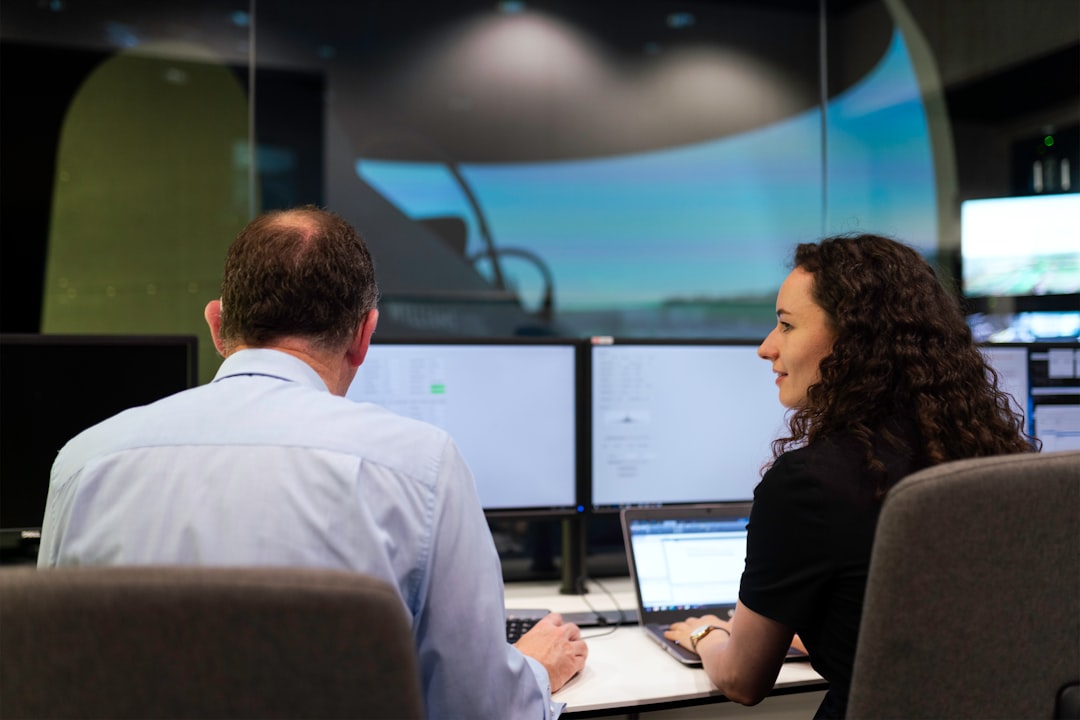
This isn’t theoretical. Throughout 2026, troubleshooting agents are moving out of the pilot phase and into deployment within the maintenance operations of airlines and MROs. These agents will serve as a digital co-pilot that enhances the productivity of the existing, experienced workforce, while also helping close the knowledge gap for newer technicians.
What that means in practice: you need software vendors, integration companies, training specialists. You need people who can translate between engineers and machine learning experts. Those roles didn’t exist in traditional aerospace.
Supply Chain Resilience and Advanced Manufacturing
Production backlogs are massive. The backlog tells the story: 14,000 commercial aircraft awaiting production—roughly a decade’s worth—and a $747 billion defense backlog, up 25% in just two years. That backlog is a feature, not a bug. It means someone has to solve the capacity problem.
Advanced composites now account for a majority of new aircraft structures, and additive manufacturing is growing at 17.4% CAGR toward USD 9.87 billion by 2029. 3D printing in aerospace. That’s aerospace innovation new commercial activity taking shape right now.
Advanced manufacturing companies aren’t sexy to most investors. But they solve a real problem: how do you produce aircraft faster when supply chains are fragile? The answer involves:
- 3D-printed titanium parts
- Robotic welding systems
- Digital twins for quality control
- New materials (composites, ceramics, polymers)
Each category is a new business opportunity. Investment activity accelerated in 2024, with 600+ aerospace and space deals, up nearly 50% year-on-year, and USD 1.8 billion invested in Q4 alone. Capital is flowing toward these solutions because the ROI is clear.
Frequently Asked Questions
What is Aerospace Innovation New Commercial Activity in 2026?
Aerospace innovation new commercial refers to new business models, products, and services emerging from advances in space technology, AI, reusable rockets, and satellite infrastructure. In 2026, this includes space tourism ($8.9 billion market), satellite aftermarket services, AI-powered maintenance, and advanced manufacturing. It’s the shift from government-led space exploration to private, profit-driven operations.
How is Aerospace Innovation New Commercial Creating Revenue for Companies?
Companies are capturing value through space tourism, satellite maintenance and servicing, AI-enabled predictive maintenance for aircraft, 3D-printed aerospace components, and launch services. Supply chains are still fragile, and maintenance crews and parts are still in short supply. Establishing a strong digital foothold now can allow commercial aerospace organisations to leverage currently available tools for 3D printing and AI-enabled MRO, but they can also enter a new stratosphere as space becomes the next frontier for aftermarket opportunity.
What is the Aerospace Innovation New Commercial Market Size in 2026?
The overall aerospace market is worth $356.93 billion in 2026. Within that, space tourism alone is $8.9 billion and growing at 21.8% annually. Commercial satellite services generate $293 billion yearly. MRO services are expanding at 3.2% CAGR with engine maintenance driving double-digit growth.
Which Companies are Leading Aerospace Innovation New Commercial Opportunities?
Leading companies like Blue Origin, Virgin Galactic, and SpaceX have pioneered commercial spaceflights, contributing innovative technologies and high-profile missions. Other major players include Axiom Space (commercial space stations), Relativity Space (3D-printed rockets), and numerous smaller firms building satellite servicing, robotics, and AI software for the sector.
When will Aerospace Innovation New Commercial Reach Mainstream Adoption?
Suborbital flights are available now, orbital tourism is expected by 2026, and lunar trips are projected by 2030. Reusable spacecraft, private stations, and scaled-up commercial operations are making space tourism more practical and accessible beyond the billionaire class. Space infrastructure is transitioning from experimental to operational. Most growth unfolds through 2026-2030.
The Bottom Line
Aerospace innovation new commercial is real money changing hands right now. It’s not all hype. In April 2026, humans returned to the moon for the first time in over 50 years, a milestone that reflects both the ambition and the capability of today’s A&D industry. Meanwhile, orbital launch activity continues to set records year after year.
The wealth isn’t just in building rockets or spaceships anymore. It’s in the ecosystem around them: the software that predicts failures, the 3D printing systems that cut production time, the training facilities, the maintenance depots, the insurance products, the supply chain solutions. These are opportunities for entrepreneurs, investors, and established companies bold enough to think differently about aerospace.
If you’re watching this space (pun intended), stop thinking about aerospace as a historical industry. It’s a frontier with new territory opening every quarter. And the gold rush is already happening—you just have to know where to look.
