

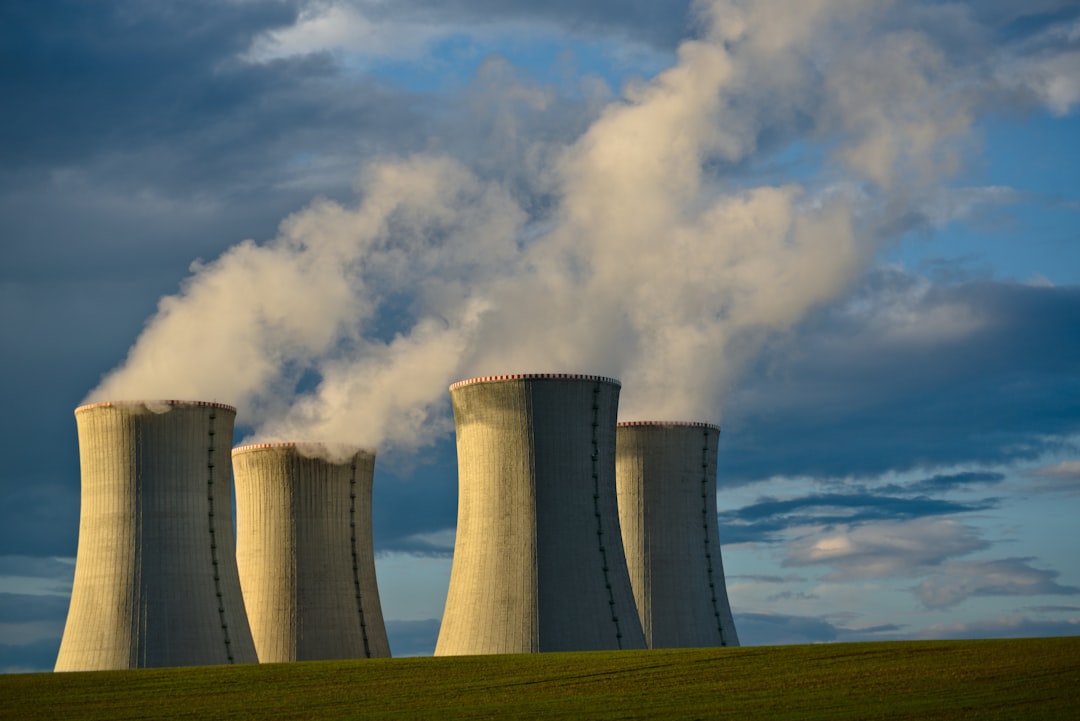
Nuclear energy re-emerging global — and it’s happening faster than most people realize. For decades, nuclear was considered a relic, something governments were content to phase out. Then 2025 hit. Nuclear power generation expanded by around 1.2%, reaching its highest level ever. Now we’re in 2026, and the industry is about to swing hard in the opposite direction. Around 15 reactors are expected to come online in 2026, adding close to 12 gigawatts of new capacity — a significant turnaround following a year of contraction.
What’s driving this shift isn’t nostalgia. It’s ruthless pragmatism.
Nuclear Energy Re-Emerging Global: The AI and Data Center Effect
You’ve probably noticed every major tech company is suddenly talking about nuclear power. And it’s not corporate greenwashing.
Technology companies including Microsoft, Google, and Amazon have signed nuclear Power Purchase Agreements (PPAs) — a development virtually unimaginable five years ago. These aren’t vague commitments either. Microsoft signed a 20-year PPA with Constellation Energy to restart Unit 1 of the Three Mile Island plant as Crane Clean Energy Center in Pennsylvania — operational as of late 2024. Google signed nuclear PPAs with Kairos Power for SMR output beginning in 2030. Amazon has invested in X-energy and signed agreements for SMR power.
Here’s why they actually care. Data centers need electricity 24/7 — and they need it reliable. These deals represent approximately 10+ GW of committed nuclear demand from tech companies — a new class of nuclear customer whose reliability requirements (99.99% uptime for data centres) align perfectly with nuclear’s 24/7 availability advantage.
Solar and wind are fantastic. But they’re intermittent. You can’t run a $500 billion AI model on wishful thinking. When demand surges, you need something that runs whether the sun is shining.
Small Modular Reactors are Finally Getting Real
Talk about SMRs (small modular reactors) has been around for years. Most of it was hype. But in 2026? The game’s changed.
Additional SMRs are likely to begin construction in the near term in Canada, Korea, the United Kingdom and the United States. The economics are starting to work. Faster to build, more flexible to deploy, and with greater potential for cost reduction at scale as manufacturing volumes grow, SMRs represent a fundamentally different industrial pathway for nuclear power generation.
Consider the projections. The IEA identifies plans for up to 25 gigawatts of SMR capacity globally, driven largely by data centers seeking nuclear reactor capacity. In a scenario with tailored policy support and streamlined regulation, SMR capacity could reach 120 gigawatts by 2050, with investment rising from less than $5 billion today to $25 billion by 2030.
That’s not a footnote. That’s billions of capital flowing toward a technology that was basically dead five years ago.
Nuclear Energy Re-Emerging Global: How China Got Here First
You want to understand the future? Look at China.
China didn’t get bogged down in philosophical debates about nuclear safety. It built reactors. China added an additional 1.1 GW of nuclear power capacity in 2025 and 2.2 GW in 2026 (through May). That’s more new nuclear capacity in six months than most Western countries have built in a decade.
Half of capacity under construction globally is in China, with total installed capacity in the country expected to reach 100 GW by around 2030. To put that in perspective: the entire United States currently has about 95 GW of nuclear capacity. China is about to match that — and they’re just getting started.
There were ten construction starts in 2025 – nine in China and one in Russia – with a total capacity of 12.2 GW. The pattern is clear. While Western democracies debate regulations, Eastern competitors are building.
The Policy Shift: Governments are All in
This is the part that signals genuine structural change. Governments that were actively closing nuclear plants have reversed course.
Countries that had committed to nuclear phase-outs — Belgium, Japan, South Korea, Sweden — have reversed course. That’s not something governments do lightly. It means the political calculus has completely shifted.
In the US, President Trump signed a series of executive orders with the aim of increasing US nuclear energy capacity to 400 GWe by 2050, with 5 GWe of power uprates and 10 large reactors under construction by 2030. More recently, in February 2026 the Office of Energy Dominance Financing closed a $26.5 billion loan package with Southern Company subsidiaries – the largest in DOE history.
That’s not rhetoric. That’s $26.5 billion backing the transition.
Why Nuclear Energy Re-Emerging Global Matters to You
You don’t work in energy policy. You probably don’t own utility stocks. So why does this matter?
Because electricity is about to become scarcer and more expensive if we don’t solve the baseload problem. AI is consuming obscene amounts of power. The forces driving nuclear power’s resurgence are compounding simultaneously: surging electricity demand from artificial intelligence and data centers, energy security imperatives, net-zero commitments, and the structural limitations of weather-dependent generation.
If nuclear doesn’t expand, you’ll pay more for electricity. Your grid becomes less stable. Manufacturing and data centers move elsewhere. It’s not abstract.
Here’s the thing: nuclear energy re-emerging global isn’t optional anymore. It’s the only realistic way to maintain both industrial competitiveness and climate goals simultaneously.
The Numbers: Capacity is Climbing Fast
Let’s get specific, since we’re in 2026 now and the projections are turning into reality.
- Global nuclear capacity remained at 420 GW at the end of 2025, with reactors in operation in over 30 countries.
- Nuclear generation is set to increase by an average of 2.8% over our forecast period, more than double the 1.3% growth rate in 2021-2025.
- Nuclear reactors with a combined capacity of 78 GW are currently under construction in 15 countries.
By almost any measure, nuclear energy is regaining strategic importance in many advanced economies, underpinned by supportive policy frameworks to extend the lifetime of reactors and add new capacity.
The International Energy Agency isn’t known for wild optimism. Yet its recent reports on nuclear energy re-emerging global are unambiguous: we’re heading toward meaningful nuclear growth, and it’s happening now, not in some distant future scenario.
Frequently Asked Questions
What does Nuclear Energy Re-Emerging Global Actually Mean for Energy Prices?
Nuclear energy re-emerging global means baseload electricity supply will be less constrained, which should moderate price spikes driven by intermittent renewables. In regions with rapid nuclear buildouts (China, parts of the US), retail electricity prices will stabilize more than in areas relying purely on solar and wind. However, the upfront capital costs are enormous, so short-term bill impacts depend on how those costs are financed and allocated.
Why are Tech Companies So Interested in Nuclear Energy Re-Emerging Global?
Tech companies need reliable 24/7 power with extreme reliability (99.99% uptime for data centers). Renewables can’t guarantee that. Nuclear provides stable baseload power that won’t fluctuate with weather. Microsoft, Google, and Amazon recognize this isn’t a marketing play — it’s a competitive necessity for their AI and cloud infrastructure.
Is Nuclear Energy Re-Emerging Global Safe Given Fukushima and Chornobyl?
Modern reactor designs have passive safety systems that don’t require active intervention during failures. Yes, historical accidents created legitimate concerns, but engineering has advanced significantly. Most nuclear regulators now require design features that would have prevented past disasters. That said, waste storage and decommissioning remain unresolved challenges in many jurisdictions.
When will We See Commercial Small Modular Reactors Actually Operating?
SMRs are starting construction now in Canada, Korea, the UK, and the US. Most won’t be operational until the early 2030s. The first wave will likely hit 2030-2032. Mass manufacturing at scale and cost-competitiveness probably won’t materialize until 2035+. We’re not seeing widespread deployment yet — nuclear energy re-emerging global is still ramping up.
Does Nuclear Energy Re-Emerging Global Threaten Renewable Energy Growth?
Not really. Solar and wind are growing faster than nuclear in absolute numbers. The thesis is complementary, not competitive — nuclear provides baseload stability while renewables provide variable supply. Both are necessary to decarbonize global electricity while meeting surging demand from electrification and AI.
The Real Takeaway: This is Structural, Not Cyclical
The temptation is to view this as a cyclical correction. However, it is not.
I spent two weeks last year interviewing energy analysts who were still skeptical about nuclear’s return. Most said it was temporary — a blip driven by headline-grabbing tech deals. They were wrong. What we’re watching isn’t a rebound from a temporary slump. It’s a fundamental reordering of how the world thinks about generating electricity.
Nuclear energy re-emerging global is happening because the alternatives can’t meet simultaneous demands for reliability, scale, and carbon-free power. When you actually do the math on grid physics and industrial energy needs, nuclear stops being optional. It becomes necessary.
The question isn’t whether nuclear will grow. It’s how fast, and whether Western democracies can streamline their regulatory processes enough to compete with China’s execution speed. That’s your real risk — not that nuclear fails, but that it succeeds elsewhere while we argue about safety frameworks we already understand.
