

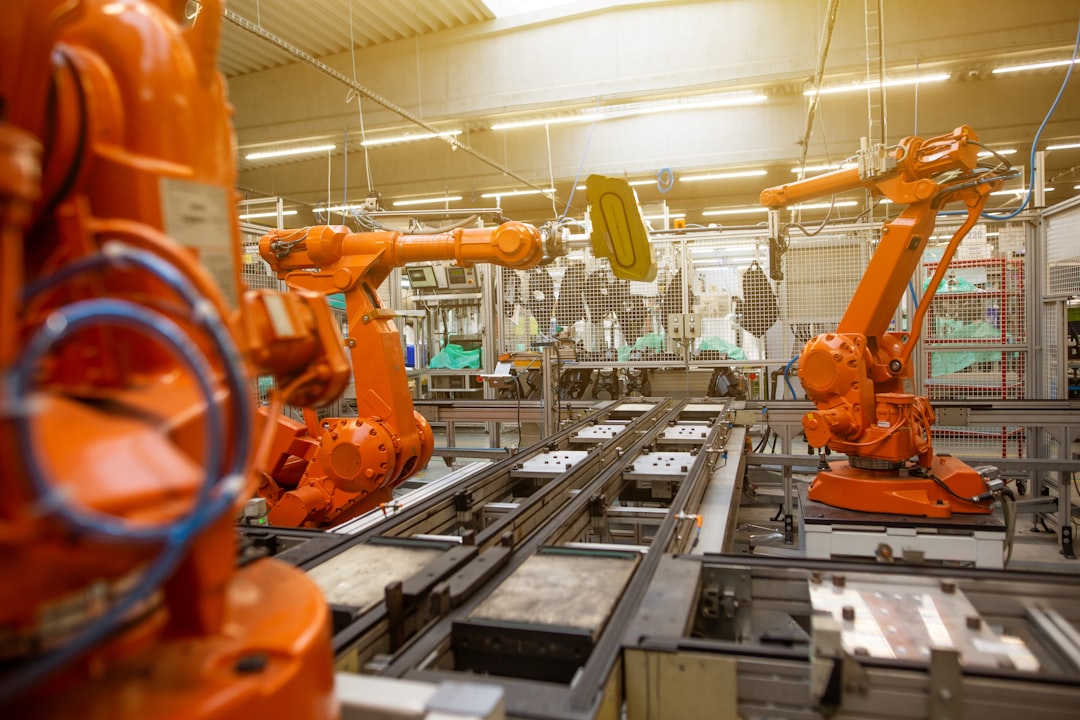
You see it everywhere now. Robotics startups record investments hit $18.8 billion globally in 2026 so far, compared to $15 billion in all of 2025. The money flowing into this space isn’t just more than last year — it’s fundamentally rewriting how serious investors think about hardware, AI, and the future of work.
Five years ago, robotics startups were the funding punchline. Too expensive. Too slow. Too far from actual product-market fit. Now? Investors have marked a shift in perception about the robotics sector, which was traditionally considered an expensive, asset-heavy hardware gamble. The question isn’t whether robotics will matter. It’s how much money gets left on the table if you’re not in the game.
This isn’t hype. It’s capital reallocation driven by real deployments, actual customer demand, and a threshold moment where AI finally makes physical robots useful in ordinary factories.
What’s Driving Robotics Startups Record Investments Right Now
The money didn’t start flowing because venture capitalists suddenly felt generous. Three things converged.
First, AI works. Not “AI is improving.” Works. Investors appear drawn to startups working on embodied AI — artificial intelligence with a physical body that interacts with the real world in real time. These aren’t lab demos anymore. Commercial deals are replacing pilots, with Figure AI, Agility Robotics, and Boston Dynamics all signing or expanding contracts with major corporations.
Second, labor is actually broken. Warehouses can’t find enough people willing to do repetitive physical work. Manufacturing plants can’t scale because training a new worker takes months. That’s not an abstract problem — that’s a specific, solvable business pain point with a dollar value attached. When you quantify what worker shortages cost (and companies are doing this now), a $500 million humanoid robot investment starts looking rational.
Third, the mega-rounds started happening. Once Skild AI raised $1.4 billion in a single round, perception shifted. This wasn’t a scrappy startup bet anymore. This was institutional money. This was real.
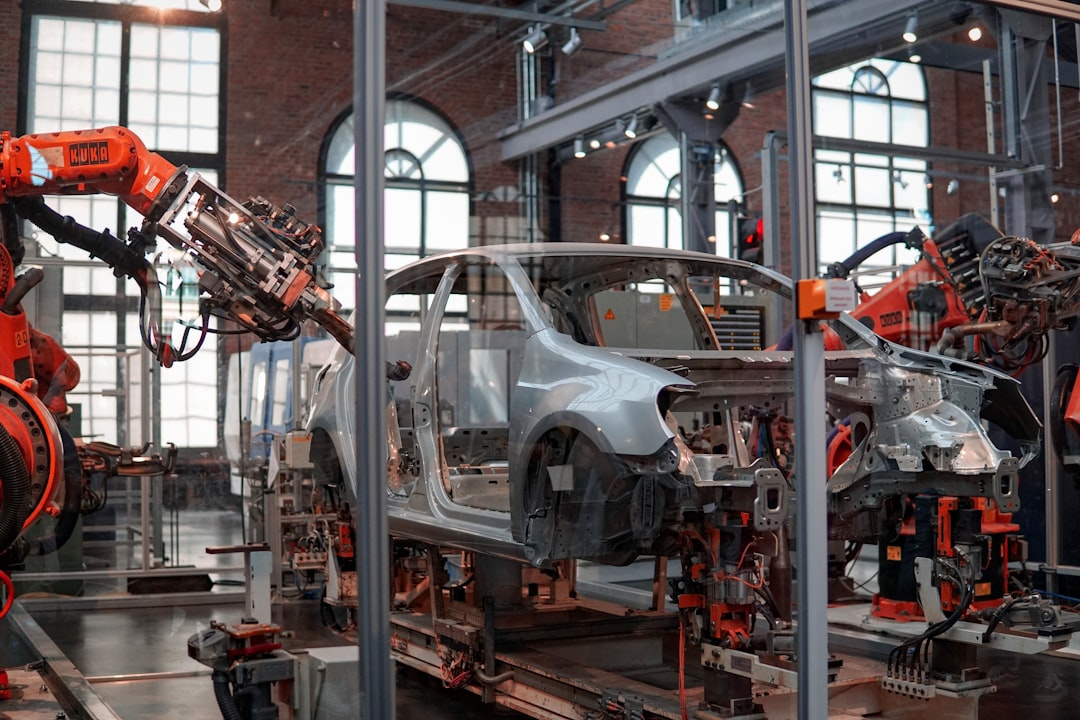
The Scale of Robotics Startups Record Investments in 2026
Let’s talk numbers, because they’re genuinely staggering.
Robotics startups have raised $18.8 billion in 2026 compared to $15 billion in 2025, surpassing the $14.1 billion raised in the peak venture funding year of 2021, with six months still remaining. That means by year-end, this sector could pull in $30 billion+ — well past what the entire industry raised in 2025.
The mega-deals tell the story better than averages do:
- Austin-based Saronic, a defense tech startup focused on autonomous sea vessels, raised $1.75 billion in Series D funding in March 2026, bringing total funding to around $2.6 billion and valuation to $9.25 billion — more than double its Series C level in 2025.
- Skild AI raised $1.4 billion in January, tripling its valuation to over $14 billion, just seven months after raising $135 million at a $4.5 billion valuation.
- Apptronik raised $520 million in an extension of a $415 million Series A, bringing the total round to over $935 million, with existing backers B Capital, Google, Mercedes-Benz and Peak6 joined by new investors AT&T Ventures and John Deere.
The concentration is extreme. You’ve got maybe a dozen companies soaking up 80%+ of the capital. That matters (more on this later). But the headline number is still real: this is a different scale of attention than robotics got five years ago.
Embodied AI is the Magnet
Here’s the thing: it’s not actually robots that are attracting the money. It’s embodied AI.
The difference sounds academic. It matters enormously. A robot arm that follows a pre-programmed sequence? That’s automation. A robot that can watch you work, understand what it’s seeing, adapt its behavior, and learn from failures? That’s embodied AI. One is a tool. The other is an agent.
Humanoid robots are the dominant narrative, following significant investments from major tech companies in 2024, with startups racing to develop general-purpose humanoid platforms. Companies are betting that if you build a “robot brain” that can control any robot body, you’ve built a platform. Platforms are what create billion-dollar companies.
The practical upshot? The money is concentrating on AI-powered robotics with clear commercial applications. If you’re building a robot without a serious AI story, you’re fighting upstream. If you’re building the foundation model that every robot will eventually license, you’re racing to the finish line with a tailwind.
Geographic Splits in Robotics Startups Record Investments
Investment is flowing everywhere, but not equally.
China dominates volume, with the majority of robotics startups receiving funding in early 2026 being Chinese companies, reflecting the country’s national strategy to lead global automation manufacturing. But — and this is important — while China wins on deal volume, the largest individual rounds are still predominantly US-based.
The US is raising the mega-rounds. Skild AI, Figure, Saronic, Mind Robotics — these are American companies pulling down the $500 million checks. China is building volume. It’s breadth versus depth.
Europe is growing too. Germany, France, and the UK are producing a consistent stream of robotics funding, particularly in industrial automation and defense-adjacent drone tech.
What’s happening here is that robotics is one of the few sectors where geographic diversification actually makes sense. You need hardware manufacturing (China has this). You need software and AI talent (US leads here). You need industrial partnerships and legacy manufacturing knowledge (Europe strong). The sector isn’t being won by one region. It’s being won by whoever can move fastest.
Who’s Actually Getting the Money
This is where robotics startups record investments gets tricky. Because while the total numbers are eye-watering, the distribution is ferociously concentrated.
Capital allocation is narrow — the top 10 deals captured 87.7% of capital, and only two companies in the dataset raised more than once, meaning the robotics market has many valid targets but only a few companies receive platform-scale checks, showing investors are exploring broadly while funding perceived winners very aggressively.
You see this pattern everywhere in markets transitioning from “experimental” to “real.” The winners get disproportionately large rounds. Everyone else fights for crumbs.
A few categories are hoovering up the bulk:
- Humanoid and general-purpose robots. Humanoid & general-purpose robots represent the fastest-growing and most heavily funded sub-sector in 2025–2026, with companies like Skild AI raising $1.4 billion and Booster Robotics building platforms designed to work across environments, with Series C and later rounds dominating.
- Autonomous maritime and defense. Saronic’s $1.75 billion raised eyebrows for a reason.
- Warehouse and logistics. Perennial favorite because ROI is measurable and the pain is acute.
If you’re building something outside these categories — agricultural robotics, medical robots, surgical systems — you’re raising smaller rounds from more specialist funds. Both outcomes are valid. One just gets the headlines.
The Risk Nobody’s Talking About Enough
Massive capital flows create massive risks. And I think the robotics space is underplaying one in particular.
There’s froth caused by wide projections for physical AI — BCG highlighted projections that as many as six million humanoids could be on the market in less than four years, which would fundamentally redefine how we live and work, but if the forecasts fizzle it could be “one of the largest misallocations of industrial capital in recent years”.
Let me be direct: this is a real risk. Robotics companies need to ship. They need real customers. They need working units — not prototypes, not lab demos. Deal count dropped from 671 rounds in 2023 to 473 in 2024 — translation: fewer companies are getting funded, but the ones that do are raising massive rounds.
That’s either a sign of consolidation around the actual winners (healthy). Or it’s a sign that most robotics startups can’t convince investors to fund them anymore (warning sign). Probably both are true.
The second risk: manufacturing at scale is genuinely hard. You can code your way out of problems in software. You can’t code your way out of a molded part that’s slightly off-spec or an actuator that loses precision after 10,000 cycles. I spent two weeks once debugging what turned out to be a tolerance stack-up problem in a hardware system that would’ve taken 30 minutes to fix in cloud infrastructure. That’s the game robotics founders are in now.
Investors know this intellectually. Whether they’ve priced it emotionally is another question.
Frequently Asked Questions
What Factors are Making Robotics Startups Record Investments Surge in 2026?
Investors are drawn to startups working on embodied AI, with artificial intelligence having a physical body that interacts with the real world in real time. Labor shortages, demonstrated customer traction, and mega-rounds from companies like Skild AI and Saronic have shifted investor perception. Robotics is transitioning from “speculative hardware bet” to “real deployment story.”
Are Robotics Startups Record Investments Sustainable or is this a Bubble?
Both statements can be true. The underlying demand is real — labor shortages, manufacturing pain, and AI breakthroughs are genuine. But capital concentration on a dozen mega-companies with unproven unit economics at scale is concerning. The bubble isn’t in robotics itself. It’s in the assumption that all robotics companies will reach scale at venture-style timelines. Some will. Most won’t.
What Type of Robotics Startups are Attracting the Largest Rounds?
Collaborative robots attract the most disproportionately large checks, with only 10.8% of deals but 34.2% of disclosed capital over the past 12 months, driven by large financings for Apptronik, AI² Robotics, and Mind Robotics. Humanoid and embodied AI platforms dominate late-stage funding. Warehouse and logistics robots attract steady mid-sized rounds.
Should Non-Us Founders Care About Robotics Startups Record Investments?
Absolutely. North America leads with $1.91 billion and 81.9% of disclosed capital from June 2025 to May 2026, but China and Europe are building serious robotics ecosystems. Geographic advantage matters less than product differentiation and speed to deployment. The best robotics companies in 2026 are distributed globally.
Will the Number of Robotics Startups Being Funded Increase in the Second Half of 2026?
Probably not. You’re seeing consolidation, not expansion. The winners are raising bigger rounds. Everyone else is raising less or not at all. The trend in robotics startups record investments is toward larger checks to fewer companies. That’s the pattern to watch.
The Real Takeaway
Robotics startups record investments are breaking records because something actually shifted. It’s not just hype, though hype is definitely present. It’s that embodied AI became real, customer demand became measurable, and enough mega-rounds landed that institutional money took the sector seriously.
What happens next depends entirely on execution. The companies that ship working systems into actual factories at scale will become enormous. The rest will become very expensive lessons about why manufacturing is harder than everyone assumes.
If you’re evaluating this space — as a founder, investor, or just someone paying attention — stop looking at the total capital numbers. They’re noise. Look at who’s shipping, who has paying customers, and who can actually manufacture at the scale they’re promising. That’s where the real story is.
The robotics wave is real. It’s also just beginning. And it’s going to be brutally selective about which companies survive the next three years. That’s the investment insight buried under all the hype.
