


When you look at cashless economies different speeds around the world, one thing becomes clear: there is no universal timeline. Sweden’s practically abandoned physical money. India runs on a fundamentally different payment logic. The United States? Still dragging its feet. This isn’t about technology maturity alone—it’s about infrastructure, trust, regulation, and whether your grandparents still insist on paying for groceries with bills.
The reality is messier than headlines suggest. Sweden is on track to become the first fully cashless economy by the end of 2026, while in India, cash on delivery still dominates, accounting for 75% of e-retail activity. That’s not a gap. That’s a chasm.
Cashless Economies Different Speeds: A Tale of Two Systems
The divergence in cashless adoption isn’t random. It follows a pattern. You’ve got the Nordic leaders (Sweden, Norway), the Asian leapfroggers (China, India, Southeast Asia), developed economies still clinging to cards (Germany, France), and Africa doing something genuinely interesting—building mobile-first systems that skip the traditional banking layer entirely.
Over 80% of Swedes use mobile payment apps such as Swish, and this isn’t aspirational anymore. It’s just how life works there. But you try implementing that model in rural Vietnam or rural Ohio and watch it collapse. The infrastructure requirements, consumer behavior, and regulatory appetite are completely different.
What’s fascinating is that cashless economies different speeds often defies development level. The digital payments market has matured faster in Africa than in Europe. Let that sink in. Africa—historically behind in many infrastructure metrics—is actually moving faster on payments than France or Germany.
Why Infrastructure (And Lack Thereof) Rules Everything
Here’s something they don’t always tell you in fintech blogs: countries with older banking infrastructure often move slower, not faster. Adoption of mobile payments is weakest in developed nations, such as Germany and France, which are finding it hard to ditch cash and cards. Even in the United States, adoption rates trail developing nations by a considerable percentage, although Nordic countries have seen a rapid adoption of mobile payments over the past decade.
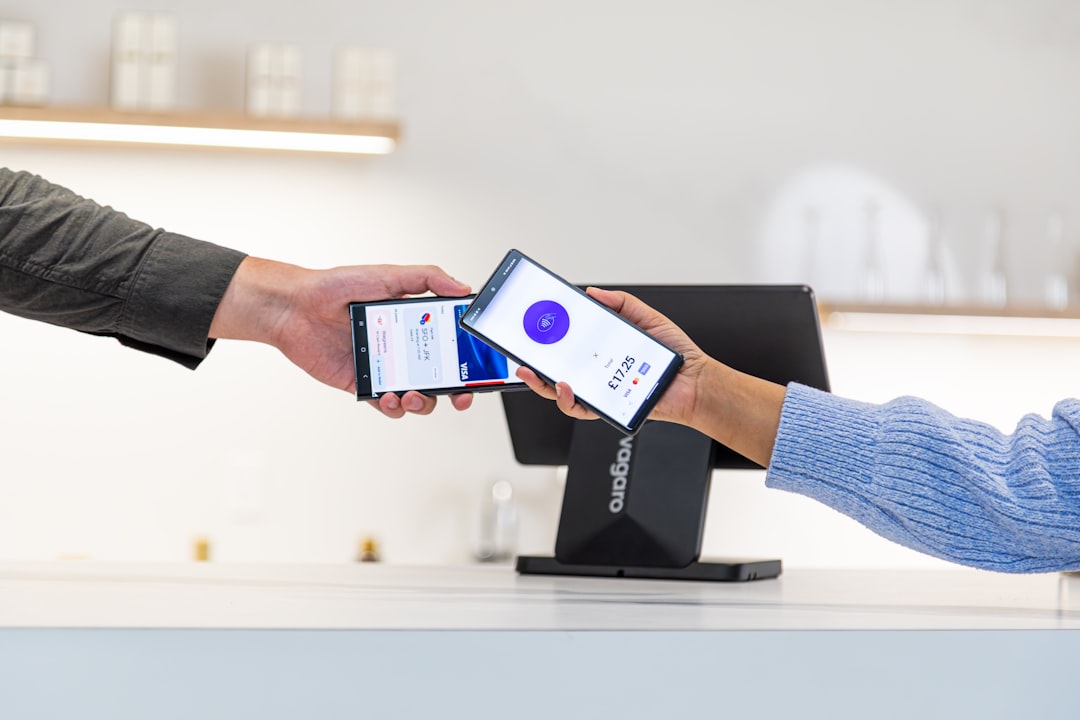
The irony is brutal. Developed nations invested heavily in physical ATM networks, card readers, and branch infrastructure. That’s expensive to replace. Developing nations? They leapfrogged straight to mobile. In India, South-east Asia and South America, the younger generation skipped the usual process of owning a credit or debit card, in favour of using mobile apps.
I had a conversation with a payments executive in Jakarta back in 2024 (yes, I’m dating myself here) and she said: “We don’t have to convince people to abandon their ATMs because we never built enough ATMs in the first place.” That’s the real story behind cashless economies different speeds.
The upshot: In EMDEs, the average number of cashless transactions per person jumped 21 percent last year, climbing to 242 annually. Emerging markets are moving faster. Advanced economies are moving slower. The tortoise occasionally beats the hare.
Government Policy and Central Bank Pressure
If infrastructure is the table, then policy is the game. Different governments have wildly different attitudes toward pushing cashlessness.
India’s approach? Aggressive. India’s demonetization of the higher-value Rs500 and Rs1000 bank notes has been designed to reduce corruption and encourage citizens to adopt digitized forms of payment. It was blunt. Controversial. Effective.
Sweden went the gentler route—infrastructure so good that cash naturally became pointless. But the destination is the same: fewer bills and coins.
Japan took another path entirely. Japan’s cashless payments reached 58.0% of total consumer spending in 2025, up from 40% in 2024. That’s a massive leap in a single year. Government policy? CBDC pilot programs? Fear of aging demographics and the need for digital records? Probably all three.
Meanwhile, the United States—despite venture capital hype—remains stubbornly cash-friendly. Over 77 countries are now in the advanced phase of CBDC exploration (development, pilot, or launch), with 5 retail CBDCs operational and roughly 40 in pilot as of April 2026. The US is exploring, but hardly leading.
The lesson: cashless economies different speeds depends heavily on whether your government actually wants you to stop using cash. Some do. Some don’t. Some are just confused.
The Mobile Money Story: Where Africa Rewrites the Rules
Sub-Saharan Africa deserves its own narrative because it’s genuinely different. Sub-Saharan Africa processed $1.4 trillion through mobile money in 2025, representing 66% of global transaction value with 347 million active accounts.
That’s not 66% of African transactions. That’s 66% of global mobile money transactions. By volume and value, Africa dominates. Why? Because you don’t need a bank account to use M-Pesa, you don’t need a credit card to send money to your mother in the village, and you don’t need permission from a legacy bank to participate.
UPI processed 21.7 billion transactions in January 2026, up 28% year-on-year in volume, and that’s just India’s Unified Payments Interface. It’s staggering. But here’s the catch: UPI coexists with huge cash use. Both things are true at once.
The global picture? Digital wallets are used by over 5.3 billion people, nearly two-thirds of the world’s ~8.2 billion population, dominating global payments in 2026. That sounds like the world is cashless. It isn’t. Those 5.3 billion people have digital wallets. Most still use cash regularly. Ownership doesn’t mean abandonment.
Consumer Behavior and Generational Splits
Here’s where it gets granular. Young people everywhere adopt digital payments faster. Old people everywhere resist. But the starting point is different.
Gen Z leads mobile wallet payment adoption at 70%, followed by Millennials at 61%, Gen X at 40%, and Boomers+ at 22% as of 2024. That’s a developed-nation pattern. In developing nations, the split is different because fewer people have alternatives.
You’re seeing a bifurcated world. In Tokyo, Singapore, and Stockholm, it’s genuinely rare to pay with cash. In Bangkok, Lagos, and Mexico City, digital and cash coexist. In rural America, cash is still king in places. (I once tried to pay for gas in rural Montana with Apple Pay in 2023—got a blank stare from the attendant.)
What you can count on: younger, urban, educated populations move faster. Older, rural, lower-income populations move slower. That’s true everywhere. But the pace of rollout differs wildly because the pressure to roll out differs.
Cashless Economies Different Speeds: Regional Snapshots
Asia leads in pure transaction volume. Alipay and WeChat Pay together dominate over 90% of market activity in China’s digital payments market. That’s two apps handling the payments universe. Simpler, faster, more centralized.
Europe is mixed. In Europe, 52% of online shoppers now favor digital wallets over legacy payment methods. That’s not dominance. That’s still a competitive landscape where cards and bank transfers retain power.
North America remains split. In North America, about 78% of smartphone users are projected to make at least one mobile payment in 2025. Notice: “at least one.” That’s not daily. That’s not the primary method. It’s supplementary.
Latin America is growing but uneven. Latin American digital wallet adoption is rising at 50% annually, led by Brazil and Mexico. Fast growth doesn’t mean saturation yet. It means potential.
The reality: cashless economies different speeds isn’t a mystery. It’s geography, policy, infrastructure, and culture colliding.
The Role of Trust and Security
Nobody talks about this enough: cash is the ultimate trust bypass. You don’t need to trust a bank. You don’t need to trust the government. You need to trust that a $20 bill is real, and that’s easy.
Digital payments require trust in multiple layers. Trust the payment processor. Trust your bank. Trust the telecom company (in some countries, it’s the same entity). Trust the government won’t freeze your account for political reasons (increasingly relevant).
In countries where that trust exists, adoption accelerates. In countries where it doesn’t, you get slower adoption—regardless of technology.
Honestly, this is the missing variable in most analyses. You can build the best fintech infrastructure on Earth, but if people don’t trust the system, adoption stalls. Sweden works because Swedes trust their institutions. Why does Sweden work so well, while less-developed countries leapfrog infrastructure faster? Trust, partly. But also: less legacy distrust to overcome.
Frequently Asked Questions
Why are Cashless Economies Different Speeds Across Countries?
Cashless economies different speeds because infrastructure, government policy, consumer trust, and banking legacy vary dramatically. Developed nations often have older banking systems to replace, while emerging markets leapfrog directly to mobile. Emerging market and developing economies (EMDEs) are outpacing their advanced-economy counterparts in shifting away from traditional cash reliance toward digital alternatives.
Which Countries are Leading the Shift to Cashless Economies?
Sweden is on track to become the first fully cashless economy by the end of 2026, followed by Norway and South Korea. Asia leads in transaction volume (China and India process trillions of digital transactions annually), while Africa has emerged as a mobile-money powerhouse.
How do Cashless Economies Different Speeds Affect Merchants and Businesses?
Merchants in fast-moving markets (Sweden, China, India) must upgrade payment terminals and train staff on digital systems immediately. In slower markets (Germany, France, rural America), businesses can move incrementally. Speed variance creates competitive advantage for regions with better payment infrastructure and higher consumer digital adoption.
Will All Countries Reach Cashless Status Eventually?
Eventually? Probably. But “eventually” could mean 10 years for Sweden or 50+ years for countries with low digital infrastructure, limited government push, or cultural attachment to cash. 55% of consumers in 2025 have digital wallets worldwide, projected to reach 70% by 2030, but that’s global average—regional variation will remain significant.
What’s the Biggest Barrier to Cashless Adoption?
Trust and infrastructure in developing nations; entrenched habits and legacy systems in developed nations. You also can’t ignore the fact that Australia saw cash payments drop to 13%, down from 70% in 2007, and projections suggest functional cashlessness by 2030, yet some Australians still prefer cash for privacy or control reasons.
Here’s What Actually Matters
Cashless economies different speeds isn’t a failure state. It’s reality. The world won’t cashless overnight, and pretending it will is naive. What matters is whether your region or business is moving at the pace that works.
If you’re a merchant in Sweden, you have to go digital—there’s no choice. If you’re in rural Missouri, accepting cash still makes sense. If you’re building payments infrastructure anywhere, you need local expertise, not Silicon Valley assumptions.
The real story? The gap between fastest and slowest keeps widening. Sweden is basically cashless. India has massive digital volumes and massive cash use—both thriving. The United States can’t quite make up its mind. Africa is building something entirely new.
That’s not a problem to solve. That’s the actual future: fragmented, messy, and region-specific.
Medical disclaimer: This article is for general informational purposes and is not medical advice, diagnosis, or treatment. Always consult a qualified physician or healthcare professional for guidance specific to your condition. Do not start, stop, or change any treatment based solely on what you read here.
