

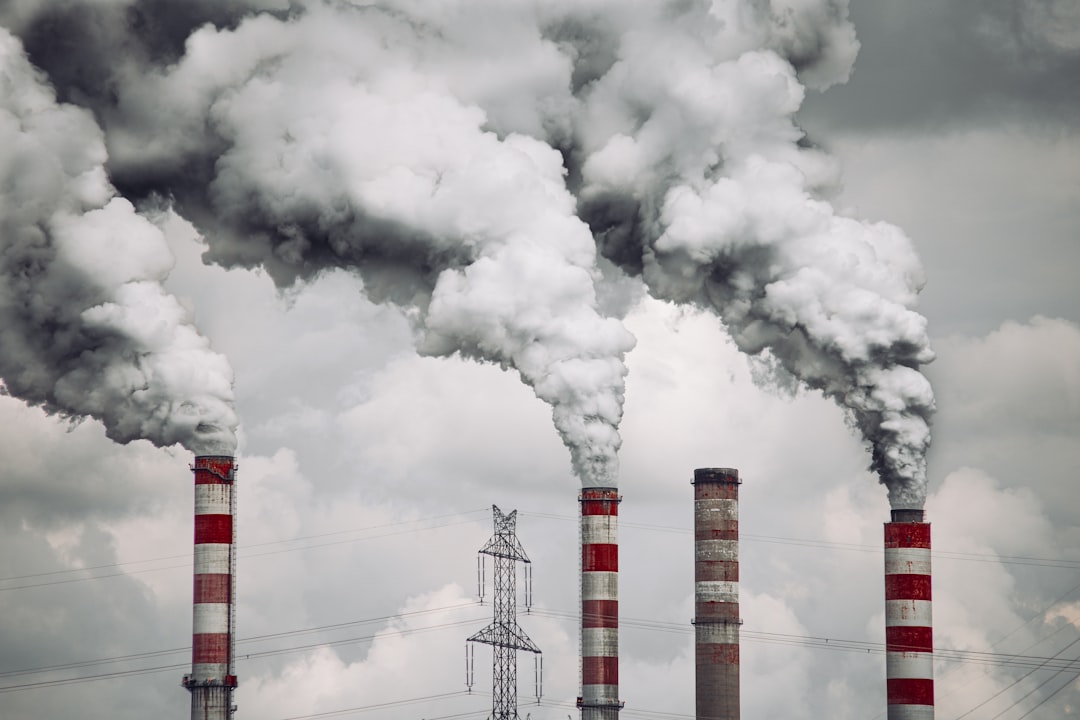
Carbon capture is becoming a carbon capture strategic industry because the economic math finally works — and because heavy manufacturers have no good alternatives left.
For years, carbon capture felt like tomorrow’s solution. The technology existed. The intent existed. But the business case? Shaky. Expensive. Subsidies-dependent. By 2026, that’s shifted. The global Carbon Capture, Utilization, and Storage market size is expected to be valued at US$ 3.5 billion in 2026 and projected to reach US$ 22.0 billion by 2033, growing at a CAGR of 30.0%. That’s not theoretical growth. That’s money moving now.
The reason is simple: cement, steel, chemicals, and refining don’t have a way to decarbonize without carbon capture. You can’t run a steel mill on wind turbines. You can’t battery your way out of process emissions. So manufacturers are building it. Governments are funding it. And the entire supply chain — from solvent makers to storage operators — is waking up to a permanent new market.
Here’s what’s actually happening, why it matters for your business, and where the real friction points are (spoiler: it’s not the technology).
Why Heavy Manufacturing Needs Carbon Capture Strategic Industry Deployment Now
Heavy industries such as cement, steel, and chemicals face significant challenges in reducing process emissions while maintaining production. That phrase—”while maintaining production”—is the whole story. These aren’t sectors where you can switch to a cleaner input. Steel requires heat above 1,600 degrees Celsius. That heat historically comes from fossil fuels. Cement releases CO₂ from the raw limestone itself, not just from fuel combustion.
So for the past decade, manufacturers faced an impossible choice: decarbonize (and shut down), or emit (and face regulation). Neither was sustainable.
Carbon capture and sequestration offers a practical solution for lowering these emissions without major process changes. This allows manufacturers to meet environmental requirements while continuing industrial operations. In other words, it’s the only hook that doesn’t rip the rope.
Regulations are tightening. Demand for low carbon construction materials, fuels, and industrial products is encouraging manufacturers to reduce production emissions. Major buyers—especially in Europe and North America—now require proof of emissions reduction. You either capture, you sell at a discount, or you sell nowhere.
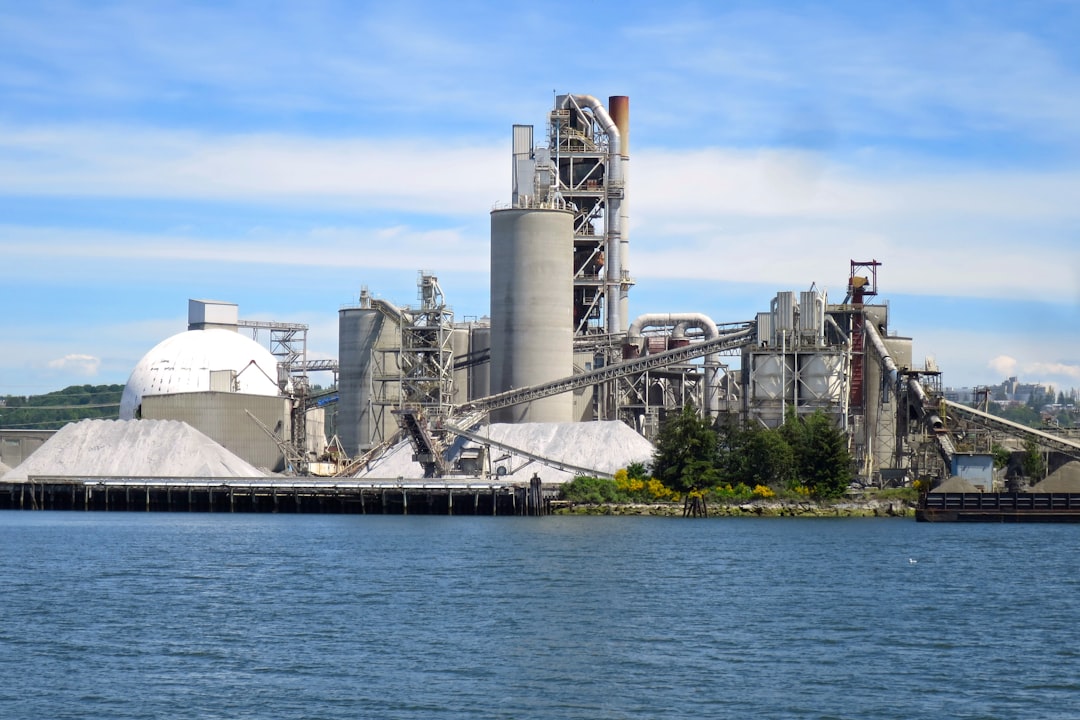
The real driver, though, is economics. Manufacturers have figured out that captured CO₂ isn’t just a compliance headache—it’s a revenue stream. The announcement of the U.S. Steel Carbon Capture 2026, $150 M Gary Works Project in 2024 marked a strategic pivot. It validated a commercial-scale model that integrates mature CO₂ capture technology (amine scrubbing) with scaling mineral carbonation, turning flue gas and steel slag into high-value precipitated calcium carbonate (PCC).
That’s not some boutique carbon removal scheme. That’s U.S. Steel taking a $150 million bet that captured carbon has market value. And they’re not alone.
The Carbon Capture Strategic Industry Has Real Money Behind it
Carbon Capture, Utilization, And Storage market size stood at $3.51 billion in 2026 and is projected to reach $5.79 billion by 2030 at a 13.3% CAGR. That’s the current year. Real dollars deployed in 2026.
But the headline number misses the setup. What’s driving this? Several things at once.
Government incentives. The U.S. Inflation Reduction Act (now fully deployed across 2025–2026) offers up to $180 per ton of CO₂ captured and stored. In Europe, the carbon price itself—now trading above €80/ton—creates economic pressure that makes even expensive capture attractive. Asia? In 2026, the Government of India reported a 60,000 tons per annum carbon capture facility at Tuticorin Alkali Chemicals, a 500 tons per day project at JSW Steel, and a 24 kilotons per annum unit—India is building this at industrial scale, not pilot scale.
Private capital. The growth in the forecast period can be attributed to increasing industrial decarbonization initiatives, expansion of hydrogen economy with carbon capture, rising government incentives for ccs projects, growth in post-combustion and oxy-combustion technologies, rising demand from cement, steel, and chemical industries. When hydrogen producers need to attach carbon capture to justify economics, and when you’ve got capital markets willing to fund that, you have real demand.
Operational proof. Carbon capture is a critical pathway for cement decarbonization, with the world’s first commercial-scale facility now operational in Norway, and more reportedly on the way. Heidelberg Materials’ Brevik plant is now capturing approximately 0.4 megatonnes of CO₂ annually – the biggest project to date. That’s a 400,000-ton annual facility running. Running. Not planned. Not piloted. Running.
The market size doesn’t feel huge compared to oil and gas or automotive. But consider this: in 2026, the entire sector is still in infant-stage commercial deployment. Carbon capture is shifting from isolated pilot projects to regulated, infrastructure-scale systems. With operational capacity at just over 50 MtCO2/year and a pipeline exceeding 400 MtCO2 by 2030. You’re watching a $3.5 billion market scale into the hundreds of billions. That’s not a trend. That’s a restructuring.
What the Carbon Capture Strategic Industry Actually Looks Like on the Plant Floor
Let’s get concrete. (Literally.)
If you own a cement plant, carbon capture today means one of two paths. The traditional one is post-combustion capture: install a solvent-based system that absorbs CO₂ from your flue gas after fuel burns. You pump the hot exhaust through amine solvents, the solvents absorb the CO₂, you regenerate the solvents with heat, you compress the captured CO₂, and you either pipe it somewhere or use it.
The most widely deployed capture systems today rely on post-combustion chemical absorption, typically using amine-based solvents. These technologies are commercially proven and remain the default option for retrofitting existing industrial assets, though they are energy-intensive and contribute significantly to operating costs.
Energy-intensive. That’s the euphemism for “it costs a lot to run.” Expect operating costs around 360 kWh per ton of CO₂ captured. On a gigawatt plant, that adds up fast.
The newer path is oxyfuel or calcium looping—you change the combustion process itself to concentrate CO₂ from the start, which makes capture easier. SINTEF Energy Research (2019) found calcium looping achieves 73–90% CO₂ avoidance versus 64% for MEA reference. VDZ gGmbH (2022) demonstrated oxyfuel retrofits reduce climate change impacts by 74–91%. These are genuinely superior—except they require ripping out your existing furnace and rebuilding it. Capital cost? Hundreds of millions for a single facility.
I once spent three weeks at a cement plant in the Midwest trying to estimate retrofit costs. The engineering team’s conclusion: post-combustion solvent capture on an existing line runs $50–100 million installed. Oxyfuel runs $400–600 million. Guess which one they picked? The cheaper one. Then the math on government incentives made it work.
The reality for heavy manufacturers in 2026 is this: capture technology isn’t the bottleneck anymore. The bottleneck is infrastructure—where do you send the CO₂?
The Real Constraint: Not Technology, but Transport and Storage Infrastructure
Here’s the thing. You can build capture. Building the pipes is different.
Every project currently advancing relies on shared networks such as those in the North Sea or the Adriatic Sea. Without these systems, projects cannot move forward regardless of technological readiness. A cement plant in Germany can commit to capture. But if the nearest storage is in the North Sea 1,000 km away, you need a CO₂ pipeline. Those pipelines don’t exist everywhere. Building one costs hundreds of millions.
This is why the largest carbon capture projects cluster geographically. Norway has geological storage (and Northern Lights, an emerging transport backbone). The North Sea has both. The Adriatic is building networks. But most of the world? Dead zone for industrial-scale capture, no matter how good your technology is.
For Asia, this is existential. India is building capture capacity at JSW Steel and other facilities, but India’s storage and transport infrastructure is minimal. What happens when you’ve got 500 tons a day of CO₂ at a steel mill with nowhere to send it? Your captured carbon goes nowhere. Economics don’t work. The project dies.
This is also why utilization—turning captured CO₂ into products rather than storing it—is getting so much traction. From 2025 onward, this carbon-to-value approach is being adopted across sectors. Cement producers like Heidelberg Materials and Holcim are pursuing similar large-scale projects, confirming a cross-industry trend toward monetizing captured carbon rather than treating it solely as a liability for underground storage.
Monetize it, and you don’t need perfect infrastructure. You turn CO₂ into precipitated calcium carbonate, polymers, chemicals, building materials. You sell it. Done.
It’s not a perfect solution. It doesn’t permanently remove carbon from the atmosphere (unless you’re turning CO₂ into long-lived concrete, which actually works). But it solves the immediate economics problem. And in 2026, economics is the only thing that moves hardware.
What Could Actually Go Wrong (Besides Everything)
Let’s not pretend this is a smooth ride.
The signs suggest that a deceleration of new CCUS projects looks set to continue in 2026. The number of projects being announced fell to 12 in 2025 from 19 in 2024. That’s a slowdown. Announced projects dropped by 37% year-over-year.
Why? Three reasons.
First: capital costs are still brutal. Yes, incentives help. But the total installed cost for industrial carbon capture on a large facility is still $500 million to $1 billion, depending on the sector and the plant. Financing that, even with government backing, takes time. Builders are being more selective about which projects pencil out, not less.
Second: technology risk is real. They are energy-intensive and contribute significantly to operating costs. That energy cost is often the deciding factor in whether a project continues operating or gets shelved. If electricity prices spike (which happened in Europe in 2025), economics flip. Projects planned for 2026 commissioning got delayed to 2028.
Third: infrastructure doesn’t exist everywhere, and building it takes consensus. You can’t unilaterally decide to pipe CO₂ across borders. You need regulatory alignment, storage agreements, pipeline routes, environmental assessments. A single facility can’t solve that alone. So facilities wait—and while they wait, other priorities surface.
Honestly, the slowdown is not shocking. The market is still sorting out which projects make real sense versus which were built on subsidies-and-hope. That’s actually healthy. It means we’re past hype cycle.
Frequently Asked Questions
What Exactly is Carbon Capture Strategic Industry and Why does it Matter for Manufacturing?
Carbon capture strategic industry refers to the deployment of CO₂ capture technologies as a core strategic capability for heavy manufacturers like steel, cement, and chemicals producers. It matters because these sectors have no viable path to net-zero without capture—process emissions are inherent to production. By 2026, carbon capture is no longer a compliance nice-to-have; it’s becoming a core operational asset that drives both emissions reduction and revenue through CO₂ utilization.
How Much does it Cost to Install Carbon Capture at an Industrial Facility?
Industrial-scale carbon capture installation costs range from $500 million to $1 billion, depending on the sector, facility size, and capture method. Post-combustion solvent-based systems run toward the lower end ($50–100 million for retrofit on existing equipment), while oxyfuel systems (which require furnace reconstruction) run toward the high end. Operating costs add 360+ kWh per ton of CO₂—translating to significant ongoing energy bills. Government incentives in the U.S. (up to $180/ton stored) and carbon pricing in Europe help close the gap.
What is the Difference Between Carbon Capture and Utilization Versus Carbon Capture and Storage?
Carbon capture and storage (CCS) captures CO₂ and permanently injects it underground in geological formations. Carbon capture and utilization (CCU) captures CO₂ and converts it into products—chemicals, fuels, building materials, or polymers—that have commercial value. CCU is increasingly popular in the carbon capture strategic industry because it creates revenue (you sell the product) rather than requiring permanent storage infrastructure, which many regions lack.
Is Carbon Capture Technology Ready for Wide Deployment in 2026?
Yes, but with caveats. Post-combustion chemical absorption (amine scrubbing) is commercially proven and widely deployed. Heidelberg Materials’ Brevik plant is now capturing approximately 0.4 megatonnes of CO₂ annually, and several additional projects are expected to come online between 2026 and 2027, with 38 projected by 2035. The bottleneck is not technology—it’s infrastructure. Transport networks and storage sites don’t exist in most regions. Without them, even proven carbon capture technology cannot scale.
Will Carbon Capture Strategic Industry Costs Come Down by 2030?
Costs should decline, but margins stay tight. Solvent formulations are improving to reduce regeneration energy (the biggest operating cost), and manufacturing scale should bring capital costs down 10–20% by 2030. However, tariffs are impacting the carbon capture, utilization, and storage market by increasing costs of imported compressors, membranes, reactors, pipelines, and advanced monitoring equipment. Energy-intensive industries in North America and Europe are most affected due to reliance on imported specialized components, while Asia-Pacific faces higher project capital expenditure for large-scale installations. These tariffs are increasing upfront project costs and slowing deployment timelines. Cost reductions will be real, but slow.
The Bottom Line: It’s Happening Whether You’re Ready or Not
Carbon capture is becoming a carbon capture strategic industry because the alternative—shuttering heavy industry or accepting permanent competitive disadvantage—is worse. Manufacturers can’t decarbonize any other way. Regulators won’t let them emit indefinitely. Buyers demand proof. So capture gets built.
The technology works. The business models are starting to work. The only missing piece is infrastructure, and that’s being built region by region, project by project. By 2030, if you’re operating a cement plant, steel mill, or chemical facility without carbon capture (or a credible path to it), you’re not operating much longer.
If you’re in the supply chain—engineering, equipment, solvents, transport, storage—2026 is the year the market becomes real. It’s still small. It’s still risky. But it’s no longer tomorrow’s problem. It’s this year’s investment. Act accordingly.

2 Comments
Pingback: Rise Bio-Based Materials Modern 2026: Market Growth & Trends
Pingback: Growing Business Carbon Markets 2026: $1T+ Opportunity