

The growing business carbon markets is no longer a fringe environmental concern—it’s become a serious financial arena where real money moves every single day. The global carbon credit market size was estimated at USD 933.23 billion in 2025 and is predicted to increase from USD 1,301.12 billion in 2026 to approximately USD 19,909.74 billion by 2035, expanding at a CAGR of 35.80% from 2026 to 2035. If those numbers seem wild, they’re not. This market is accelerating faster than most people realize, and if you work in finance, sustainability, energy, or even supply chain management, you need to understand what’s happening here.
Here’s the catch: not all carbon markets are created equal. There’s compliance carbon (mandatory by law) and voluntary carbon (companies doing it by choice or commitment). The two operate in very different ways, attract different players, and follow different rules. Most people think carbon markets are boring government stuff. They’re not. They’re actually where some of the smartest capital is flowing right now.
Why the Growing Business Carbon Markets Matters Right Now
The growing business carbon markets exists because of a fundamental problem: the world agreed to cut emissions (Paris Agreement), but nobody wants to be the only one doing it. Carbon markets are the financial mechanism that lets companies, countries, and projects trade their way toward climate goals without starting over.
Think about it this way. If you’re a manufacturing plant in Germany, you have an emissions cap. You can either spend millions retrofitting your facility to pollute less, or you can buy carbon credits from someone who’s doing renewable energy projects in Indonesia. Both reduce global emissions. The credit buyer saves money. The project developer gets paid. The planet wins. Or at least, theoretically.
The compliance market (regulated, mandatory) dominates by volume. Compliance carbon credits dominated the market with approximately 98% revenue share in 2025, driven by cap-and-trade systems and expansion of ETS scope to transport and buildings. The European Union’s Emissions Trading System is the big player here. But voluntary carbon credits—where companies voluntarily offset emissions they’re not legally required to reduce—is the part that’s actually accelerating at a crazy pace.
The Voluntary Carbon Market: Where Real Growth is Happening
Here’s what’s wild about the voluntary carbon market (VCM). The voluntary carbon credit market size was valued at USD 5.3 billion in 2025 and is expected to reach USD 7.4 billion in 2026. Some researchers see it even larger. The global voluntary carbon credit market, valued at USD 1.6 billion in 2025, is projected to grow to USD 2.6 billion in 2026 and USD 47.5 billion by 2035, representing a CAGR of 38% during the forecast period 2026 to 2035.
(Yes, the different research houses disagree on base numbers. That’s actually a sign of how new this market still is.)
Why the variance? Because the VCM is murky. It’s decentralized. Standards are fragmented. But that fragmentation is also creating opportunity—especially for companies that can build trust.
What’s driving this growth?
Corporate net-zero pledges. Microsoft, Amazon, Google—they’ve all promised carbon neutrality. Major U.S. corporates—especially tech giants—continue to sign some of the largest removal deals ever recorded. Microsoft alone accounted for the majority of durable CDR in 2025, driving enormous confidence and setting procurement benchmarks.
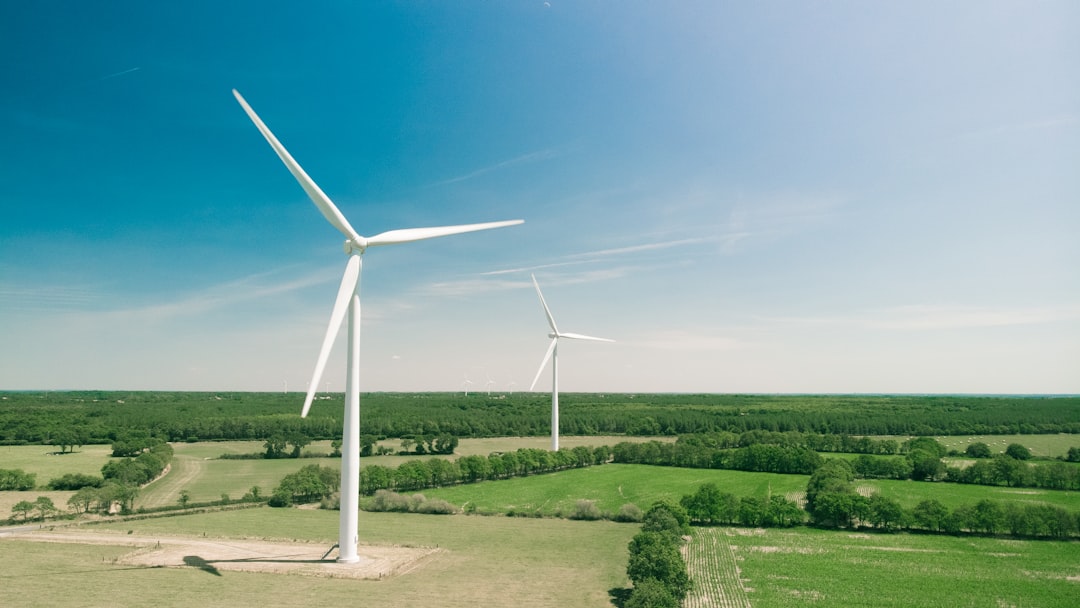
Renewable energy projects. The renewable energy segment led the market with the largest revenue share of 39.1% in 2025. Solar farms, wind turbines—they generate credits and they actually reduce emissions.
Nature-based solutions. Reforestation. Peatland protection. Methane capture. These get monetized through carbon markets, turning conservation into a business model.
But here’s the honest part: the voluntary market has been struggling with a perception problem. Greenwashing. Overpriced credits. Projects that didn’t actually reduce emissions. One of the key challenges faced in the voluntary carbon credit market is the lack of transparency in carbon credit pricing and the absence of detailed project information. Additionally, inadequate evaluation and verification lead to doubts regarding the efficacy and integrity of these carbon projects, especially with respect to their effects on biodiversity and local communities.
That said, things are changing. Standards are tightening. Verification is improving. Blockchain and digital platforms are bringing transparency.
Article 6 and International Carbon Markets: The Game-Changer
You’ve probably never heard of Article 6. But it might reshape the entire growing business carbon markets landscape.
Article 6 is part of the Paris Agreement rulebook. Basically, it lets countries trade carbon credits internationally (like how companies trade within the EU) and lets international climate projects go toward multiple countries’ climate targets simultaneously. Expansion of Article 6-authorized credits is expected to be a major driver of market growth.
This matters because it removes friction. Right now, if Brazil protects rainforest, it’s tricky to convert that into a credit that a U.S. company can buy and retire. Article 6 standardizes that. It opens up entire regions (Southeast Asia, Africa, South America) as carbon project sources for wealthy nations and corporations.
In March 2026, India launched the Carbon Market Portal under the Prakriti 2026 initiative. This platform establishes a carbon credit registry, enables trading, and monitors industry compliance. This initiative encourages transparency and accelerates the development of India’s national carbon trading system. That’s exactly what Article 6 acceleration looks like on the ground.
Regional Dominance: Who’s Buying, Who’s Selling
The growing business carbon markets doesn’t look the same everywhere.
Europe owns the compliance market. The market in Europe dominated with a revenue share of 88.7% in 2025. Why? Strict regulations, cap-and-trade (EU ETS), and a mature financial system. If you’re buying compliance credits for a factory in Germany, you’re buying in a highly liquid, well-regulated market.
North America leads in voluntary carbon. The market in North America dominated with a revenue share of 37.0% in 2025. Tech companies, investment firms, wealthy corporations. They’re buying voluntary offsets to hit net-zero goals. Prices are higher. Verification standards are stricter. The buyer base is concentrated but deep-pocketed.
Asia-Pacific is the frontier. Forecasts suggest the region could grow at a staggering 36–58% CAGR, outpacing every other geography. Why? Massive renewable energy pipelines (especially solar and wind), huge forestry potential, and governments starting to build formal carbon markets. China’s renewable deployment. India’s new registry. Indonesia’s peatlands. This is where the growth is actually happening.
That’s not theory. I watched a company I know spend eighteen months building a wind project in Vietnam. The power sale made decent money, but the carbon credits? Those were the real value driver. That’s the new model.

The Players and the Concentration Problem
Who actually runs the growing business carbon markets? Fewer companies than you’d think.
Verra led with over 10% market share in 2025. Top 5 players in this market include Verra, South Pole, Climate Impact Partners, EcoAct, 3Degrees, which collectively held a market share of 35% in 2025.
These are verifiers, brokers, and platform operators. They don’t usually own the projects. They certify them, list them, trade them. Think of them as the infrastructure layer.
But here’s the tension: the market is becoming more concentrated, not less. Market growth was driven by a limited pool of repeat buyers, with participation failing to expand at the same pace as volumes and demand becoming increasingly concentrated. Big companies are buying more, but fewer companies are actually buying. That’s actually a sign of maturity in some ways (professional, serious money) but also a risk (one bad headline about greenwashing and the whole VCM could tank).
The real opportunity for new entrants? Building trust at scale. Digital platforms that increase transparency. Project developers in emerging markets who can access capital. Verification companies that solve the integrity problem.
Challenges that Won’t Go Away (Yet)
Let’s be real about this. The growing business carbon markets still has serious growing pains.
Pricing volatility. There’s no single price for a carbon credit. A removal credit (actually taking CO2 out of the air) costs $30–$200+ per ton. A reduction credit (preventing emissions) costs $1–$10. The spread is massive and confusing.
Greenwashing and fraud. Supply constraints, public criticism and legal action over greenwashing claims often discourage stakeholders from participating in the market, even when the project is credible. One news story about fake forest offsets can dent the entire market’s credibility.
Regulatory uncertainty. Governments are still figuring out what they want. Do voluntary credits count toward compliance targets? Should they be regulated? The rules keep changing, which makes long-term investment risky.
Additionality. This is the deep problem nobody talks about. How do you know a project wouldn’t have happened anyway? If Vietnam built that wind farm with or without carbon credit revenue, then the credit isn’t “additional”—it’s fake. Proving additionality is genuinely hard.
But—and this is important—the fact that these problems exist means smart money is solving them. Blockchain for transparency. Satellite monitoring for verification. Better additionality methodologies. This is not a stalled market. It’s a maturing one.
Frequently Asked Questions
What Exactly is the Growing Business Carbon Markets?
The growing business carbon markets refers to the global system where carbon credits are traded between companies, countries, and project developers. One credit equals one ton of CO2 equivalent either prevented or removed from the atmosphere. Companies buy credits to offset emissions they can’t eliminate directly. It’s split into compliance (mandated by law) and voluntary (by choice) segments.
How Big is the Growing Business Carbon Markets Expected to be in 2026?
Market estimates vary widely, but most projections place the total carbon credit market at over $1 trillion in 2026. The voluntary carbon market alone is projected to reach $7.4 billion or higher. Different research firms use different methodologies, which explains the variance, but all show explosive growth ahead.
Who are the Main Buyers in the Growing Business Carbon Markets?
Tech companies (Microsoft, Google, Amazon), heavy industry (cement, steel, chemicals), energy utilities, financial firms, and increasingly, small-to-medium enterprises. In compliance markets, it’s companies and governments with emissions caps. In voluntary markets, it’s companies pursuing net-zero pledges and ESG commitments.
What’s the Biggest Risk in the Growing Business Carbon Markets?
Greenwashing and fraud. Credits from projects that either don’t reduce emissions or were going to happen anyway. This erodes trust. Better verification (blockchain, satellite data, stricter standards) is being built, but the reputational risk remains real and could destabilize the entire market if major frauds are exposed.
Is the Growing Business Carbon Markets Profitable to Invest In?
Yes, but volatility is real. Project developers in emerging markets can achieve strong returns. Platform operators building integrity infrastructure are attracting capital. But the market is young, standards are evolving, and regulations are changing fast. It’s high-growth but high-risk. Diversification is essential.
The Real Takeaway
The growing business carbon markets is not a charity. It’s not window-dressing. It’s becoming a real, multi-trillion-dollar system where companies are spending actual money, governments are setting rules, and capital is flowing to the projects that will define the energy transition.
If you work in energy, finance, supply chain, or sustainability—you need to pay attention. Not because carbon credits are perfect (they’re not). But because the money is real, the growth is accelerating, and the companies that understand this market early will have an edge. The voluntary market is still noisy and fragmented, but it’s maturing fast. Compliance markets are huge but mature. The next decade is when regional markets (especially in Asia) become seriously important.
The winning strategy is simple: focus on quality, transparency, and durability. Buy or build projects with real, verifiable impact. Use the best verification available. Understand that this market rewards trust above all else. That’s what the capital is actually chasing right now.
Disclaimer: This article is for general informational purposes and is not financial or investment advice. Markets, products, tax rules, and regulations vary by country and change frequently. Consult a licensed financial advisor, qualified investment professional, or other relevant licensed expert in your jurisdiction before making any investment, lending, insurance, or tax-planning decision.

2 Comments
Pingback: Direct Air Capture Global Markets: 2026 Investment Guide
Pingback: Green Building Standards Commercial 2026: From Promises to Performance