

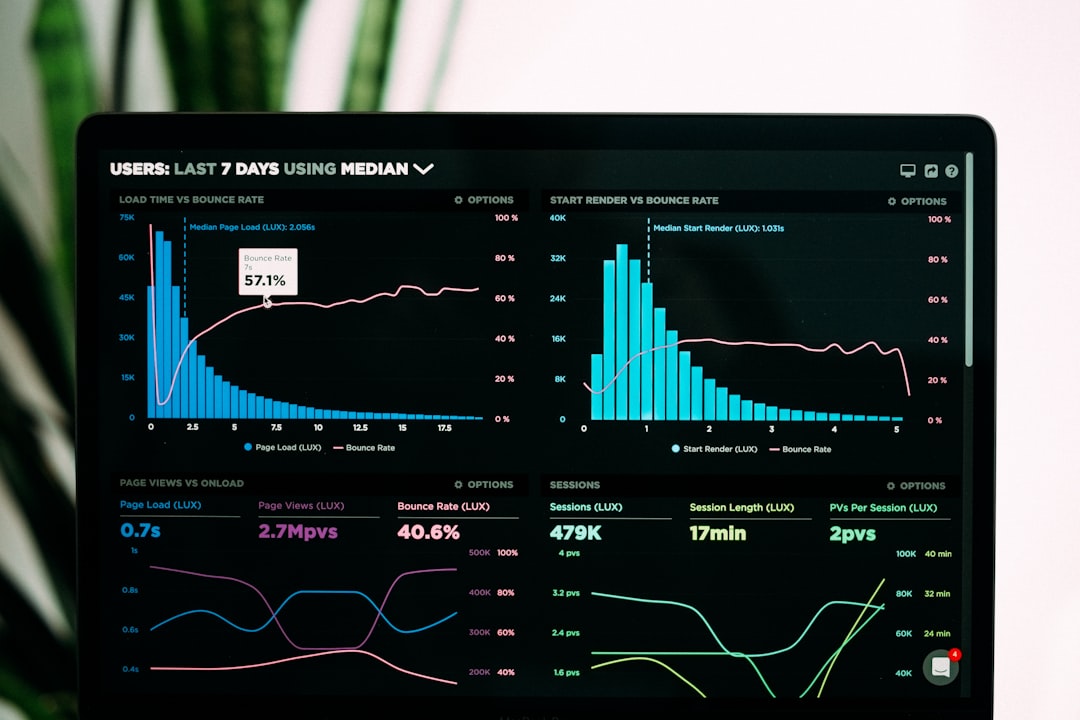
The digital marketing trends dominate this year’s industry conversation harder than any shift since the mobile-first revolution — and if you’re still running a 2024 playbook, you’re already behind. Not slightly behind. Meaningfully, measurably behind. This isn’t hyperbole. The ground has shifted under three major pillars at once: how people search, what content they respond to, and how AI is weaving itself into every single stage of the marketing workflow. Let’s get into all of it.
Why the Digital Marketing Trends Dominate Conversations in Every Boardroom Right Now
Here’s the thing — not all of these trends are new. Some have been creeping up for two or three years. What’s different in 2026 is the speed of forced adoption. Marketing is experiencing its biggest disruption in 20 years. AI is fundamentally changing how businesses find and engage customers. That’s not marketing fluff — that’s the lived reality for every SEO manager, content lead, and digital strategist trying to justify their budget this quarter.
By 2026, total spend for the digital marketing industry is expected to top $800 billion, according to 2025 figures from Oberlo. That’s a staggering number. But what that figure doesn’t tell you is where those dollars are being redirected — away from pure keyword-stuffed content, away from vanity-metric campaigns, and toward AI-augmented discovery, short-form video, and owned-channel dominance.
The shift is structural, not cyclical. AI is influencing research, content workflows, personalization, and even how buyers compare vendors before they ever visit a website. At the same time, privacy expectations are higher, third-party data is less dependable, and buyers expect relevance without feeling watched. That combination is what defines digital marketing in 2026.

GEO is the New SEO: How Digital Marketing Trends Dominate the Search Landscape
I spent about six months in early 2025 watching a client’s organic traffic plateau despite solid traditional SEO work. Rankings were fine. Content was thorough. And yet, discovery was quietly bleeding out. The culprit? We weren’t showing up in AI-generated answers. That’s when Generative Engine Optimization (GEO) became non-negotiable for us.
GEO is the practice of structuring your content and digital presence so that AI-powered search platforms — including ChatGPT, Google AI Overviews, Perplexity, Claude, and Copilot — can retrieve, cite, and recommend your brand when answering user questions. If traditional SEO was about earning a spot among 10 blue links, GEO is about earning a place among the two to seven domains large language models typically cite in a single response. The competition is tougher, but the payoff is big: when an AI engine names your brand in its answer, it delivers an implicit endorsement no organic listing ever could.
The numbers behind this are wild. LLM visitors convert at 15.9% from ChatGPT, 10.5% from Perplexity, and 5% from Claude, compared to a 1.76% organic search conversion rate (Seer Interactive, June 2025). Ahrefs found AI search visitors generated 12.1% of signups despite accounting for only 0.5% of total visitors — a 24:1 conversion ratio relative to organic search.
That’s not a rounding error. That’s a channel-level advantage.
Updating SEO for search changes is one of the top trends brands are tackling this year, cited by 40.6% of marketers. Half of all consumers use AI-powered search in 2026, and half of all Google searches include an AI overview. Yet most brands haven’t fully adapted. By early 2026, most enterprise marketing teams have a GEO initiative. Most SMB marketing teams have not started yet — which represents a significant first-mover opportunity.
To get cited by AI systems, the Search Engine Land guide to GEO in 2026 recommends focusing on:
- Structured, scannable content with clear H2/H3 hierarchies
- Original data and statistics — adding stats improves AI visibility by up to 41% (Princeton/Georgia Tech research)
- Earned media and third-party citations — brand mentions correlate 3x more strongly with AI visibility than backlinks
- Fresh content signals — AI platforms show a clear preference for current content. Data indicates that AI systems prefer sources approximately 25% fresher than what traditional search typically surfaces.
“AI Overviews and Google Zero pushed us into a world where the search result is now the answer itself,” said Kaare Wesnaes, head of innovation for Ogilvy North America. “If a brand isn’t mentioned or cited in that instant, it effectively doesn’t exist.”
That’s blunt. And it’s correct.
Short-Form Video: Still the Highest-Roi Format Going
Not a trend anymore. A fact.
Video is now the default marketing format — 91% of businesses use video as a marketing tool in 2026, up from 86% in 2024. You don’t get to opt out of this one. The top three ROI-driving content formats, according to marketers, are all video-based: short-form video (49%), long-form video (29%), and live-streaming video (25%), per HubSpot’s State of Marketing Report 2026.
Short-form specifically. Videos under 60 seconds generate 2.5x more engagement per impression than any other content type. Marketers rank short-form video as the number one ROI format for the third consecutive year, and 57% of marketing budgets now include a dedicated short-form line item.
Here’s a real tension though — and I’ll be honest about it. The race to produce short-form content at scale has flooded every platform with mediocre stuff. The advancement of generative AI could encourage mediocrity — “slop” was deemed a 2025 word of the year for a reason — but also benefit marketers moving against the grain. To grab attention, brands may embrace messaging that is deliberately button-pushing or bold. So, yes, short-form video is the best channel. The best — well, the best for brands willing to actually be interesting. Generic, AI-generated talking-head content is becoming invisible.
Consumer expectations back this up. 84% of consumers say they want to see more videos from brands in 2026. That figure has been consistent to within 8% for the past eight years, which suggests it’s not a passing preference — it’s a structural expectation. 89% of consumers say video quality impacts their trust in a brand.
And production costs are dropping fast. AI has cut average production costs by 40% — AI-powered editing, scripting, voiceover, and generation tools have reduced the median video production cost from $4,200 to $2,500 per finished minute. This cost compression is accelerating adoption among small and mid-size businesses that previously could not justify video budgets.
There’s no excuse left for not doing video. Budget isn’t it anymore.
AI Personalization: The Gap Between Knowing and Doing
Organizations report measurable improvements in key CX performance metrics, such as personalization (70% say this metric has somewhat or significantly improved), lead generation (64%), and customer retention (59%). Yet these gains coexist with modest self-perceptions of digital CX maturity, with more than half (57%) saying their organization is on par with or behind peers and only about a third (36%) considering themselves ahead of the curve.
That gap — between the gains AI personalization is already delivering and how unprepared most teams feel — is the defining tension of 2026. Most organizations are experimenting. Few are executing at scale.
88% of digital marketers use AI in their day-to-day roles (SEO.com). 92% of businesses intend to invest in generative AI tools over the next three years (McKinsey). But intent and execution are very different things. Companies that win in 2026 will not be the ones with the most AI tools; they’ll be the ones with the clearest point of view, the most disciplined use of data, and the best judgment about where human creativity must lead and where automation takes over.
Adobe’s 2026 AI and Digital Trends research, which surveyed 3,000 executives and 4,000 customers globally, found something marketers need to sit with: half of customers say promotional emails, ads, and social media posts have only two to five seconds to capture their interest. Two to five seconds. That’s not a lot of room for generic, non-personalized messaging.
Customers appreciate the conveniences and personalization offered by AI-generated brand interactions, but they are not ready to cede control of their sensitive information or important decisions. At the same time, experiences that fail to pique their interest within five seconds — or feel misleading, poorly timed, or irrelevant — prompt quick disengagement.
The implication? AI personalization works when it’s invisible. When it’s obvious — when users can smell the automation — it backfires hard.
First-Party Data and the Post-Cookie Reality
This one has been “coming” for four years. Now it’s actually here.
Privacy expectations are higher, third-party data is less dependable, and buyers expect relevance without feeling watched. Third-party cookies, for all practical purposes, are dead or dying fast on the browsers that matter. That means if your audience targeting still leans primarily on cookie-based behavioral data you borrowed from a platform, you’ve got a problem.
First-party data strategy — building owned email lists, SMS opt-ins, loyalty programs, community platforms, and zero-party data collection through quizzes and preference centers — is the infrastructure play of the decade. It doesn’t sound exciting. It rarely gets the flashy case study. But brands that built owned audiences in 2023 and 2024 are running laps right now around brands that didn’t.
To capture attention and drive growth, brands must optimize for discovery across platforms, prioritize first- and zero-party data, and humanize their AI workflows for genuine audience connection.
Practically speaking, you should be:
- Auditing every form, quiz, and opt-in touchpoint you have and asking whether you’re capturing permission-based data at scale
- Building content that trades value for data — guides, tools, calculators that people actually want
- Investing in CDP (Customer Data Platform) infrastructure to unify and activate the data you do own
- Treating email as a primary channel, not a support channel — in 2025 data from HubSpot’s State of Marketing Report, B2C brands relied most on email, paid social, and content marketing for best returns.
Mostly. That’s the short answer. Depends on your vertical.
The Anti-AI Backlash: A Trend Within a Digital Marketing Trends Dominate Cycle
Here’s something nobody was talking about eighteen months ago.
Keran Smith, cofounder and chief marketing officer of LYFE Marketing, identifies a trend that feels counterintuitive given how pervasive AI content tools have become: anti-AI marketing. “I believe 2026 will be the year of anti-AI marketing,” he says, pointing to early movers like iHeartRadio and the creators of Apple TV’s Pluribus.
“A lot of the output is trending toward the median,” said Taryn Crouthers, CEO of Spcshp, about AI in marketing. “It’s about pulling against the median because all of the content is merging to look very, very similar.”
This is real. I’ve watched clients in premium service categories — law firms, boutique consultancies, luxury goods — deliberately lean into human-made signals: handwritten notes, unscripted video, deliberate imperfection. And it’s working. Not because AI is bad, but because human authenticity has become scarce. Scarcity creates value.
2026 marks the shift from experimentation to execution. Agentic AI will move beyond content generation to autonomously handle campaigns, scheduling, and reporting. So the irony is this: as AI gets more capable in the background operations, the human-facing content layer might need to get more human to stand out. Not less.
Frequently Asked Questions
What Digital Marketing Trends Dominate in 2026?
The digital marketing trends dominate this year are AI-driven search optimization (GEO), short-form video, AI-powered personalization, first-party data strategy, and the counter-movement toward human-authentic content. The most important digital marketing trends in 2026 are AI-assisted search, first-party data strategy, AI-supported personalization, social media as a search layer, short-form and searchable video, trust-driven creator marketing, and full-funnel measurement. These aren’t isolated tactics — they’re interconnected systems.
Which Digital Marketing Trends Dominate for Small Businesses Specifically?
The digital marketing trends dominate for small businesses in 2026 center on short-form video and first-party data collection — both of which are now more accessible than ever. AI has cut average video production costs by 40%, reducing the median cost from $4,200 to $2,500 per finished minute, which is accelerating adoption among small and mid-size businesses that previously could not justify video budgets. Start with email list building and one short-form video platform before attempting GEO.
How is AI Changing SEO in 2026?
AI is fundamentally reshaping how search works. Half of all consumers use AI-powered search in 2026, and half of all Google searches include an AI overview. Traditional SEO still matters, but it now needs to be layered with GEO — optimizing for AI citation rather than just for ranked blue links. The goal is to be the source AI systems quote, not just a page that ranks on page one.
What Content Format Delivers the Highest Roi in Digital Marketing Right Now?
Short-form video, consistently. Short-form video is the number-one ROI-generating content format according to HubSpot’s State of Marketing Report 2026, with 21% of marketers citing it as their highest-ROI channel. Second place goes to long-form video, and email remains the top owned-channel performer — particularly for B2C brands.
Is AI Personalization Actually Working for Marketers in 2026?
Yes — with caveats. Organizations report measurable improvements in personalization (70% say this metric has somewhat or significantly improved), lead generation (64%), and customer retention (59%). The challenge is that most teams are still in experimentation mode rather than full deployment. The brands seeing the biggest gains are the ones that have paired AI tools with clean, unified first-party data — not the ones simply plugging in off-the-shelf AI features and hoping for the best.
The One Takeaway You Should Actually Act on
Every single trend covered here points to the same underlying truth: discoverability is being restructured, and the brands building citation authority, owned audiences, and human-first creative now will compound those advantages for years.
Honestly, you don’t need to tackle all of this at once. Pick the weakest link. If you’re not showing up in AI-generated answers, start there — audit your content structure, add original data, earn some third-party mentions. If you’re not doing short-form video, the barrier to entry just dropped to nearly zero. If your data infrastructure is still third-party-dependent, build one owned channel this quarter.
The companies that win in 2026 will not be the ones with the most AI tools; they’ll be the ones with the clearest point of view, the most disciplined use of data, and the best judgment about where human creativity must lead and where automation takes over.
That’s it. That’s the whole thing. According to the HubSpot 2026 State of Marketing Report, 70.2% of marketers believe they can adapt their strategy to the changes in organic search — which means almost 30% don’t. Don’t be in that 30%.
Pick one shift. Move fast. Build from there.
