

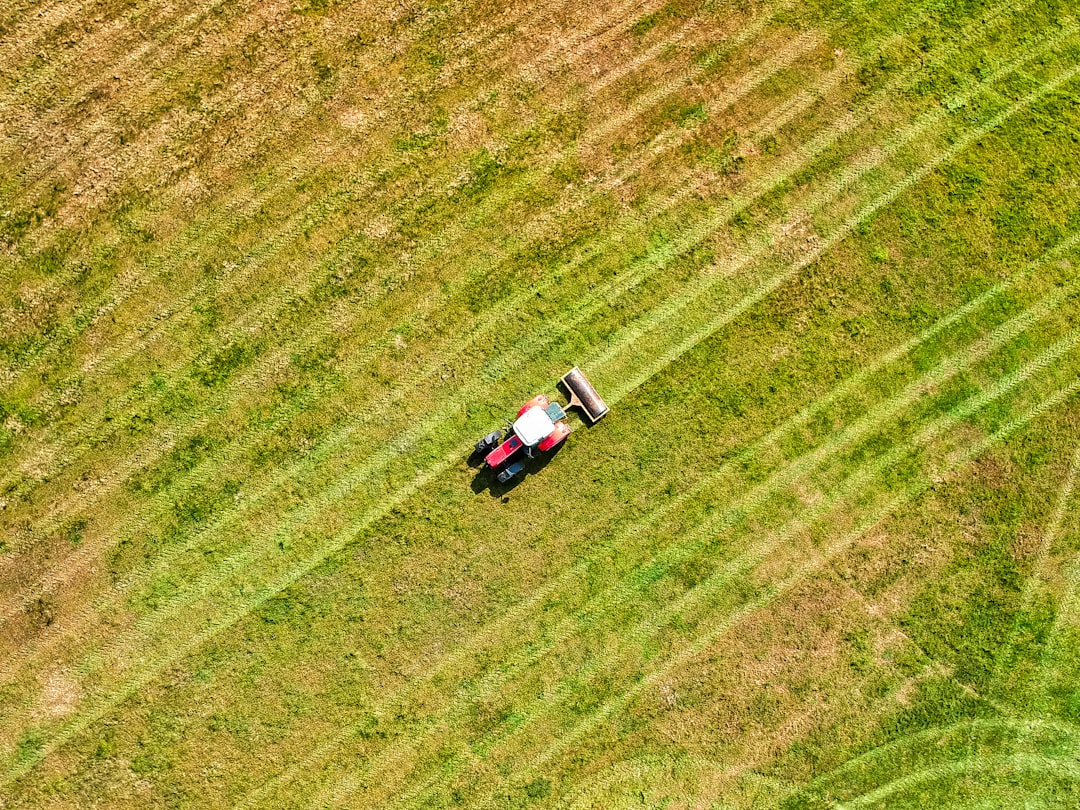
The question isn't whether precision agriculture global food systems will change — it's already happening. Over 70% of large crop farms are expected to adopt satellite-based precision farming technologies as we move through 2026, and this shift represents something genuinely transformative. Not "disruption" in the tired Silicon Valley sense. This is farmers making money, growing more food on less land, and doing it with measurably less waste.
Here's what most people miss: precision agriculture global food production isn't just about fancy drones and sensors. It's a complete rethink of how we grow. It's data, sure. But more importantly, it's farmers — real people — using that data to stop throwing fertilizer at fields hoping something works and instead applying exactly what each zone of soil needs, sometimes down to the individual plant.
The stakes couldn't be higher. By 2050, we'll need to feed nine billion people on a planet that's getting warmer and less predictable. Traditional farming won't cut it.
The Real Market Moment for Precision Agriculture Global Food Systems
This isn't hype. The global precision farming market is predicted to increase from USD 16.07 billion in 2026 to approximately USD 48.36 billion by 2035, expanding at a CAGR of 13.05% — and those numbers reflect serious money flowing into equipment, software, and services. North America leads. North America region has accounted revenue share of around 44% in 2025, while Europe region has captured revenue share of over 25% in 2025.
But here's the catch: a 44% market share in North America mostly means large-scale row crop operations. Smaller farms, especially in emerging markets, are still years behind adoption.
I once spent an afternoon in Iowa talking to a farmer using John Deere's Operations Center. He pulled up data from three different field zones showing soil moisture variations I couldn't see with my eyes. His field looked uniform. The data told a completely different story. That's the power shift happening right now. Farmers with access to this insight are making better decisions in real time — and their competitors without it are losing ground.
Why Precision Agriculture Global Food Production is Accelerating in 2026
Technology convergence. That's the real driver. By leveraging data-driven insights, advanced sensors, the Internet of Things (IoT), AI, and automation, it's rapidly transforming how farmers manage soil, water, nutrients, and crops in real time.
Three specific things are happening simultaneously:
- AI is getting smarter. AI in Precision Agriculture Market Size was valued at USD 0.93 Bn 2025 and is predicted to reach USD 5.68 Bn by 2035 at a 20.0% CAGR. Machine learning models that detect pest pressure, predict yield, and optimize input timing are maturing fast.
- Mobile-first operations are becoming standard. Smartphone and digital-based farm management has rapidly moved from convenience to essential infrastructure. What began in early adopting markets such as Brazil is now a global shift, enabling farmers, ranchers and feed operators to operate with greater agility and coordination.
- Hardware costs are dropping. Drones, sensors, and soil moisture probes that cost thousands five years ago now run $500–$2,000. Subscription models are replacing massive upfront capital requirements.
Variable Rate Technology: Where Precision Agriculture Global Food Gains Real Dollars
Most precision agriculture global food discussions focus on yield — and yield matters. But variable-rate application (VRA) is where the ROI actually shows up in bank accounts.
Instead of spreading fertilizer uniformly across a field, VRA systems apply different rates to different zones. Seems basic, right? Except most farms did this wrong for decades. You'd overfertilize poor soil (wasting money) and underfertilize good soil (leaving yield on the table).
Variable-rate technology market size is projected to grow at the fastest 10.4% CAGR from 2026 to 2031. This growth is driven by the addition of prescription control over seeding, fertilization, and chemical application, which enhances returns on existing autosteer platforms.
The math is stark. A 1,000-acre corn field with uneven fertility can waste $20,000–$40,000 annually in unnecessary input. Precision agriculture global food technologies recover most of that. Farmers in the Midwest who've deployed VRA systems report payback in 18–36 months.
Remote Sensing and Drones: The Eyes in the Sky
Satellite data used to cost serious money and take days to process. That's not remotely (pun intended) true anymore.
In May 2025, John Deere's acquisition of Sentera integrated hyperspectral analytics directly into its Operations Center, eliminating a subscription layer and facilitating adoption for connected machines. This matters because it lowers friction. Farmers no longer need separate vendor relationships. The data flows directly into the tools they already use.
Drones add something satellites can't: ground-level detail on stress (disease, pest pressure, nutrient deficiency) and rapid response. Remote sensing and analytics providers are enhancing edge computing and real-time processing capabilities, enabling quicker decision-making and reducing delays in field assessments.
Real example: a soybean disease (frogeye leaf spot) can spread in days once it hits a field. A drone flight with multispectral imaging can catch it in the earliest stage when a fungicide works. Wait a week and you've lost significant yield.
Water Management: The Hidden Efficiency Win
People talk about feeding nine billion. They rarely talk about the water. Agriculture uses 70% of global freshwater. Precision agriculture global food systems are remaking that equation.
The irrigation management market size is projected to grow at the fastest 11.2% CAGR from 2026 to 2031. Soil moisture sensors feeding real-time data into irrigation controllers mean no more watering on a fixed schedule. You water when the plant actually needs it.
Lindsay's FieldNET network, integrated with real-time weather and moisture data, reduced water usage during Nebraska corn trials in 2024. FarmX's Osmo sensor achieved water savings in California nut orchards, thereby reducing pumping costs.
In a California almond orchard, the difference between guessing and precision irrigation is the difference between $150,000 and $200,000 in annual water pumping costs. That's not trivial on a 300-acre operation.
The Barrier Nobody Talks About: Small Farms Get Left Behind
Here's the uncomfortable reality. Precision agriculture global food solutions work beautifully if you're a 5,000-acre corn operation in Illinois. You have the scale to justify $300,000 in equipment and software. The payback in two years is real.
For a 200-acre diversified farm? Different story. Upfront investment remains a material hurdle as precision agriculture increasingly depends on higher-cost hardware such as GNSS guidance, variable rate application systems, camera-based machine vision systems for precision targeting, drones, and autonomous-capable tractors. For small and mid-sized farms, payback timelines can appear uncertain when yields fluctuate and input prices move quickly, while recurring software and data subscriptions add ongoing cost.
The precision agriculture industry is solving this — mostly. Software-as-a-service models, leasing options, and cooperative purchasing are helping. But there's still a 200-acre gap where most farms aren't quite large enough to justify the capital, but large enough to feel like they're falling behind.
Frequently Asked Questions
What Exactly is Precision Agriculture Global Food Farming, and How does it Work?
Precision agriculture represents a revolutionary approach to farming for a sustainable future. In practice, it combines sensors (soil moisture, weather), GPS guidance, drones, and data analytics to optimize crop management. You collect real-time data on field conditions, analyze it with software or AI, then apply inputs (water, fertilizer, pesticides) only where and when crops need them — not uniformly across the entire field.
How Much does Precision Agriculture Global Food Technology Cost to Implement?
Costs vary wildly depending on farm size and which technologies you adopt. Basic GPS guidance systems start around $30,000–$50,000 for a tractor retrofit. Full-stack precision agriculture global food solutions (guidance, variable-rate application, drone integration, software) run $150,000–$500,000+ for mid-sized operations. Many farmers start with one piece (usually guidance) and add others over time. Software subscriptions typically run $500–$3,000 annually per farm.
Is Precision Agriculture Global Food Actually Profitable for Farmers?
Yes — but ROI depends on what you're optimizing. VRA systems payback in 18–36 months through fertilizer savings. Irrigation management can cut water costs 20–30%. Yield improvements vary by crop and region, but most precision agriculture global food adopters see 3–8% yield gains. The challenge is measuring this precisely because many benefits overlap (higher yield + lower input costs + less water).
Will Small Farms Ever be Able to Afford Precision Agriculture Global Food Tools?
Increasingly yes. Software-only solutions (you use existing equipment) cost less than $1,000 annually. Mobile apps let you scout fields efficiently. The gap between large and small farms is narrowing, though it's not closed yet. Cooperatives and data-sharing models are emerging too.
What Technologies Matter Most for Precision Agriculture Global Food Right Now in 2026?
GPS/GNSS guidance remains the foundation — Guidance (GPS/GNSS) held the largest 37.5% of the North America precision agriculture market share in 2025 — but variable-rate application, soil moisture sensors, and AI-powered analytics are the growth stories. Drones and satellite data are valuable but secondary for most farmers unless you're managing irrigation or disease pressure.
The Takeaway: Precision Agriculture Global Food is No Longer Optional
By the end of this decade, precision agriculture global food will be normal. Not novel. Normal. The farms that don't adopt will lose money — not from dramatic yield gaps, but from thousand-dollar inefficiencies bleeding out across seasons.
What matters right now is starting. You don't need everything. Start with the tool that saves money on your biggest cost (usually nitrogen fertilizer or water). Get one season of data. Use that to justify the next piece.
The global food system needs to grow 50–70% more food without proportionally more land or water. Precision agriculture global food production delivers that equation. Not perfectly. Not for everyone yet. But it's the realest path we have.
